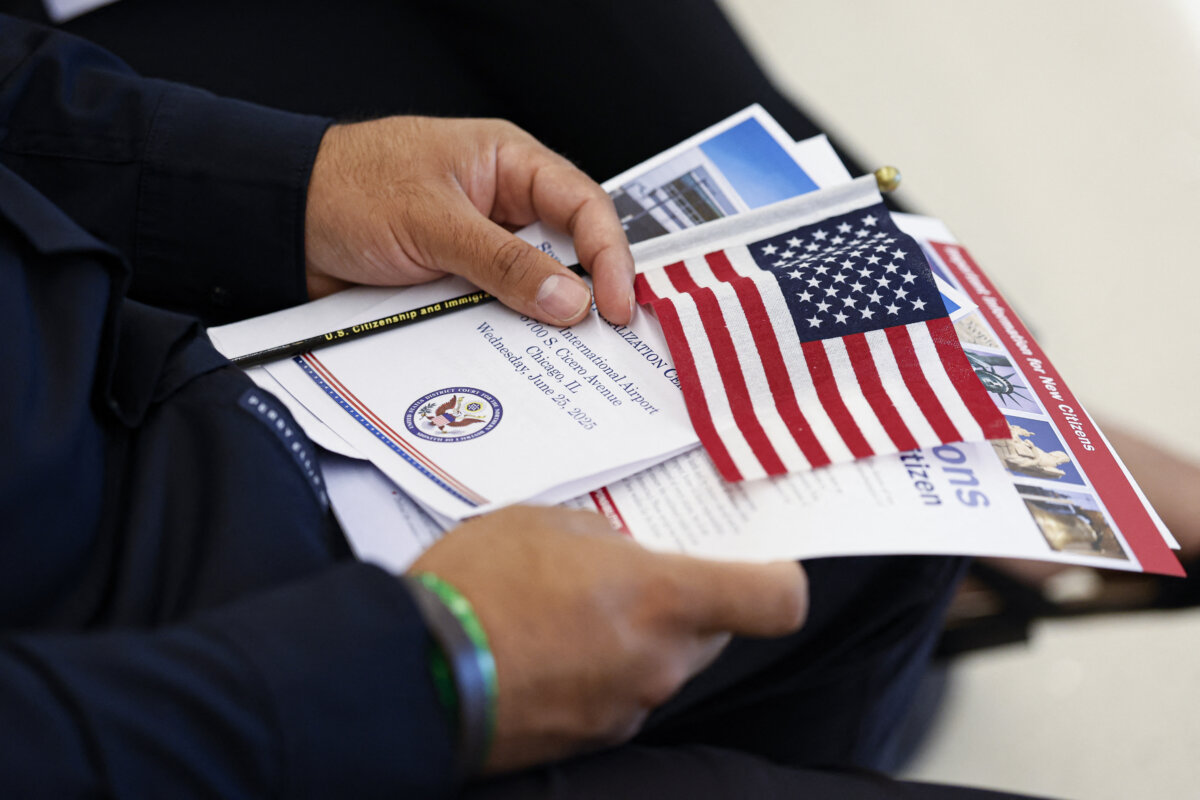

U.S. Citizenship and Immigration Services (USCIS) will adopt a more rigorous approach when determining whether a foreigner applying for citizenship meets the “good moral character” standard.
In a policy memo issued on Aug. 15, USCIS called for a “holistic” review of applicants’ behavior and background. Instead of focusing only on statutory disqualifications such as certain criminal convictions, the agency now asks officers to weigh both positive community contributions and conduct that may be technically lawful but socially questionable.
“Going forward, USCIS officers must account for an alien’s positive attributes and not simply the absence of misconduct,” the memo states.
To become a U.S. citizen through naturalization, applicants must be at least 18 years old, live in the country as a lawful permanent resident for a specific period, pass basic English and civics tests, and show they have good moral character.
Traditionally, applicants could be denied naturalization for lacking good moral character if, during the three- or five-year statutory period before applying, they committed certain disqualifying offenses. These include, to name a few, murder, theft, money laundering, and human trafficking.
Other than those serious crimes, the Aug. 15 memo gives USCIS officers more discretion to deny citizenship based on a wider range of behaviors. For example, repeated drug use or multiple convictions for driving under the influence (DUI) may now be grounds for denial, even if they are only listed as conditional disqualifiers.
“Repeated criminal conduct such as multiple DUI convictions undermines moral character unless rebutted by affirmative evidence of reform,” the memo states.
Officers are also encouraged to consider actions that fall short of criminal offenses but are “contrary to the average behavior of citizens” in the community, such as reckless or habitual traffic violations, harassment, or aggressive solicitation.
Rehabilitation Is a Plus
The memo emphasizes that rehabilitation will be given greater weight than before. Applicants who have made mistakes in the past may still be approved if they can demonstrate genuine reform by complying with probation terms, paying overdue taxes or child support, presenting credible letters of community support, or showing evidence of mentoring other people with similar challenges.
At the same time, applicants may now benefit from positive factors such as long-term community involvement, caregiving or raising a family, education and career achievements, and paying taxes.
“GMC findings must go beyond the absence of disqualifying acts, it must reflect a genuine positive assessment of who the alien is and how they have lived in their community,” the memo states, using an abbreviation for good moral character.
The change is part of a broader effort by the Trump administration to implement stricter vetting for foreign nationals seeking legal immigration benefits. As high-profile enforcement actions against illegal immigrants often dominate news headlines, the administration is also steadily expanding scrutiny of applicants for visas, green cards, and naturalization.
Between 600,000 and 1 million immigrants go through the naturalization process each year, and under the new policy, they will face closer scrutiny.
“U.S. citizenship is the gold standard of citizenship—it should only be offered to the world’s best of the best,” USCIS spokesperson Matthew J. Tragesser said in a statement on X.