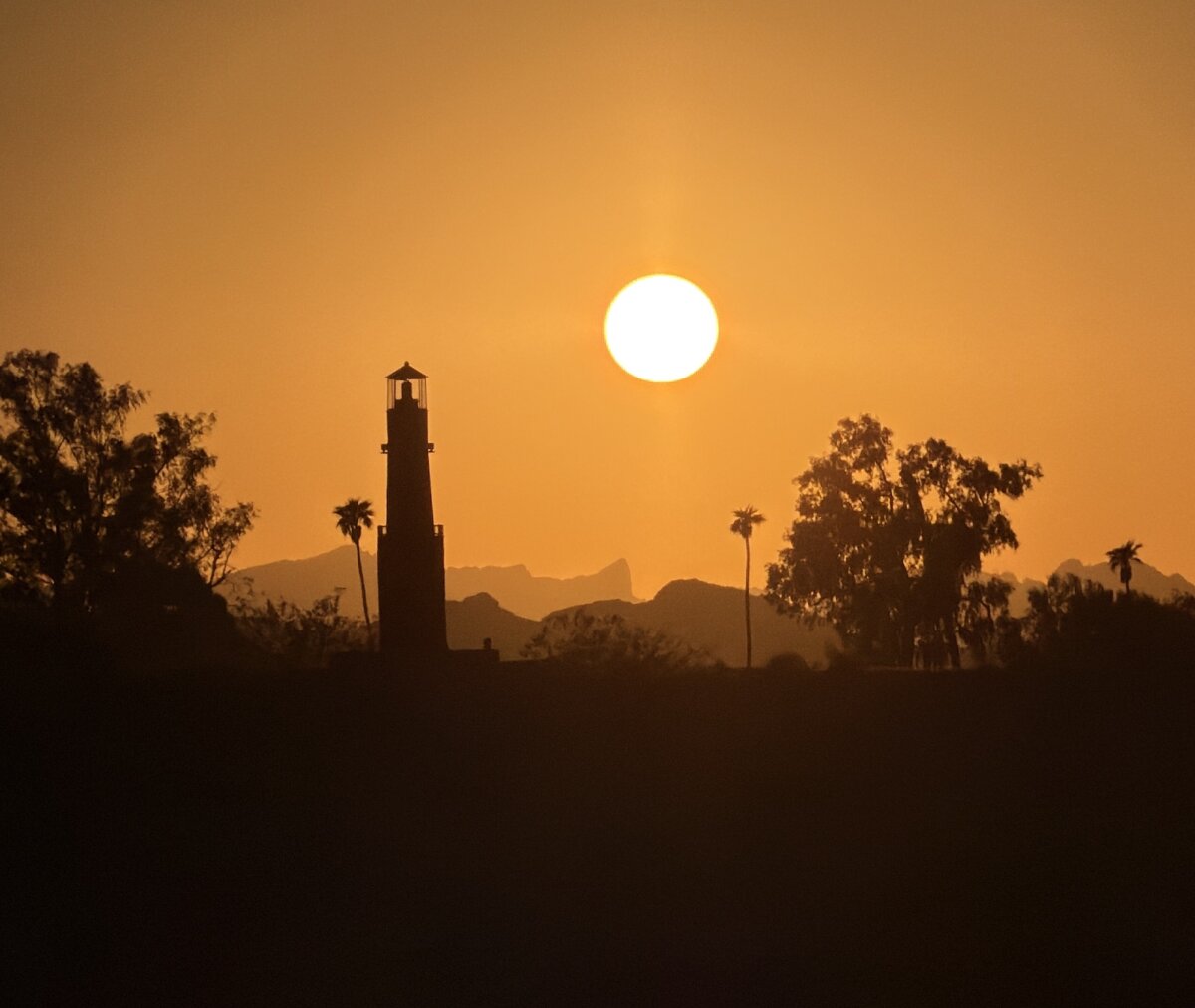

LAKE HAVASU CITY, Ariz.—The nostalgic paddle-wheeler Dixie Belle cuts a path across the golden waters of Lake Havasu between Arizona and California on its hourlong sunset cruise.
The air is calm, the skies clear in early October. Some passengers stand along the guardrails, watching the shoreline as the charter boat makes a sweeping loop around Pittsburgh Point in Lake Havasu City, Arizona.
Men in swim trunks and bikini-clad women race across the lake on personal watercraft in the waning daylight. Speedboats send tall arcs of water into the air as one lighthouse blinks, followed by another, like the first stars at twilight.
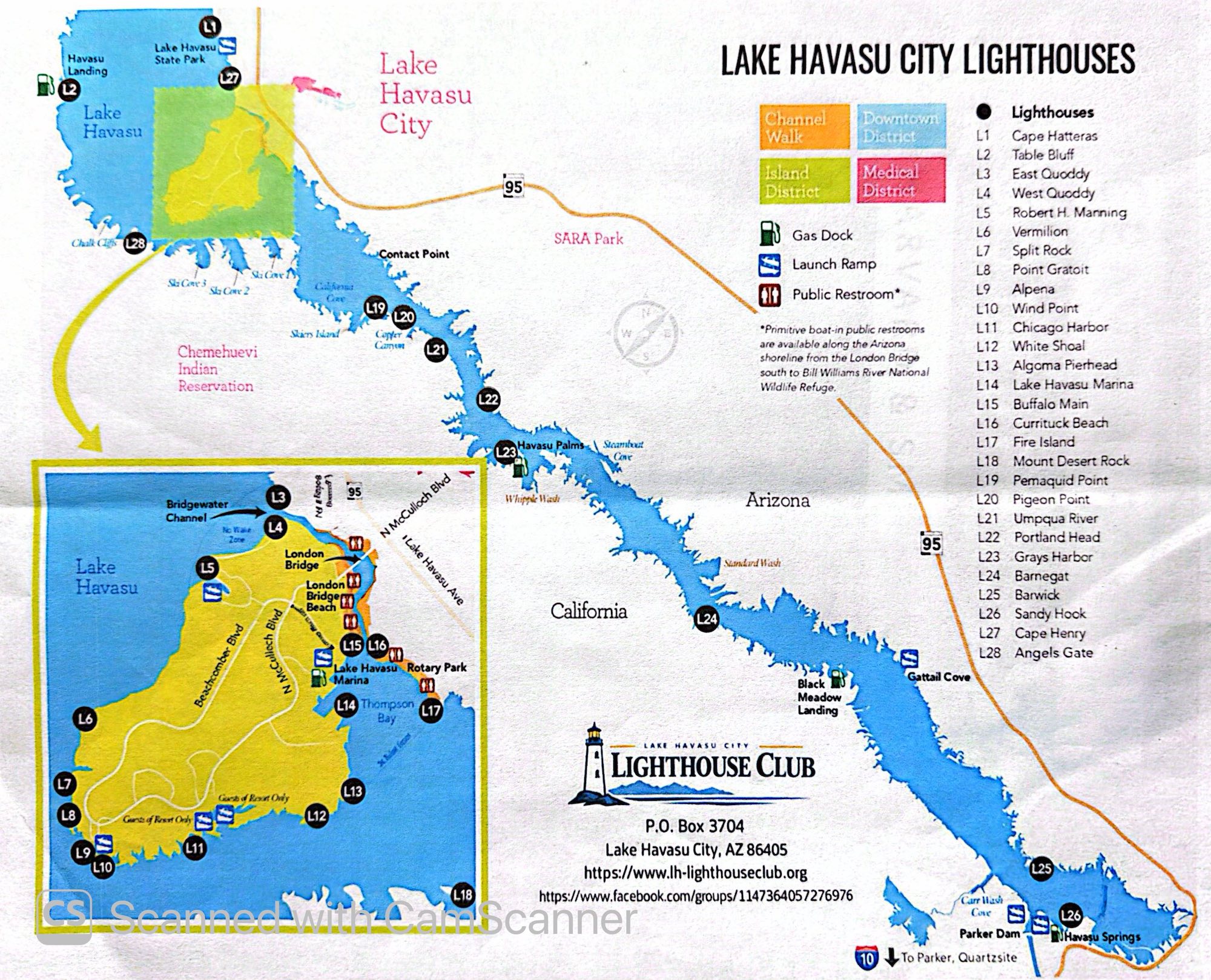
Twenty-eight scaled replica lighthouses line the 45-mile-long lake—21 on the Arizona side and seven on the California side.
They attract thousands of visitors each year. Their flashing beacons can be seen from miles away, helping boaters navigate safely back to shore.
“It originated as [a means of] boater safety—a navigational point for boaters at night to see and know where they’re at,” said Steve Parsons, vice president of the Lake Havasu Lighthouse Club.
“From there, it became an attraction.”
Since 2000, the club has built and maintained the replica lighthouses with limited funding and rising costs. The structures require routine repairs and are subject to vandalism and weather-related damage.
Each solar-powered light alone costs about $2,000 to replace, Parsons said.
Much of the maintenance falls to volunteers, without financial assistance from Lake Havasu City or California, said club member Rachael Hughes.
Despite the financial challenges, keeping the lights on remains a commitment for club members, she said.
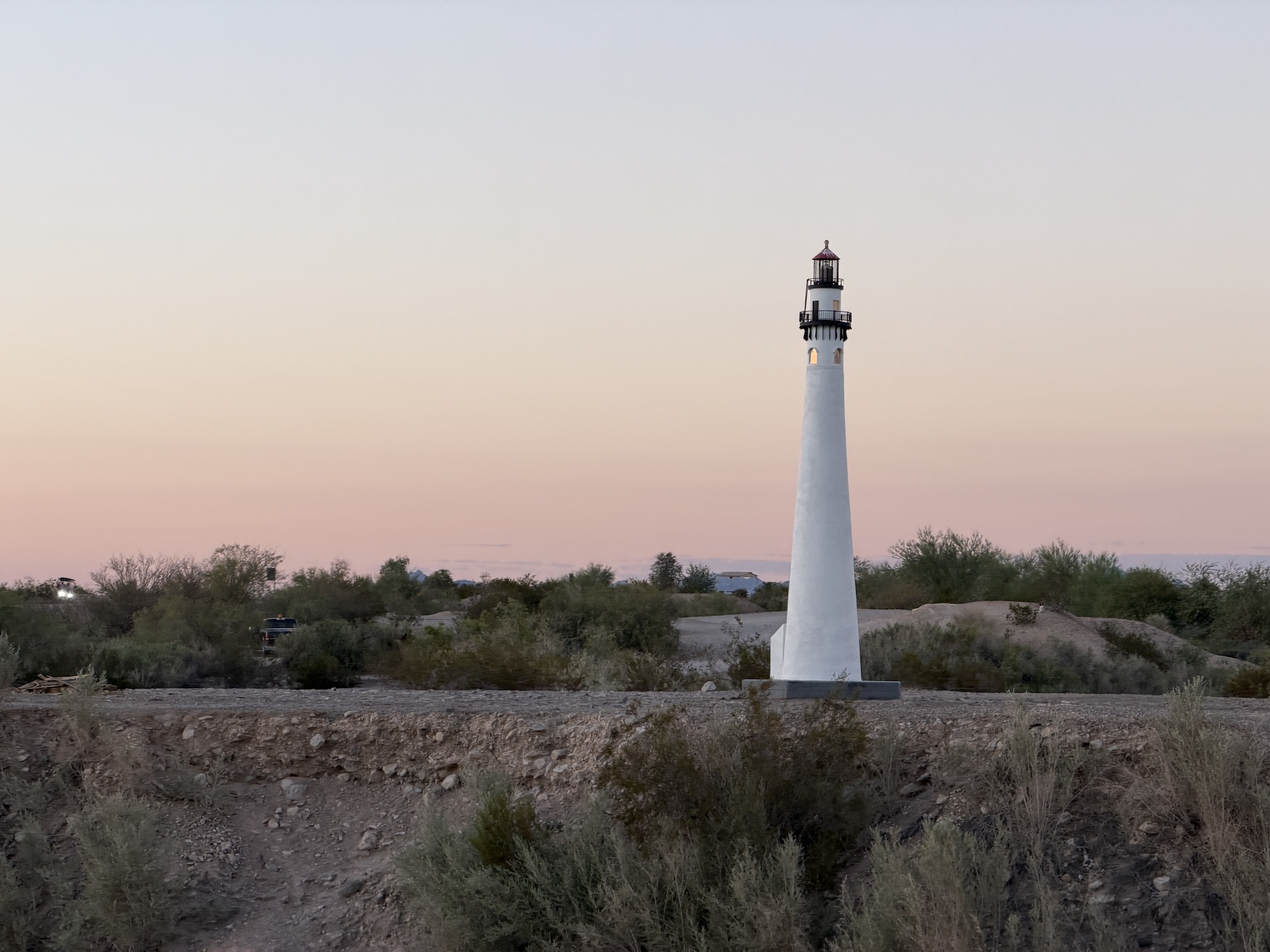 A scaled lighthouse, one of 28 along the shores of Lake Havasu in Lake Havasu City, Ariz., on Oct. 6, 2026. (Allan Stein/The Epoch Times)
The club selected West Quoddy Lighthouse as its first replica. Dedicated on June 30, 2002, it replaced a state navigational aid known as the North West Bridgewater Channel Entrance Light.
The newest addition, Angel’s Gate Lighthouse, was completed in January 2020, Hughes said. It replicates the 69-foot San Pedro lighthouse, built in 1913 at the entrance to the Port of Los Angeles.
The lighthouse project began with an idea and donations from local organizations, including the Rotary Club and Kiwanis.
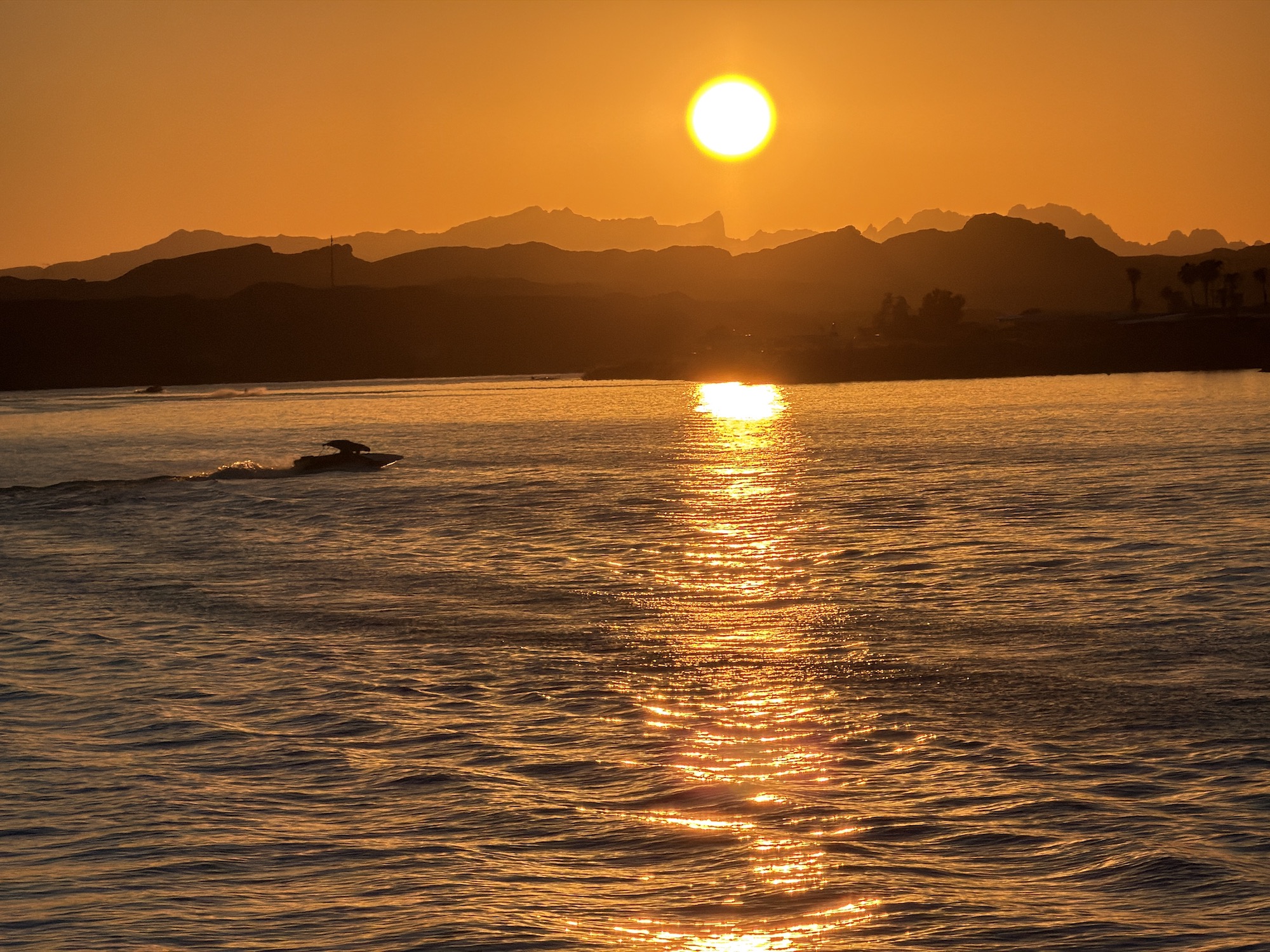 A speedboat carves a wake through the glimmering sunset waters of Lake Havasu on Oct. 6, 2026. (Allan Stein/The Epoch Times)
Honoring the Past
Hughes said the goal was to build exact smaller versions of lighthouses from across the country. The community embraced the project.
“Let’s build from all over the country—East Coast, [West Coast,] Great Lakes area—that’s kind of how it started,” she said.
“The club decided that they were going to keep East Coast lighthouses on the Arizona side. The West Coast would be primarily along the California side,” she said.
Materials used to construct the working lighthouses include brick, metal, stucco, and concrete. The replicas honor and reflect their historic counterparts, standing as miniature sentinels along Lake Havasu’s more than 400 miles of desert shoreline.
Parsons said the lake isn’t always as calm as it appears. Conditions can change quickly, turning serene waters turbulent—even violent.
That is particularly true during monsoon season, when sudden squalls can catch boaters off guard, he said.
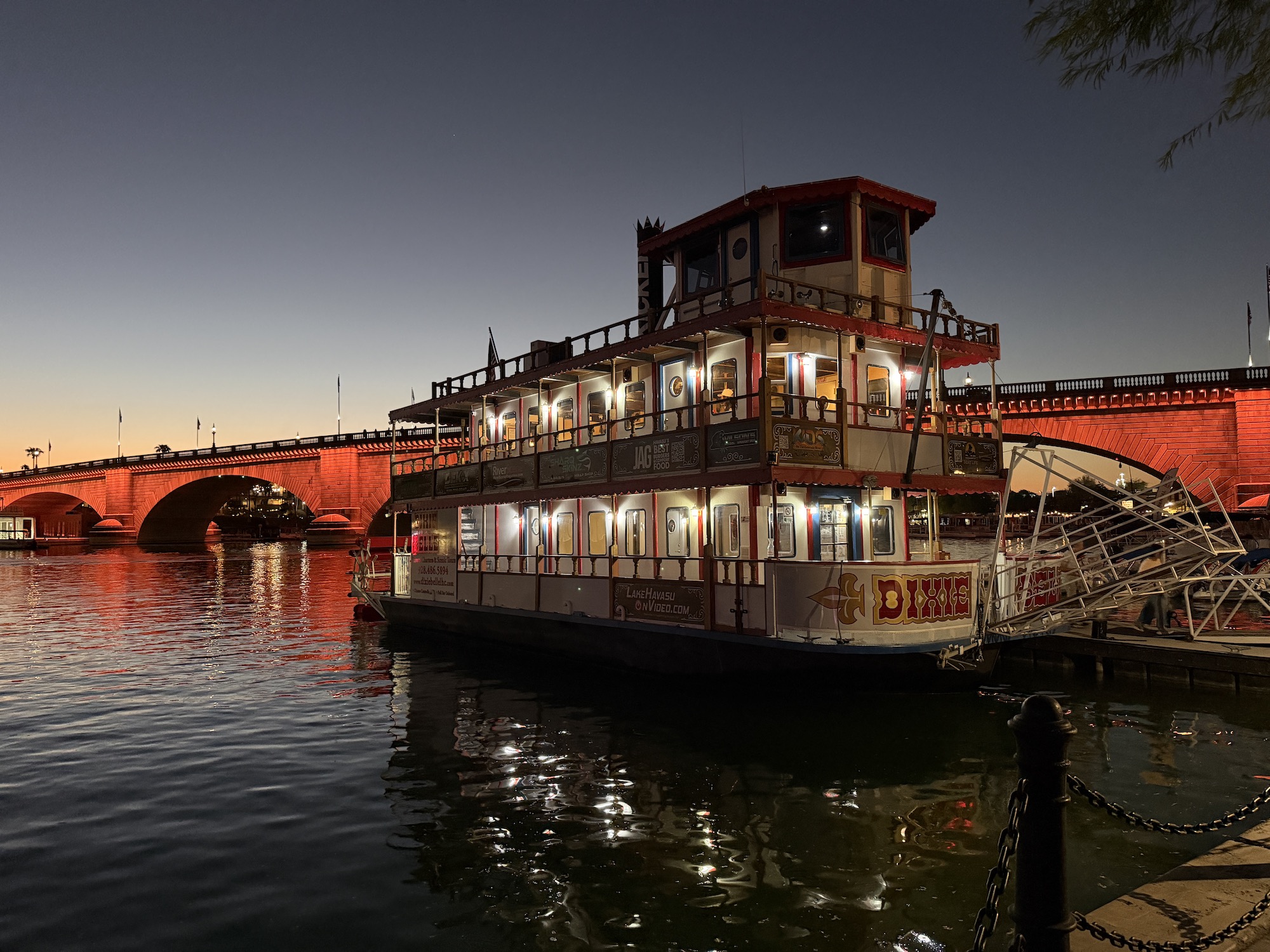 The paddle-wheeler Dixie Belle rests in its slip flanked by the London Bridge in Lake Havasu City, Ariz., on Oct. 6, 2026. (Allan Stein/The Epoch Times)
Maritime Relics
The replicas preserve a navigational tradition dating back centuries, even as many of the original lighthouses that inspired them have fallen out of service.
Lighthouses have long warned mariners of shallow waters and dangerous coastlines while guiding vessels safely into and out of harbors.
“The messages of these long-trusted aids to navigation are simple: either stay away, danger, beware, or come this way,” according to the National Oceanic and Atmospheric Administration (NOAA).
Lighthouses still guide mariners across oceans and lakes, but modern navigational aids—including buoys, radar beacons, and electronic systems—now perform many of the same functions.
NOAA says some 48,000 federal buoys, beacons, and electronic aids occupy more than 25,000 miles of waterways and serve more than 300 ports.
About 1,500 lighthouses were built in the United States after its founding, reaching their heyday around 1910.
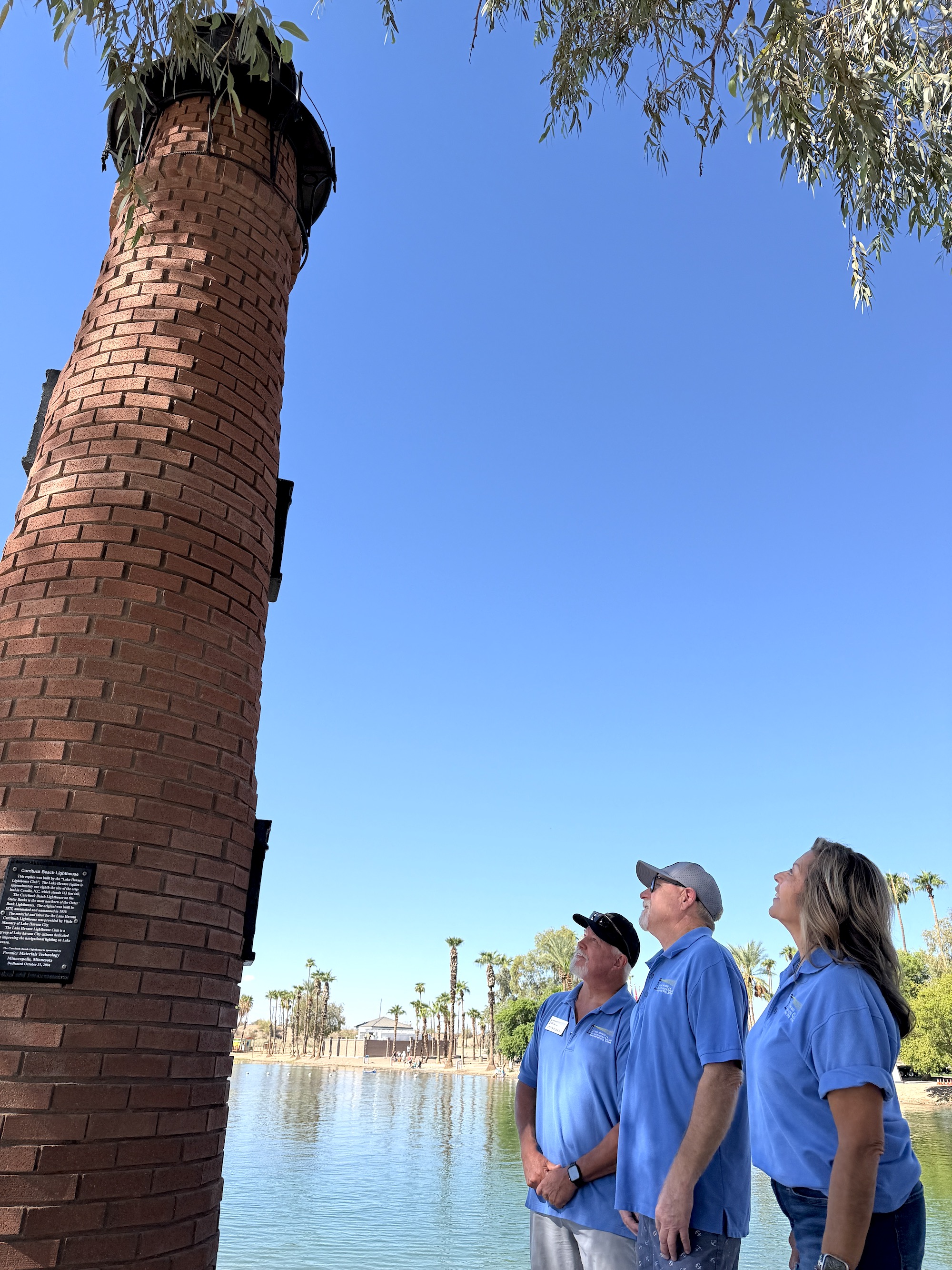 Lake Havasu Lighthouse Club Vice President Steve Parsons (L), President Carl Cornett, and club member Rachael Hughes inspect a miniature lighthouse with a brick facade in Lake Havasu City, Ariz., on Oct. 6, 2026. (Allan Stein/The Epoch Times)
As many lighthouses aged and became obsolete, Congress passed the National Historic Lighthouse Preservation Act in 2000.
The law established a process for transferring federally owned historic light stations to qualified new owners.
Public agencies and nonprofits receive priority, but the General Services Administration (GSA) is also authorized to sell properties through online public auctions.
Historic Opportunities
Since 2000, the GSA has conveyed more than 150 historic lighthouses no longer needed by the federal government, an agency official familiar with the program told The Epoch Times.
Of those, 81 were transferred at no cost to eligible public entities, including federal, state, and local governments and nonprofits. Another 70 were sold through public sales.
“GSA has the responsibility to dispose of government real estate assets that are no longer needed for mission purposes, including historic lighthouses. Historic lighthouses are unique in that they have sentimental and tangible value as historic properties and continue to serve as maritime aids to navigation,” the official said.
The process begins when the GSA issues a Notice of Availability, alerting interested parties to the property.
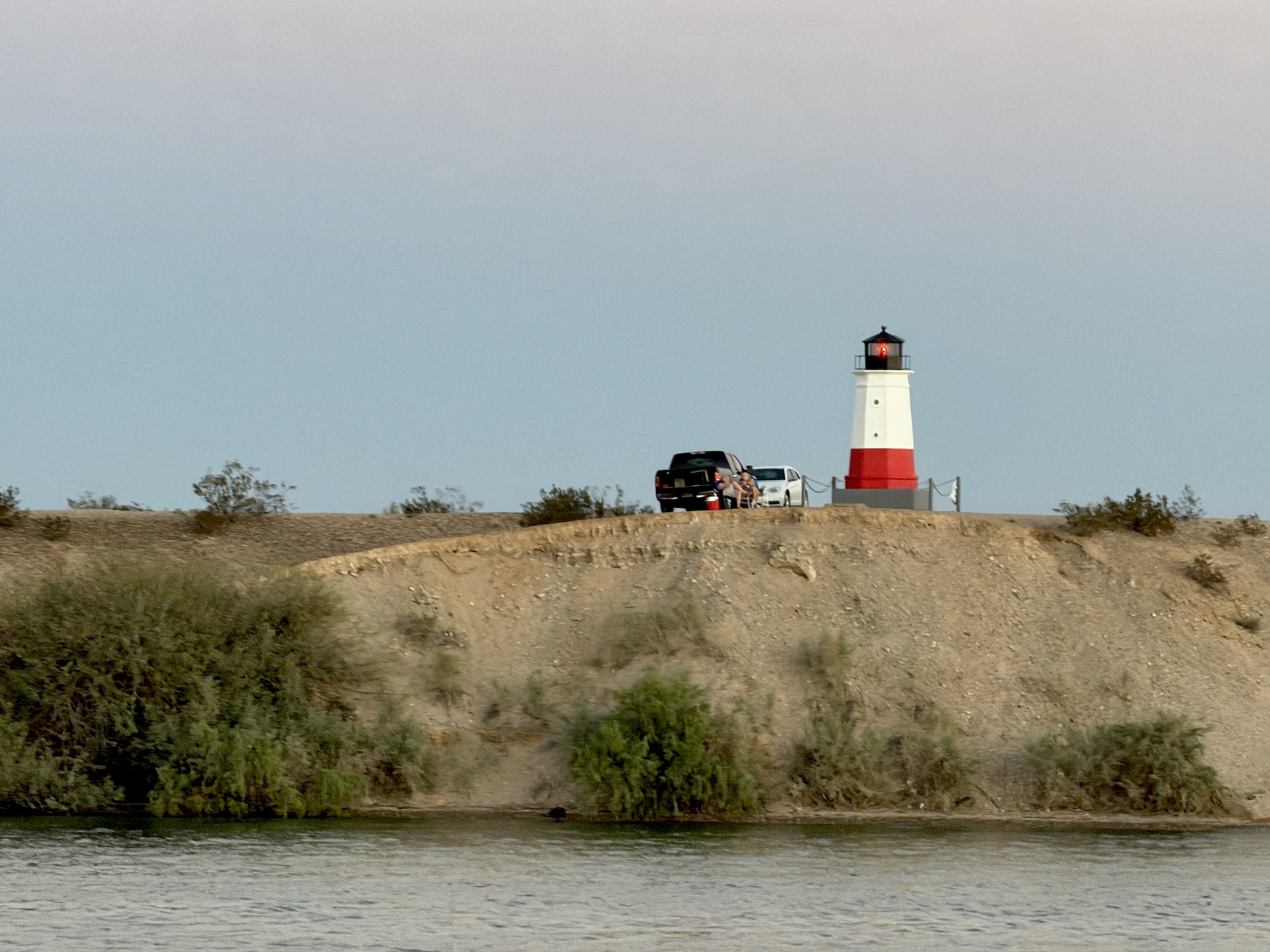
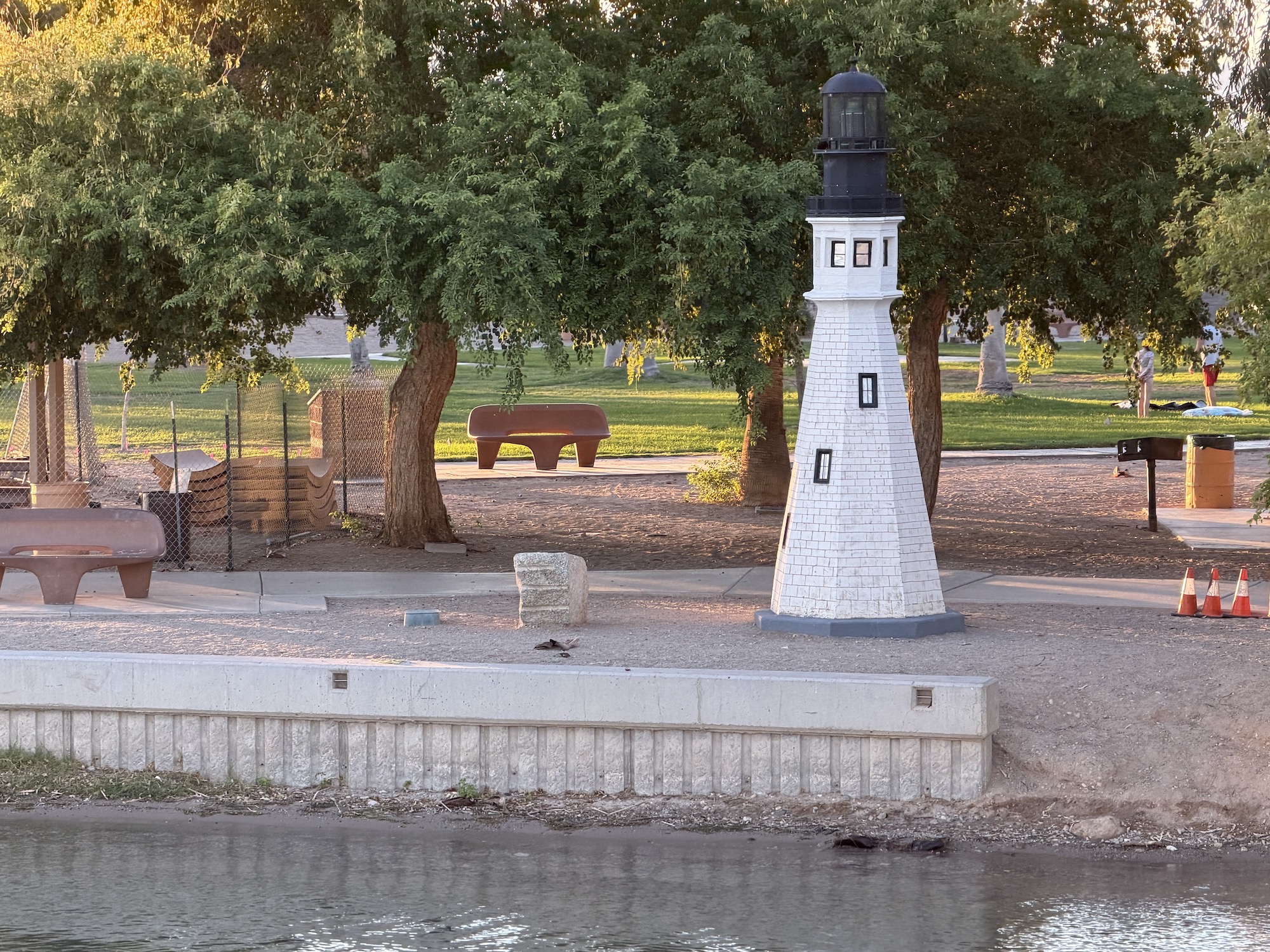 Two more examples of scaled working lighthouses built and maintained by the Lake Havasu Lighthouse Club in Lake Havasu City, Ariz., on Oct. 6, 2026. (Allan Stein/The Epoch Times)
Applications are evaluated on several factors, including the applicant’s financial status, proposed use, and ability to meet maintenance and historic preservation requirements.
“At the completion of the application process, the secretary of the Interior makes a recommendation for a selected steward to GSA and GSA conveys the lighthouse at no cost to the new steward,” the official added.
“If no applicant is approved, GSA will sell the property in a competitive public sale. All conveyances include historic covenants to protect historically significant features.”
In May 2023, the GSA offered a record 10 historic lighthouses—six to public entities and four at auction—during what it called “lighthouse season.”
“Lighthouses have long served as beacons for those at sea or on inland waters, marking dangerous coastlines and underwater hazards such as rocks and reefs as well as marking safe entries to harbors,” the GSA said in a statement.
“As technology advanced, and lighthouses became less essential to navigation, lighthouses often fell into neglect or were demolished.
“While the U.S. Coast Guard may continue to maintain active aids to navigation at or near specific lighthouses, the structures themselves are often no longer critical to the [Coast Guard’s] mission needs.”
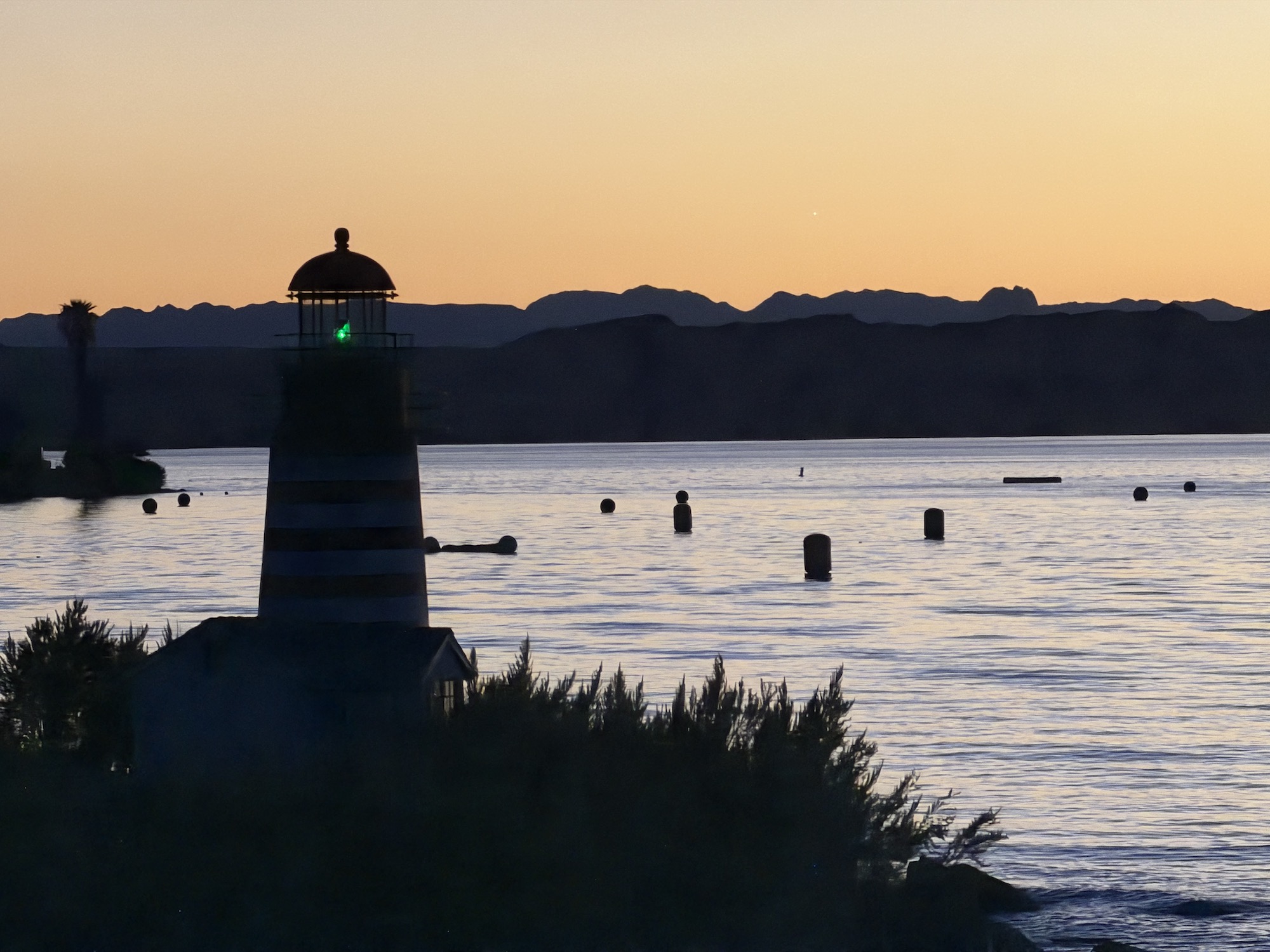 A scaled lighthouse with its flashing green beacon at dusk in Lake Havasu City, Ariz., on Oct. 6, 2026. (Allan Stein/The Epoch Times)
The GSA is promoting the property as a rare chance to own a historic New England lighthouse situated on 1.3 acres of waterfront land.
The 51-foot structure has guided mariners since 1827 and retains its traditional cast-iron lantern, now fitted with a modern beacon.
The property also includes a two-story, 1,626-square-foot historic residence with four bedrooms that once served as the lighthouse keeper’s home.
The site is listed on the National Register of Historic Places, according to the auction listing.
After the Sale
Maintenance costs vary depending on what a new owner plans to do, the GSA said.
“New owners should expect to have to paint, clean, and possibly restore broken or missing items. Most lighthouses do not have any utilities, so there would be a cost associated with making the lighthouse livable,” the agency added.
In 2011, Sheila Consaul purchased a 75-year-old lighthouse on the shores of Lake Erie at an online auction for $71,010, the GSA said.
“I was looking for a summer home and I wanted something historic, something interesting, something near the water,” Consaul told the GSA blog team.
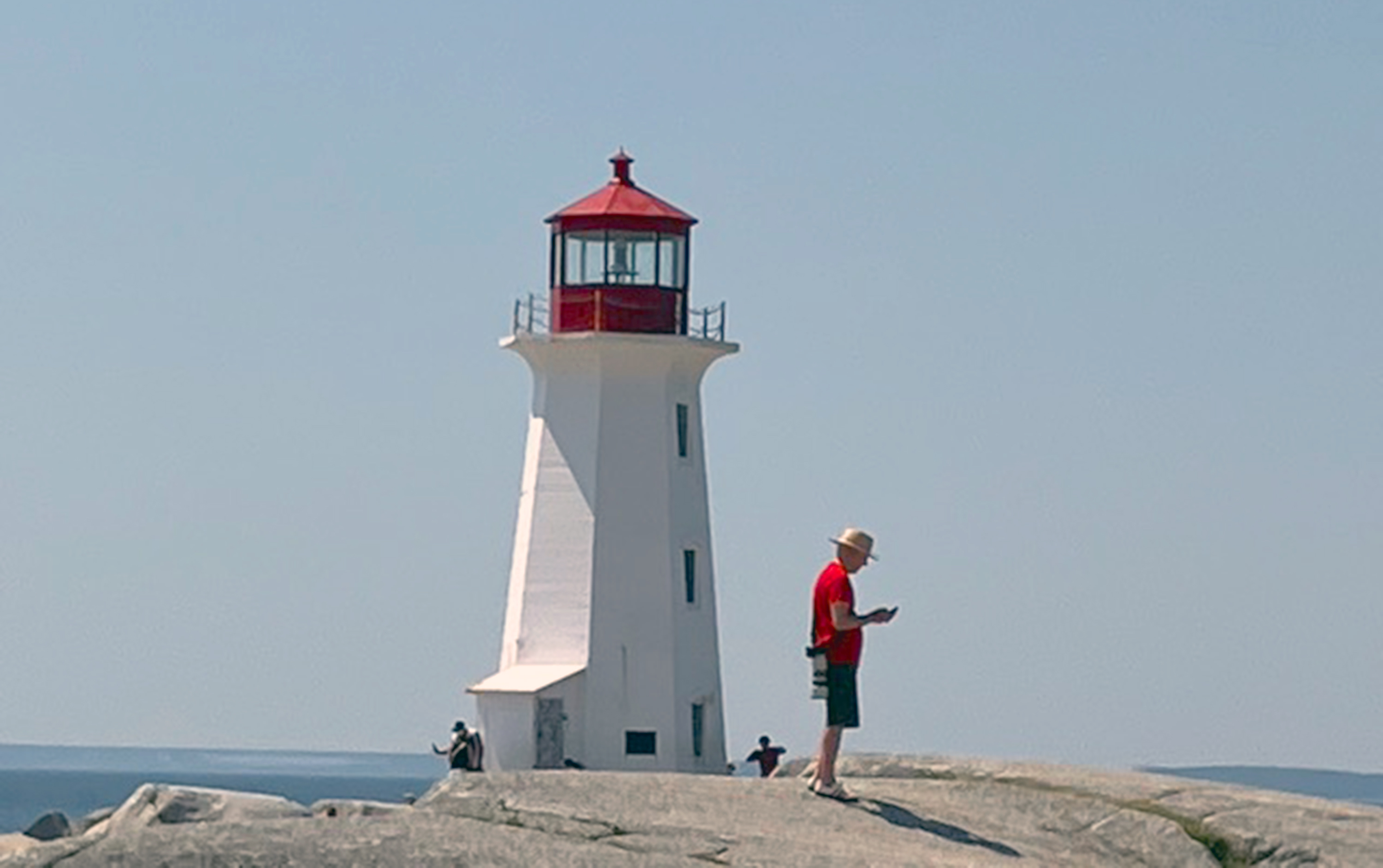 Nova Scotia is home to roughly 185 lighthouses, more than any other province in Canada. (Carol Ann Davidson/TNS)
Desert Beacons
Hughes chuckled when asked how 28 miniature lighthouses found their way into the desert.
She said it was no more unusual than having the original 1831 London Bridge as Lake Havasu City’s signature attraction.
In the 1960s, American businessman Robert McCulloch purchased the aging span for $2.46 million. McCulloch transported the bridge across the Atlantic to Lake Havasu and reconstructed it stone by stone.
McCulloch founded Lake Havasu City as a planned community in 1963. Today, the city, with its iconic bridge and lighthouses, draws about 850,000 visitors annually to a region informally known as Arizona’s “West Coast.”
For all their daytime charm, the lighthouses aren’t just for show.
After dark, their beacons provide vital reference points for boaters and first responders navigating the lake, Parsons said.
Parsons said a sudden squall on Lake Havasu can be “pretty scary.”
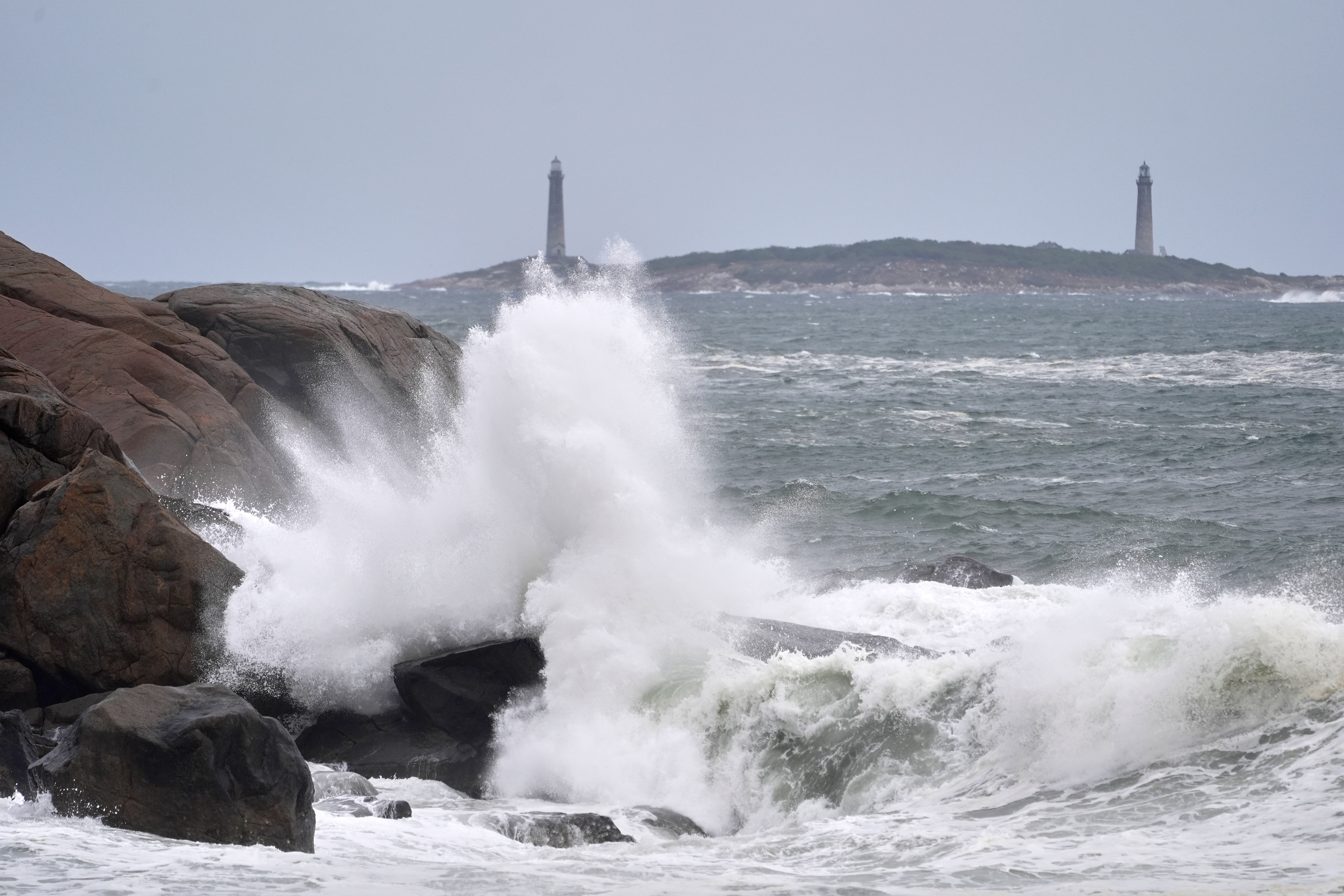 Surf breaks along the rocky coastline, with the twin lighthouses of Thacher Island visible in the distance, during the early stages of a nor’easter in Gloucester, Mass., on Sept. 25, 2026. (Robert F. BukatyAP Photo)
“These lights come on at night. They don’t necessarily come on in the daytime unless it gets really dark.”
Lake Havasu City Mayor Cal Sheehy said the club’s vision combines a distinctive historical attraction with practical navigational aids for boaters along Lake Havasu’s shoreline.
“The lighthouses bring our shoreline alive with visually pleasing replicas,” Sheehy told The Epoch Times.
But as the lighthouses age, the cost of preserving them continues to climb.
Hughes said the club has considered building more lighthouses, but it ultimately comes down to more funding.
The entire project depends on donations, she said.
“Like everything else, [prices] keep going up. We can’t continue to exist solely on the kindness of visitors,” Hughes said.