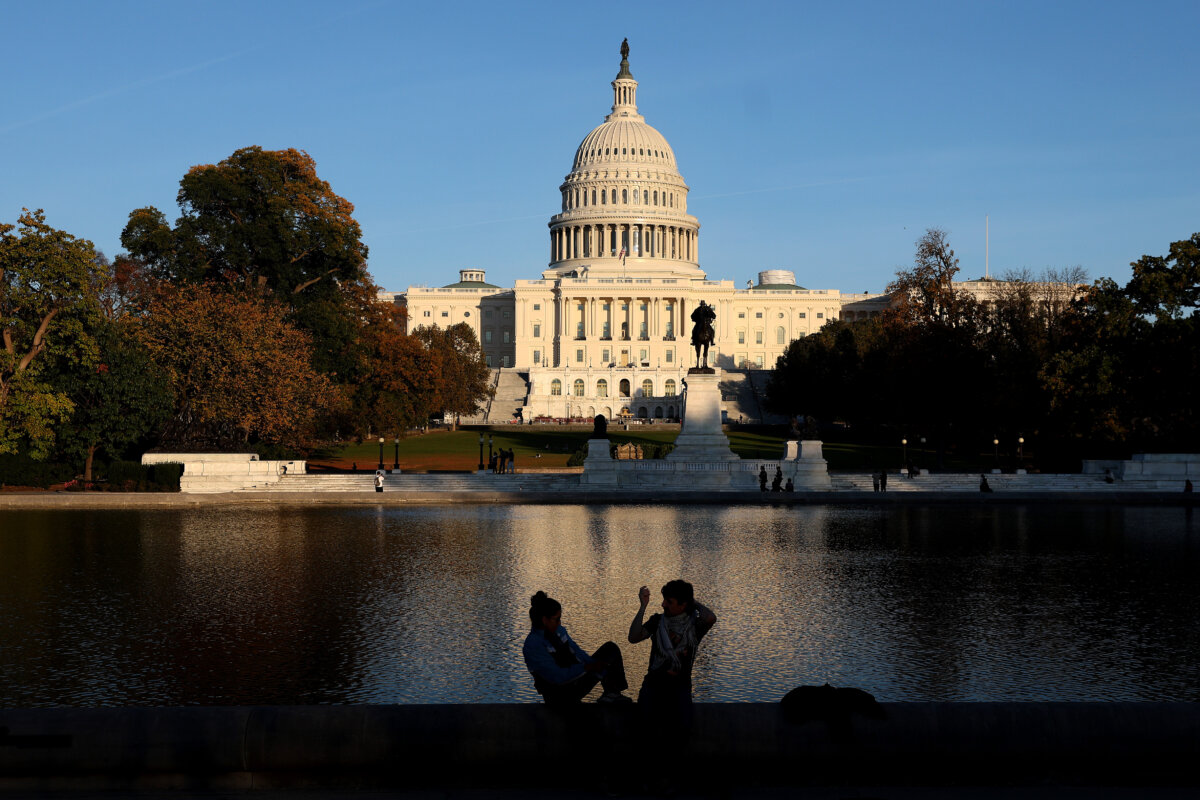

The newly elected U.S. senators from both major parties will bring a range of China-related positions to Capitol Hill, with priorities spanning restrictions on advanced technology, support for Taiwan, and efforts to reduce U.S. dependence on Chinese supply chains.
Differences in their views on how Washington should compete with Beijing include, in particular, tariffs and whether the United States should slow the development of advanced artificial intelligence, even if China does not.
Democrats won control of both chambers of Congress in the Nov. 3 midterm elections, and the incoming Senate class includes House members with years of China-related legislative records, as well as first-time federal lawmakers whose positions emerged mainly during the campaign.
Two Senate contests—in Alaska and Mississippi—remained uncalled as of Nov. 6. In Mississippi, Democrat Scott Colom held a narrow lead over incumbent Sen. Cindy Hyde-Smith (R-Miss.), with thousands of provisional ballots awaiting resolution.
Taiwan Draws Support From Both Parties
Some of the clearest positions come from lawmakers moving from the House to the Senate.
Sen.-elect Andy Barr (R-Ky.), a co-chair of the Congressional Taiwan Caucus, has repeatedly backed stronger U.S.–Taiwan ties. During a congressional visit to Taiwan in 2024, Barr affirmed Washington’s commitment to supporting Taiwan militarily, diplomatically, and economically. In May 2026, he joined other caucus leaders in urging Taiwan’s legislature to fully fund the island’s defense priorities.
Sen.-elect Chris Pappas (D-N.H.) has also pursued Taiwan legislation. In May 2025, he joined Rep. Don Bacon (R-Neb.) in introducing the Taiwan Representative Office Act, which would direct the State Department to negotiate changing the name of Taiwan’s de facto embassy in Washington to the Taiwan Representative Office.
The name-change legislation would not establish formal diplomatic relations or alter the U.S. position on Taiwan’s international status.
Sen.-elect Juliana Stratton (D-Ill.) said during the campaign that Washington should bolster ties with Taiwan, support its self-defense capabilities, and help secure semiconductor supply chains.
At the same time, she criticized President Donald Trump’s broad tariff approach toward China and called instead for investments in American infrastructure, advanced technology, and workers.
Sen.-elect Annie Andrews (D-S.C.) told CNN in August that she considered China “an existential threat” and described Taiwan as “a courageous democracy.” Unlike Barr and Pappas, Andrews has no previous congressional voting record.
Technology and Supply Chains
Technology restrictions also draw support across party lines.
Sen.-elect James Talarico (D-Texas) says his Senate priorities include legislation to strengthen export controls and prevent advanced AI chips from reaching U.S. adversaries. His campaign platform also calls for investment in science and technology education and stronger protections against AI-related threats to American workers.
On the Republican side, Sen.-elect Kevin Hern (R-Okla.) introduced the Countering Communist China Act in February 2024 while serving in the House and as chairman of the Republican Study Committee. The legislation proposed restrictions involving Chinese investment, sensitive technologies, supply chains, and Chinese Communist Party influence in American institutions.
Also included were proposed sanctions against Chinese officials and entities involved in the fentanyl trade.
Sen.-elect Harriet Hageman (R-Wyo.) has focused heavily on critical minerals and domestic mining.
During a July 2025 opening ceremony at Wyoming’s Brook Mine, where operators plan to produce coal and extract rare-earth elements, the lawmaker said reducing foreign supply-chain dependence was essential.
“Dependency is vulnerability. That changes today,” Hageman said.
In February 2026, she supported the House-passed Critical Mineral Dominance Act, which sought to streamline permitting for domestic mineral production and reduce reliance on foreign suppliers.
Pappas, meanwhile, became the first House Democrat to cosponsor the Securing Essential and Critical U.S. Resources and Elements Minerals Act of 2026 in February. The bipartisan legislation proposed a $2.5 billion strategic reserve intended to reduce U.S. dependence on China for critical minerals and strengthen domestic supply chains.
Wider Divide on AI
AI has produced one of the sharper differences among the incoming lawmakers.
The AI platform of Sen.-elect Abdul El-Sayed (D-Mich.) calls for controls on advanced computing, identity-verification requirements for computing providers, independent safety testing, and international cooperation.
In an interview with CBS’s “60 Minutes,” conducted on Oct. 22 and broadcast on Nov. 1, El-Sayed called for a “full-on pause” in frontier AI development—the work on the most advanced AI systems.
In an extended version of the interview released afterward, CBS interviewer Ross Douthat asked what would happen if Washington paused development while Beijing continued.
El-Sayed said he did not take that concern as seriously as some others, arguing that much of China’s progress has involved reproducing American technology. He also advocated an international agreement involving China to limit the risks of advanced AI.
Sen.-elect Adam Hamilton (D-Kan.) took a different approach during a Sept. 12 Senate debate with incumbent Sen. Roger Marshall (R-Kan.).
Hamilton also called AI a serious potential threat and said safeguards were needed, but argued that the United States could not stop developing the technology while competitors continued.
“Russians and China, the Chinese are going to be working on this,” Hamilton said. “As Americans, we have to do the same.”
Hamilton added that the United States must continue its work on AI while establishing appropriate safeguards.