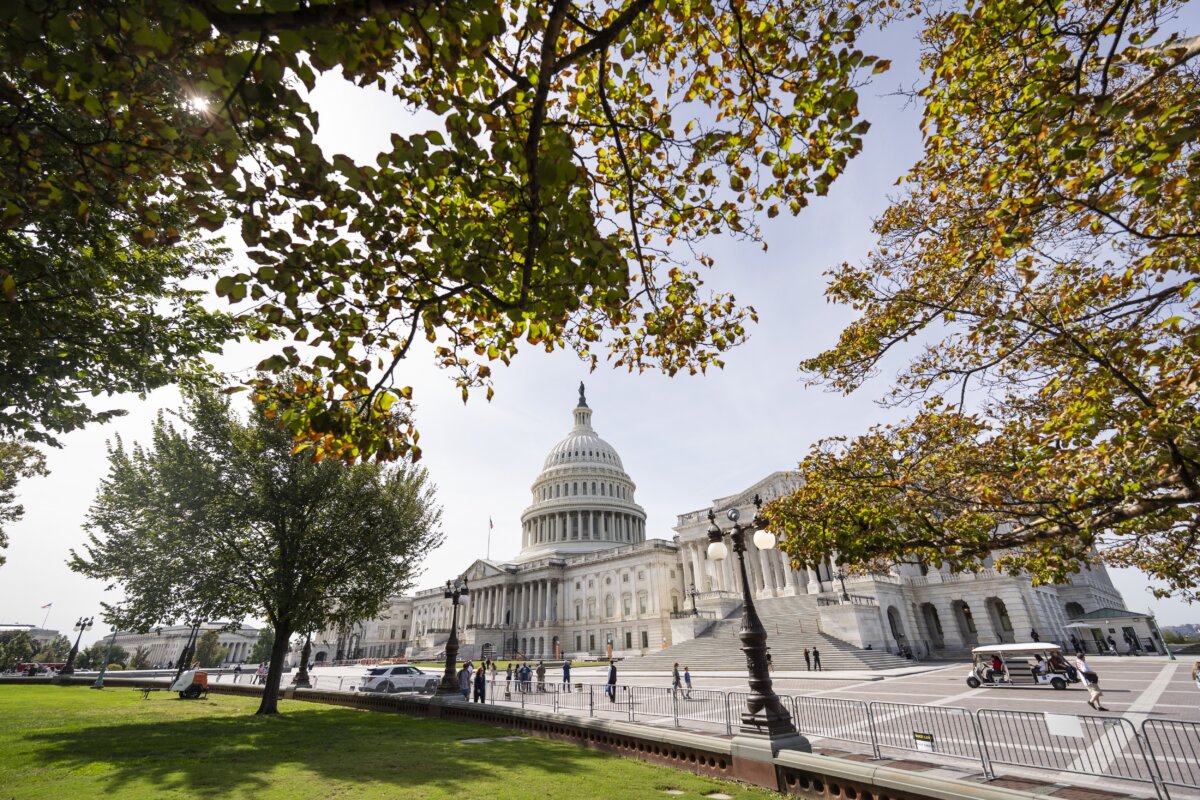

More than a week after the 2026 midterm election, races for the House, Senate, and two governorships remain undecided.
From California to North Carolina, officials are still processing outstanding ballots. Some states have races with such a narrow margin that the absentee and provisional ballots could decide the election, or lead to recounts.
Alaska and Maine are tabulating ranked-choice ballots to decide winners, and two Louisiana congressional districts are headed to a December runoff.
As of Nov. 11, Democrats have already changed the balance of power at federal and state levels.
Democrats will now hold substantial majorities in both the House and Senate in the upcoming term and won a majority of gubernatorial races for the upcoming year.
Alaska Senate Race
In the Alaska Senate race between Democrat Mary Peltola and Republican Sen. Dan Sullivan, recent counts show that Peltola led Sullivan by about 4,250 votes. Those figures reflect an estimated 84 percent of the vote counted.
State officials are still awaiting the release of absentee ballots, with some being mailed from outside the United States. Alaska accepts ballots as late as Nov. 18, which will be 15 days after the Nov. 3 election.
The state uses Rank Choice Voting, where voters put candidates in order of preference, which takes more time to count ballots.
Alaska does have an automatic recount policy, but only in the event of a tie vote, or if a candidate—or 10 qualified voters—requests the recount within five days of the state race certification.
House
A number of House races have yet to be called; however, it is not enough for the balance of power to swing back to Republicans, even if the party wins every outstanding district.
North Carolina
North Carolina has the most undecided races, with four still unfinished in Districts 3, 5, 7, and 10. All are where Republican incumbents are being challenged.
The state does not have an automatic recount policy, but the results can be challenged by the candidate if the margin is not more than one percent; however, the state is scheduled to certify results by Nov. 24.
California
In California, Districts 4 and 23 are as yet undecided, one currently held by a Democrat and the other by a Republican.
The Fourth District, however, will continue to be Democratic, as voters are deciding between two candidates from that party.
The state is still processing mailed ballots, and counties are required to certify results by Dec. 3, and the state must certify its results by Dec. 11.
Louisiana
Two races are still undecided in the Pelican State. In Districts 5 and 6, the candidates will compete in runoff elections.
State Reps. Pat Moore and Gabe Firment have moved to the Dec. 12 runoff to decide District 5’s representative.
Likewise, former East Baton Rouge Metro Council member Chauna Banks and State Sen. Blake Miguez are both still in the race for District 6.
Other Undecided House Races
Alaska’s at-large congressional district, Maine’s 2nd, Colorado’s 4th, Minnesota’s 1st, and Tennessee’s 4th are all still undecided.
Both Alaska and Maine have ranked-choice voting procedures that could impact when the winner is determined.
In Alaska, Nick Begich, a Republican, is currently in the lead.
Maine’s District 2 race is also still in limbo, with state officials announcing two days after the election that the race would proceed to ranked-choice tabulation.
Former Republican Gov. Paul LePage held a slight lead over former Maine secretary of state Matthew Dunlap, a Democrat, at the time the race went to a ranked-choice count.
In Colorado, District 4 has been closely watched as Eileen Laubacher leads incumbent Rep. Lauren Boebert (R-Colo.) by just over 3,000 votes.
In Minnesota, District 1 is yet to be decided between Democratic candidate Jake Johnson and Republican Brad Finstad.
As of Nov. 10, there was about one tenth of one percent separating the two in vote counts.
In Tennessee’s Fourth District, Democrat Victoria Broderick leads incumbent Rep. Scott DesJarlais (R-Tenn.) by about 285 votes.
Gubernatorial
As of late Tuesday, the governorships of Kansas and Alaska are both undecided.
Alaska
In Alaska, Democratic candidate Jonathan Kreiss‑Tomkins leads by around 50,661 votes over Republican Bernadette M. Wilson as of early Wednesday.
If neither of the candidates receives more than 50 percent of the votes, the race will move on to ranked-choice calculations to decide the winner.
Kansas
In Kansas, Democratic state Sen. Cindy Holscher led over Republican Senate President Ty Masterson by less than one percentage point as of late on Nov. 10.
On Nov. 4, the day after the election, the state announced it would audit the close race, requiring a hand count of selected ballots in six close Kansas races, including the gubernatorial race.
It is required that the audit be completed and the counties certify their results before Nov. 16.
Given the results of the recent election, Democrats will hold at least 28 governorships in 2027, possibly as many as 30, if both Kansas and Alaska go to Democrats.
Before the election, Democratic governors represented about 60 percent of the nation’s population, while Republicans held 26 of the nation’s 50 governors’ offices.
Thirty-six states, or about 80 percent of the nation’s population, decided their governorships in the recent election, with 19 of those offices open with no incumbent.
Zachary Stieber contributed to this report.