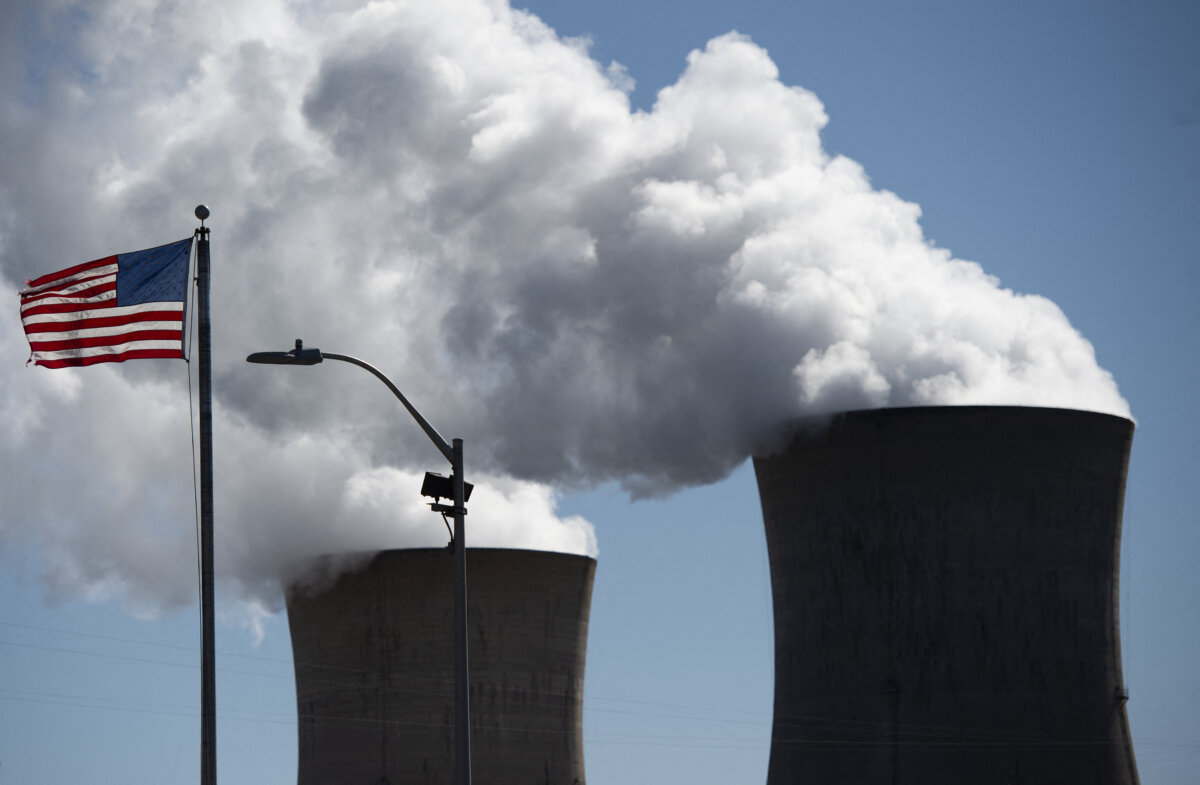

An emergency was declared at a U.S. Department of Energy nuclear site in South Carolina following a laboratory fire, officials said.
The emergency was ultimately terminated at 9:45 p.m. ET on Wednesday, or around four-and-a-half hours after the emergency was declared, said the Savannah River Site, which is operated by the federal National Nuclear Security Administration, itself overseen by the Energy Department.
“Protective actions have been lifted, and site barricades have reopened,” it said, adding that officials with the Savannah River Site are responding and have notified both local and state officials.
The emergency arose when a fire was reported at the Savannah River National Laboratory. Surveys of radiation levels showed there were no detectable levels of nuclear contamination, authorities said.
“Oncoming shift workers should report to work as usual, and all other employees should report to work as scheduled” on Oct. 29, the site said.
The Savannah River Site is a large complex where the federal government once produced materials used in nuclear weapons, primarily tritium and plutonium-239, the Department of Energy said.
The site was opened in the early 1950s as the Cold War was ramping up between the United States and the Soviet Union and has a decades-long record of backing American strategic deterrence, according to the Nuclear Security Administration website.
Nowadays, the site is used as a key Energy Department “industrial complex responsible for environmental stewardship, environmental cleanup, nuclear waste management, and disposition of nuclear materials,” the department states.
Five reactors and support facilities were constructed as part of the site to produce the plutonium, tritium, and other materials, while irradiated materials were moved from those reactors to two plants, known as “canyons.” Around 36 metric tons of plutonium were produced from 1953 until 1988.
The emergency declaration issued on Wednesday is the second-highest of three categories of emergencies at the site and indicates “something more serious has occurred,” according to the site’s community preparedness information. The emergency declaration ended Wednesday night after the fire was extinguished.
Before the emergency was terminated on Wednesday night, officials had set up barricades at site entries, while river, rail, and air traffic in the area of the nuclear site was restricted, authorities said in a previous statement.
Authorities said in that statement that local residents should monitor local radio or television stations for updates, while employees who weren’t involved in the emergency response efforts were “sheltered as a precaution.”
Edwin Lyman, director of nuclear power safety at the Union of Concerned Scientists, told The Associated Press that if there is a fire near radioactive material, “you need to take extreme precautions because of the potential dispersal of that material and the potential for contamination, potential for the public to be exposed.”
But Lyman said it was a positive development that there was no off-site contamination found, adding the site has a buffer zone between the facilities and public places. The Union of Concerned Scientists is an organization that seeks to reduce nuclear and space weapons, among other policy initiatives.
The Associated Press contributed to this report.