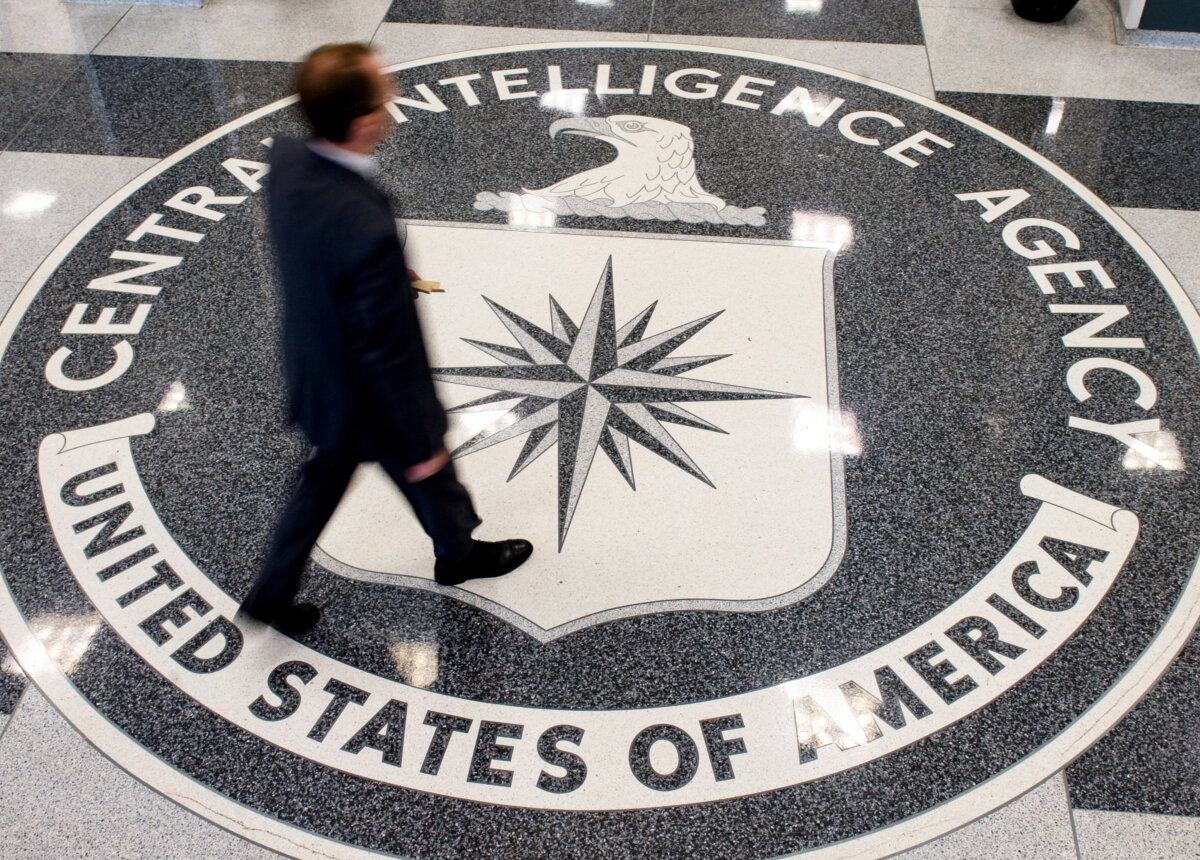

WASHINGTON—Democrats in the House of Representatives are preparing to lead expansive probes into the U.S. intelligence community’s operations under President Donald Trump when they take the majority in January, House Intelligence Committee Ranking Member Jim Himes (D-Conn.) has announced.
In an interview with The New York Times published on Nov. 11, Himes said Democrats plan to investigate an “extremely aggressive” use of covert operations by the CIA during the second Trump presidency.
Covert operations by the U.S. intelligence community may include secretive lethal strikes and other paramilitary actions meant to advance foreign policy objectives.
Himes told the newspaper that he also intends to probe donations that defense and intelligence community contractors have made to various construction projects the president has pursued in office, including a new ballroom for the White House and a triumphal arch. Himes said this line of inquiry will focus on whether contractors were threatened or promised anything in return for donations to these construction projects.
The House and Senate intelligence committees typically hold hearings behind closed doors. Oversight of U.S. covert operations abroad would likely require such secretive proceedings.
Himes told the paper that a congressional probe into contractor donations to Trump’s Washington construction projects could involve public hearings.
In a Nov. 10 interview with Reuters, Himes said Democrats also intend to scrutinize intelligence community staff reductions under the Trump administration.
The Office of the Director of National Intelligence, which coordinates the intelligence-gathering operations of the various U.S. intelligence agencies, has cut hundreds of jobs under the Trump administration.
Himes suggested that these staff cuts entailed retaliatory firings.
“We’re going to tell the story of the patriots who were fired because they said something that was inconsistent with what the president wanted to be true,” Himes told Reuters.
The congressman said remaining intelligence community employees feel pressured to self-censor and withhold analyses that break with the Trump administration’s policy objectives.
“There’s absolutely evidence that analysts are hesitant to write on topics that they think might be controversial,” Himes told Reuters. “There’s absolutely evidence of a decline in morale in the analytic community because of the pressures that they are under.”
The Office of the Director of National Intelligence did not respond to a request for comment by publication time.
Other Democratic Party leaders in the House have previewed similar oversight plans for when they take the majority in January.
Last week, House Armed Services Committee Ranking Member Adam Smith (D-Wash.) announced plans for expansive scrutiny of the U.S. military under Trump’s leadership. Among the oversight topics, Smith said Democrats would review the war with Iran, strikes on suspected drug smuggling boats in the Western Hemisphere, and the process by which contracts have been awarded for military projects.
Rep. Thomas Massie (R-Ky.) forced a vote on articles of impeachment against Secretary of War Pete Hegseth, asserting that he has committed high crimes and misdemeanors in his handling of issues such as the Iran war and the boat strikes. The House, which is currently controlled by Republicans, voted on Nov. 10 to send Massie’s impeachment articles to committee, where they’re unlikely to progress with the time remaining in this session of Congress.
Democratic lawmakers have also signaled plans to scrutinize Homeland Security Secretary Markwayne Mullin, former Homeland Security Secretary Kristi Noem, White House chief of staff Stephen Miller, and Tesla CEO Elon Musk in his capacity as an adviser on government efficiency policies.
White House counsel Will Scharf sent a letter to Rep. Robert Garcia (D-Calif.) on Nov. 9, warning that certain Democrat-led efforts to scrutinize the administration could constitute an effort to “abuse the legislative process to intimidate and to interfere with the lawful functioning of government.”
Garcia, in response, asserted that Congress has a broad authority to conduct oversight.