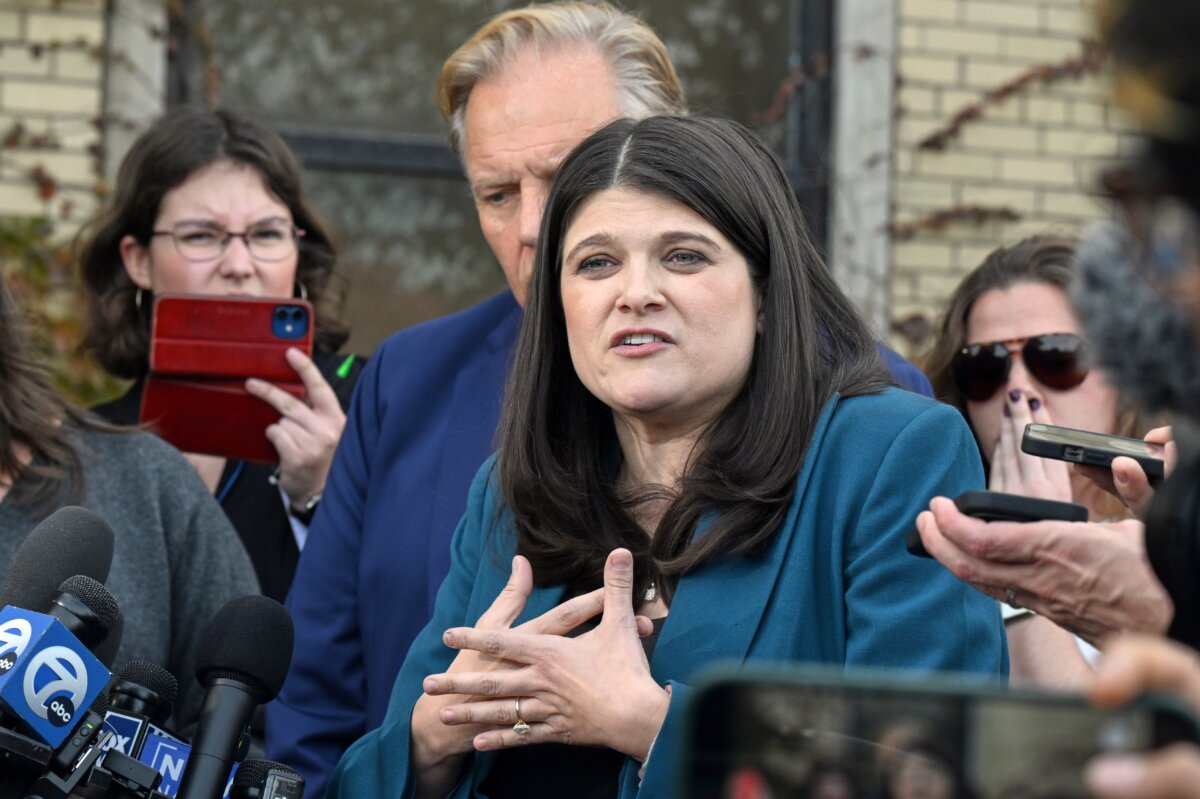

Rep. Haley Stevens (D-Mich.) said Nov. 2 that she stood by her decision to back Republican Mike Rogers over fellow Democrat Abdul El-Sayed in the U.S. Senate race despite criticism from many Democrats.
“My decision to withdraw my endorsement of Abdul El-Sayed and support Mike Rogers has angered many Democrats. I understand why,” Stevens said in a lengthy post on X.
“But it was not impulsive, and it was not made for me by anyone else. It was a decision of conscience.”
Stevens said she remained “a proud Democrat” and that her endorsement of Rogers had not changed her political views. The congresswoman said she tried putting her party first and endorsed El-Sayed after losing the Democratic primary in early August, but she later felt “shut out” by his campaign.
“There was little effort to listen to the voters who supported me or bridge the real disagreements our primary had exposed,” she said.
Stevens said her decision to withdraw support for El-Sayed was partly driven by an advertisement produced by an outside group that tied grocery prices to U.S. support for Israel.
She also took issue with El-Sayed’s campaign ad featuring conservative commentator Tucker Carlson, as well as his decision to campaign with podcaster Hasan Piker, whom she alleged was anti-Semitic. Stevens cited Piker’s comparison of efforts to win over Jewish voters in West Bloomfield to canvassing a Ku Klux Klan neighborhood.
While El-Sayed had condemned the comparison, Stevens said his decision to campaign with Piker raised “serious questions about his judgment” and ability to bring people together.
“I asked Abdul to reject that rhetoric clearly. I wasn’t asking him to change his platform. I was offering him an opportunity to reassure people, reject division, and demonstrate the leadership required of a United States Senator,” she said.
“He ultimately said he disagreed with the outside ad. I welcomed that. But by then, I had also been told I was no longer welcome at his campaign events.”
A spokesperson for El-Sayed said on Nov. 1 that the ad Stevens targeted, which criticized U.S. support of Israel and said the money was going to “killing Palestinians,” was not affiliated with his campaign.
Stevens also rejected claims that her fiance played a role in her decision to back Rogers.
The congresswoman said she decided to support Rogers in the hope that he would follow late Republican Sen. John McCain’s (R-Az.) example of putting the country’s needs before political party.
“I still believe in the promise of the Democratic Party. But fulfilling that promise will require something more than loyalty tests and demands for blind obedience,” she said. “It will require true leadership.”
El-Sayed’s campaign did not immediately respond to a request for comment.
El-Sayed told reporters during a campaign stop over the weekend that he wanted to focus on how he plans to bring down costs for people, not on Stevens.
When asked whether Stevens had betrayed the Democratic Party, he said, “At the end of the day, I actually don’t think about Haley Stevens.”
Rogers said in a Nov. 1 social media post that he was honored to receive Stevens’s endorsement and commended her courage in putting Michigan first.
Zachary Stieber and Tom Gantert contributed to this report.