
CAVE CREEK, Ariz.—Old soldiers may someday fade away, as Gen. Douglas MacArthur famously observed, but their legacy survives in monuments, memories, and the stories they leave behind.
Two projects underway in Arizona seek to preserve military legacies in different ways. One will capture veterans’ thoughts and feelings through artwork in a desert garden setting.
The other will honor the U.S. Navy’s attack submarine force and its role in ending the Cold War with a monument dedicated to the USS Phoenix.
The Cave Creek Museum has set aside the grounds in front of the museum for a Veterans’ Memory Garden, a place of healing and remembrance built from stone, iron, and raw experience.
The garden will feature seven stations—six honoring the branches of the U.S. military and a seventh paying tribute to the men and women from Cave Creek who answered the call to serve.
First proposed in 2022, the Veterans’ Memory Garden broke ground at the nonprofit museum on Feb. 28, 2023.
Cave Creek Museum volunteer Stacy Holland said the project is being fully funded by donations and is more than 50 percent complete.
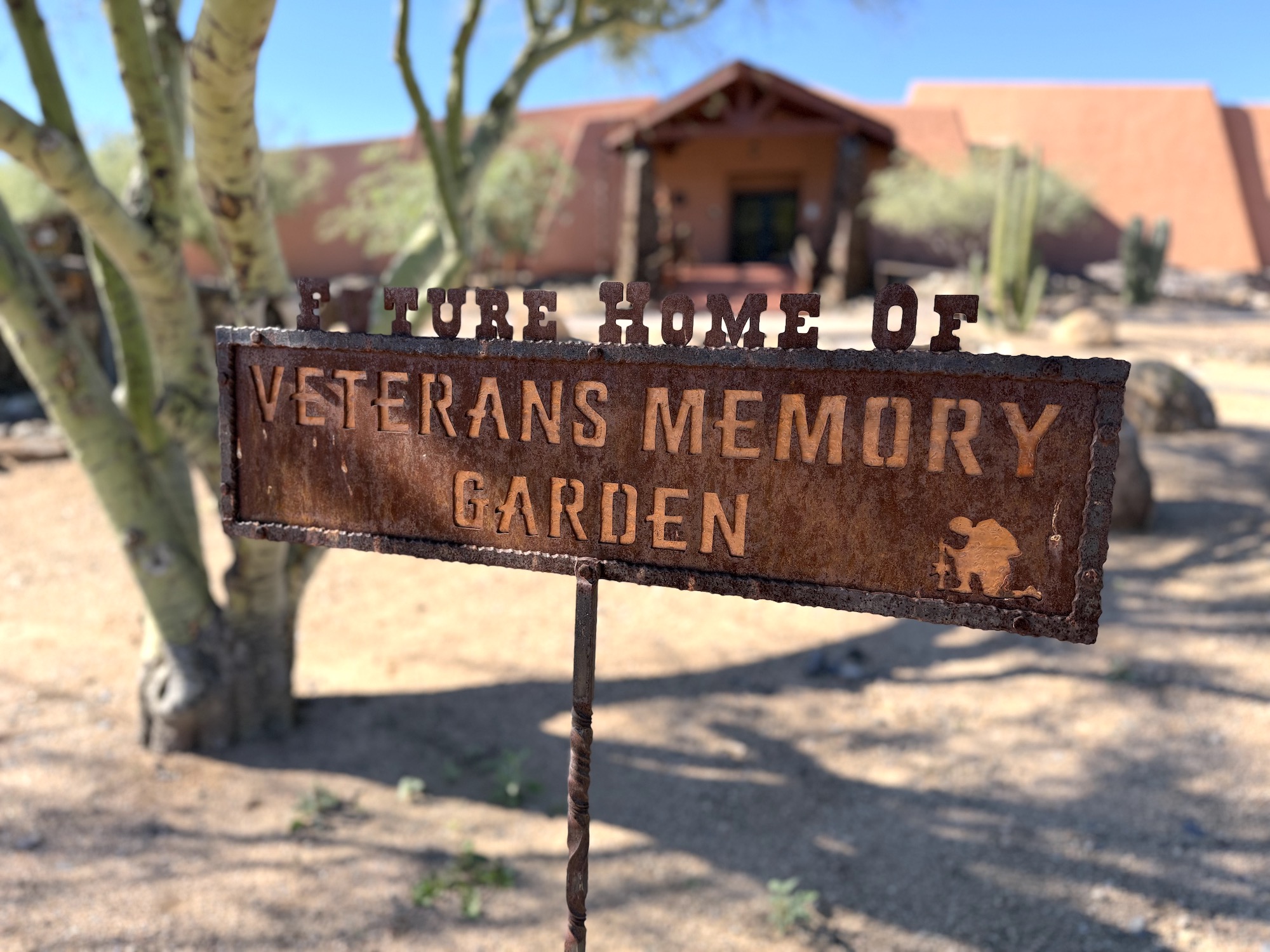 A wrought-iron sign at the entrance to the Veterans’ Memory Garden in Cave Creek, Ariz., on Nov. 8, 2026. (Allan Stein/The Epoch Times)
Holland said the plan is to continue raising funds for the project and adding artworks as they come forward.
Landscape designer Marc Viator developed the project in collaboration with Cave Creek Museum staff, its board of directors, and Dream Team, including local blacksmith Paul Diefenderfer.
Other supporters include American Legion Post 34 and the Black Mountain Foothills Chapter of the Daughters of the American Revolution.
Marcia D’Alessandro, master gardener, will oversee the planting and design of each garden area. Each station will feature a gabion, a decorative wire basket filled with stones.
“All the iron work you see with the railing was all made by one of our people from what we call the Dream Team,” Holland told The Epoch Times.
The Veterans’ Memory Garden will be a “living and constantly evolving experiential garden,” according to the project website.
“Set in a peaceful environment on the grounds of the Cave Creek Museum, the Veterans’ Memory Garden will reflect what is important to know and remember about our veterans,” it states.
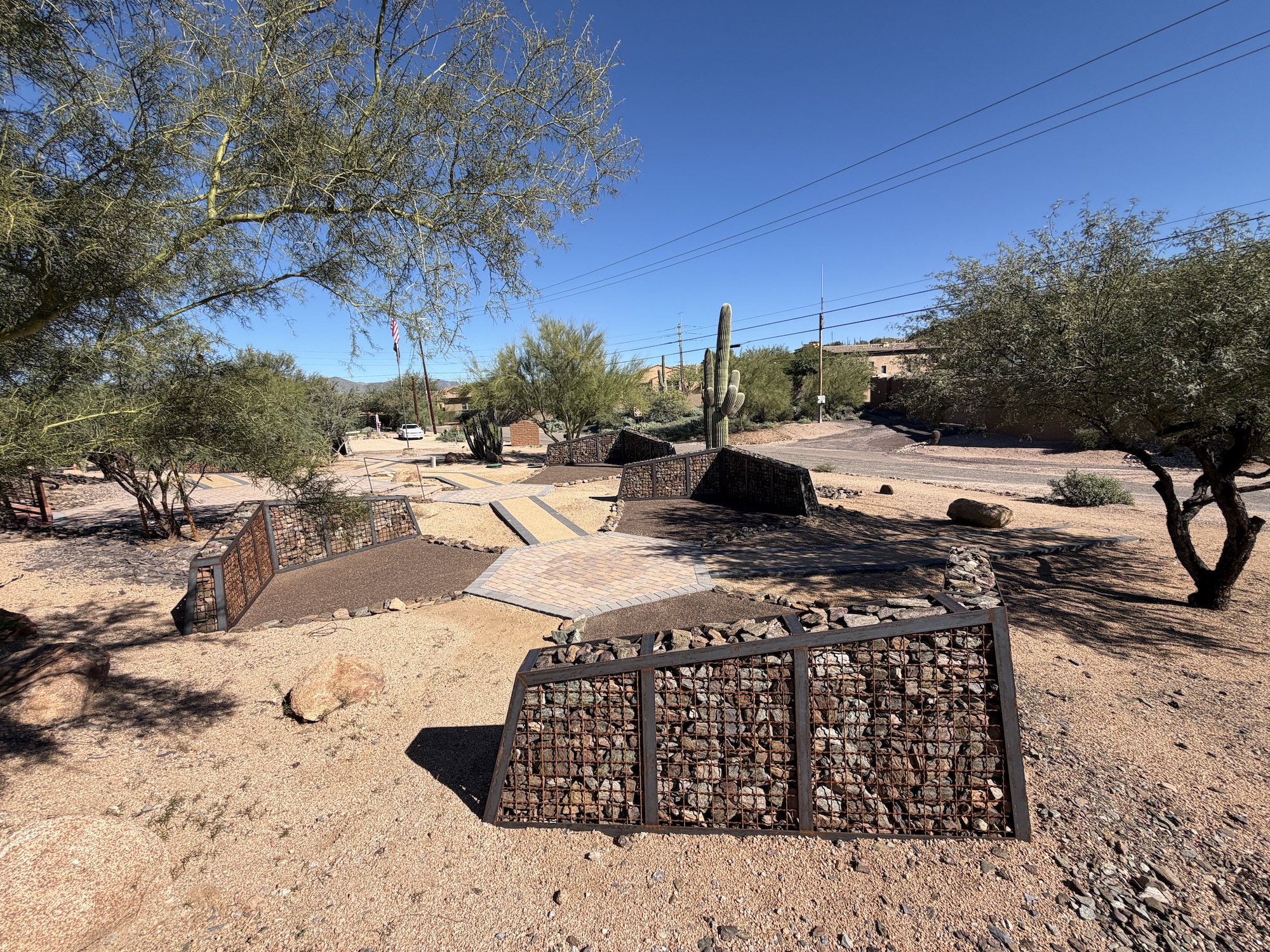 Gabions filled with decorative stones mark each station representing a specific branch of the U.S. military at the Veterans’ Memory Garden in Cave Creek, Ariz., on Nov. 8, 2026. (Allan Stein/The Epoch Times)
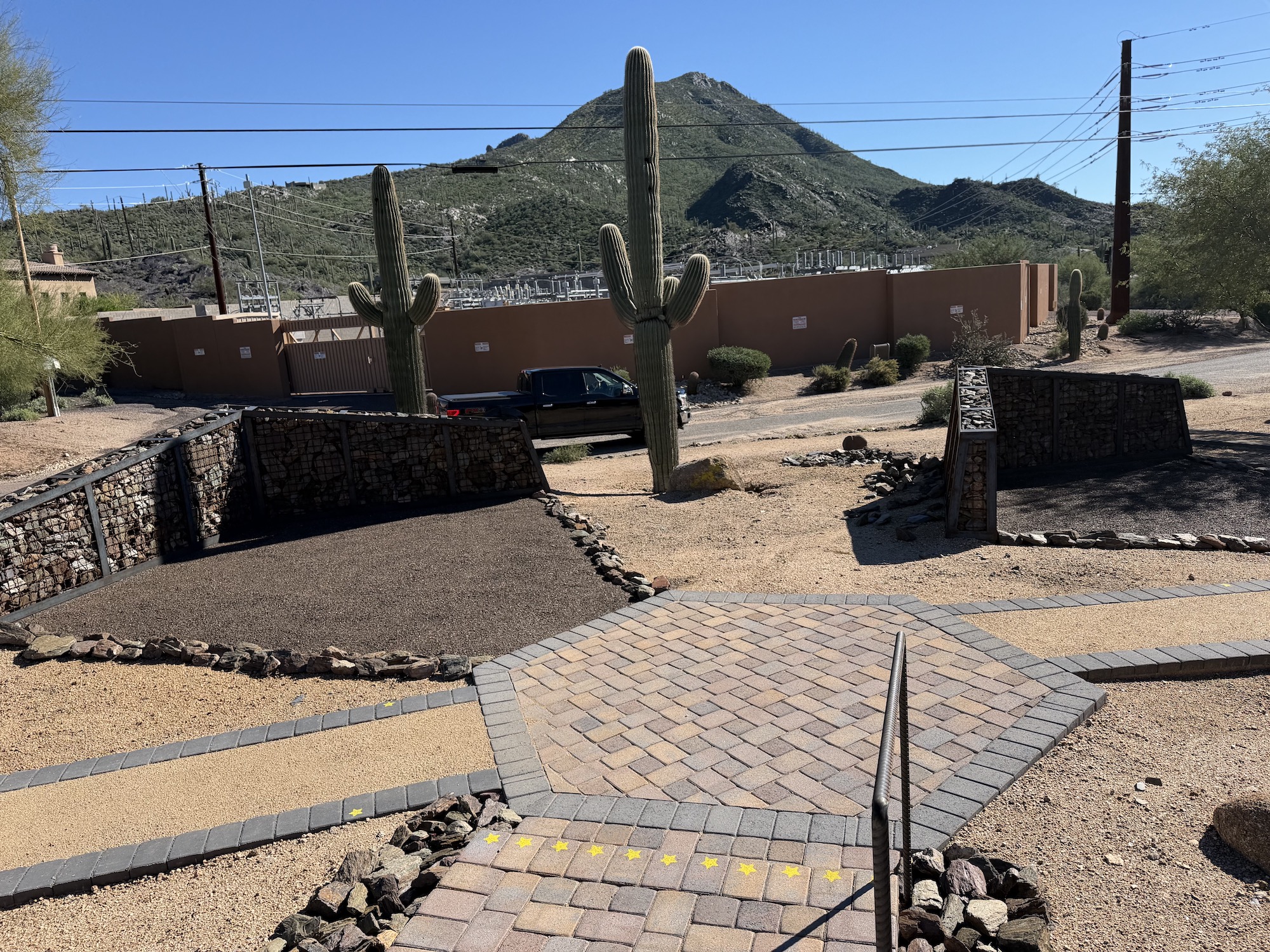 The Veterans’ Memory Garden in Cave Creek, Ariz., on Nov. 8, 2026. (Allan Stein/The Epoch Times)
“These collaborations will continue over time, creating an eternally evolving and changing garden as new collaborations and memories are introduced,” the museum added.
Holland said the garden will serve as a place of reflection and healing through artistic expression.
“The veterans have done so much for us in this town. We just wanted to find a way to honor them,” she said.
Cold War Remembered
About 40 miles south of Cave Creek, the USS Phoenix submarine monument is on schedule for completion in 2027 in Phoenix.
The city project broke ground on Aug. 1 at Steele Indian School Park, with about $3.6 million in funding secured. Organizers hope to raise $4 million by 2027.
During the ceremony, Phoenix Parks and Recreation Director Marty Whitfield praised Councilmember Laura Pastor, the USS Phoenix Cold War Monument Foundation, and local veterans and partners for making the historic monument possible.
“Today’s milestone reflects the strength and partnership in our community,” Whitfield said.
Pastor said the project has been decades in the making, dating to 1986 under former Mayor Terry Goddard.
“It’s just an opportunity to preserve history, and teach history,” Pastor said.
According to the project website, the USS Phoenix Cold War Monument aims to preserve the history and lessons of the Cold War, spanning 1946 to 1991.
The monument will honor the submarine’s sailors and the civil servants and defense industry workers involved in its development.
Built by General Dynamics’ electric boat division, the USS Phoenix (SSN-702) was a nuclear-powered Los Angeles-class fast-attack submarine that measured 362 feet long and 33 feet wide.
The Phoenix was the 15th submarine of its class to join the fleet. It was launched in December 1979 in Groton, Connecticut.
The class was built between 1972 and 1996.
The submarine remained on active duty from 1981 to 1997, patrolling the North Atlantic and conducting operations along the U.S. East Coast and in the Mediterranean.
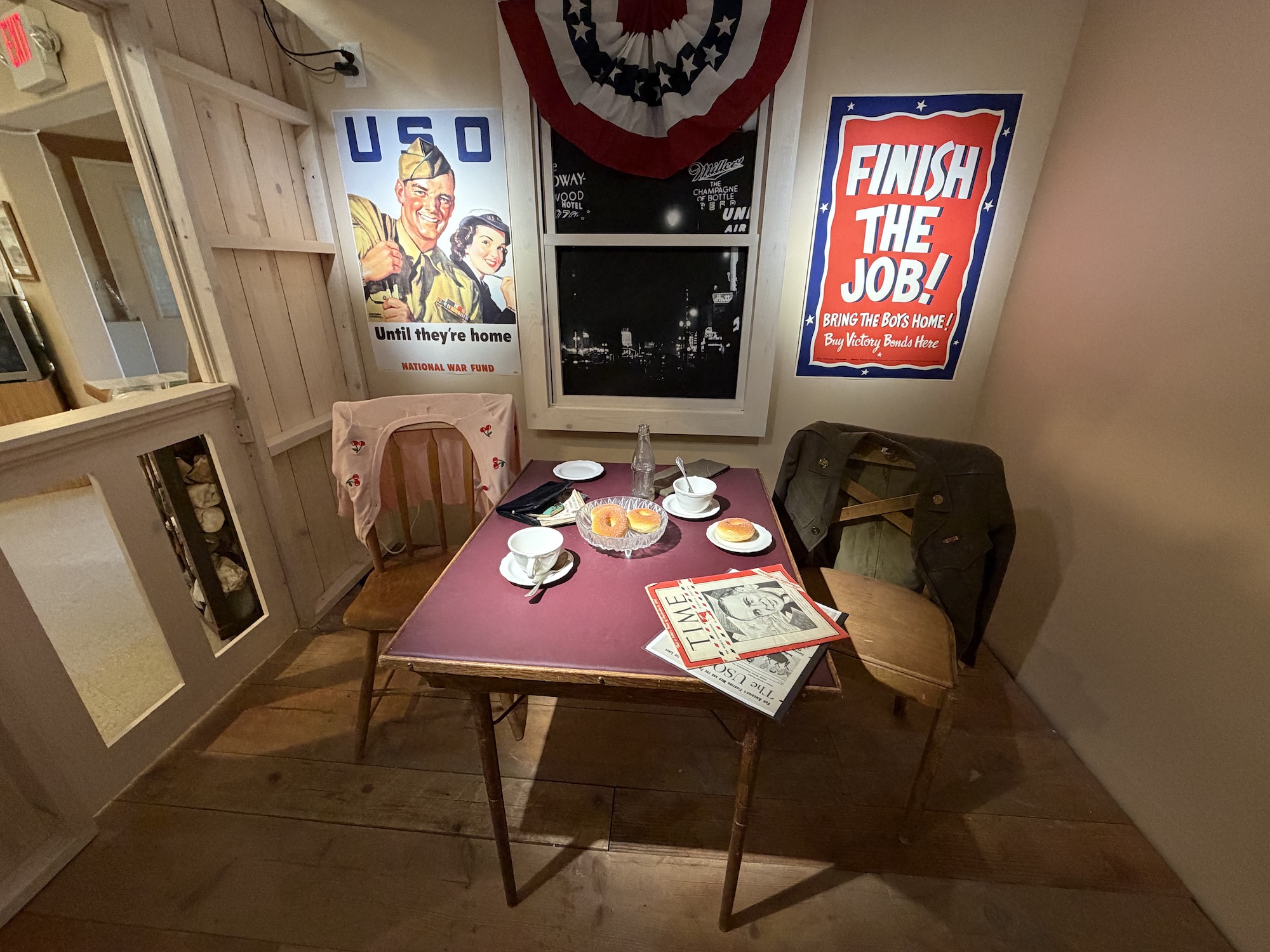 A special section dedicated to the efforts of the United Service Organizations during World War II at the Cave Creek Museum in Cave Creek, Ariz., on Nov. 8, 2026. (Allan Stein/The Epoch Times)
For a decade, the group lobbied the city for a suitable location, and the city granted permission to use Steele Indian School Park for the monument.
The Navy provided 65 tons of parts—including the sail, diving planes, and top rudder—that were moved by truck from Washington to Arizona.
The city began raising funds for the monument museum in 2019, with an expected opening date of spring or summer 2027.
“For submarine veterans, the project also offers overdue recognition,” the project website states. “The nature of undersea service meant that many missions were conducted quietly, far from public attention.”