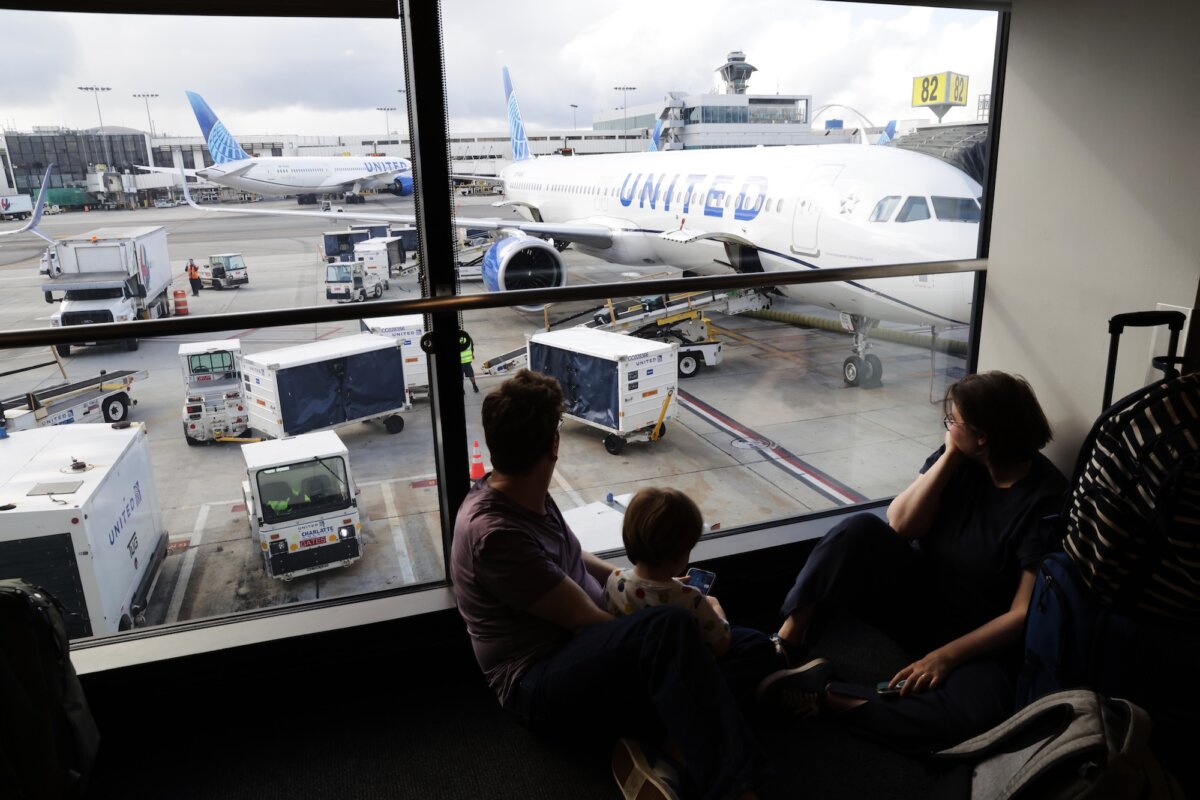

Travel to and from airports across the United States should be back to normal by the end of Sunday, the Federal Aviation Administration (FAA) said on Saturday, a day after the agency announced a more than four-hour nationwide ground stop.
FAA Administrator Bryan Bedford told reporters in Washington that delays and cancellations were still impacting air travel on Saturday but added that the “worst is behind us.”
On Friday, the FAA issued the emergency ground stop at 3:54 p.m. ET, which lasted more than four hours. The disruption was the nation’s longest ground stop in 25 years, and the second since the Sept. 11, 2001, attacks. An FAA computer malfunction stopped traffic in January 2023.
As the stop lifted on Friday, Transportation Secretary Sean Duffy said that airlines would need time to restore normal operations as departures were gradually allowed to resume, after 9,161 flight cancellations and 7,292 delays.
“It’s going to be slow,” Duffy had told reporters at the White House on Friday evening. He said tens of thousands of passengers remained stuck at airports after the restrictions were lifted, potentially facing overnight waits.
Thousands of travelers remained stranded on the morning of Nov. 14, with another 3,600 flights canceled and more than 1,600 delayed, according to FlightAware data at around 8:45 a.m. ET. By the end of the day, more than 6,000 U.S. flights had been canceled.
Another 800 flights are already canceled for Sunday.
Duffy said Saturday that the problem began when contractor L3Harris Technologies Inc. was replacing old copper wire in a section of the air traffic control system with new fiber wire. That somehow caused the routers to become overloaded with data and malfunction. The resulting “intermittent” communications and radar gaps prompted the government to shut down air traffic.
Duffy said that officials were investigating whether contractor “incompetence” or a faulty router was the cause. “Our contractor didn’t meet the moment, or the equipment didn’t meet the moment,” he said.
L3Harris said it was supporting the FAA in its investigation to “understand the conditions” that led to the emergency stop.
“L3Harris takes the nationwide ground stop and its impact on travelers, airlines and air traffic operations seriously,” it said in a statement.
Duffy on Friday called for Congress to include $50 billion in an emergency funding bill before the end of the year to finish building a new system.
“Let’s invest so we never have to come at 8:30 at night and have a press conference on why air travel was shut down, why we have tens of thousands of people in airports separated from their families without any knowledge of where they’re going to sleep tonight,” he said.
“With a brand-new state-of-the-art system, you won’t have these outages,” he added. “This is a continual problem that we have and it should be fixed.”
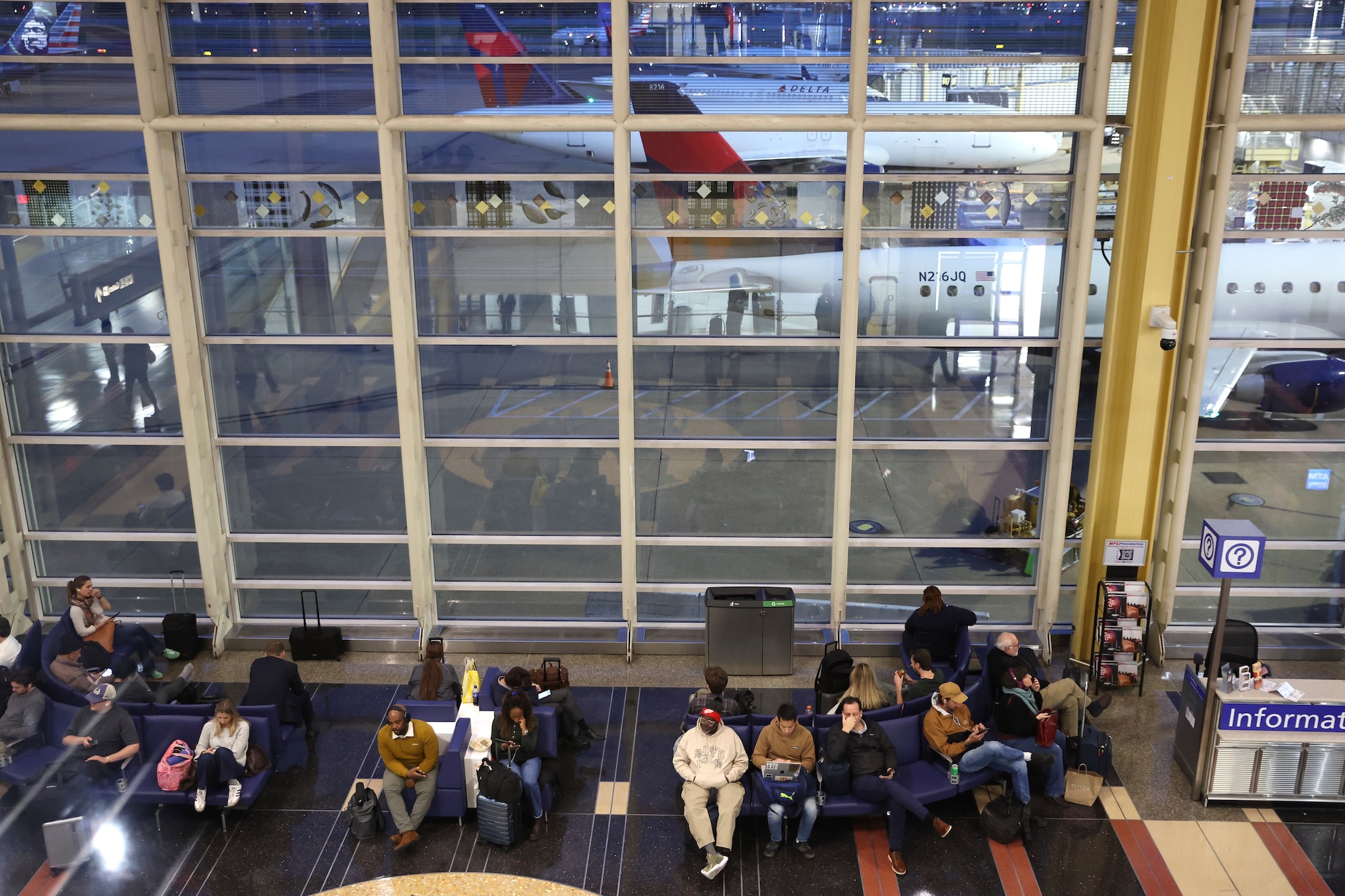 People wait at a terminal at Ronald Reagan Washington National Airport in Arlington, Va., on Nov. 13, 2026. (Tom Brenner/AP Photo)
FAA Says Systems Tested
The FAA said in a late Friday statement that it had tested its systems before reopening the airspace for commercial flights.
“Before clearing flights to resume, we thoroughly tested our systems to confirm they were stable and that operations remain reliable,” the agency said on social media platform X, advising passengers to contact their airlines for updates.
Homeland Security Secretary Markwayne Mullin said new equipment and technology that the FAA had been adding to the network was “overwhelming the older system.” Duffy said controllers lost consistent radar and communication with aircraft, and that the upgraded digital equipment did not fail, only the old analog equipment.
Mullin said more than 3,000 flights landed safely Friday and that no one was in danger.
He said attackers typically claim responsibility for cyberattacks and that investigators had picked up “no chatter.”
“We haven’t seen any footprints, as you would say, or identifications of people that got into the system,” Mullin told reporters at the White House. “It appears that this was mechanically driven; however, we’re still looking, so we’re not going to rule that out.”
Asked by a reporter what caused the instability, Duffy again pointed to the equipment.
“We have old switches, old routers. We use 1980s little copper lines. It’s an old system that went down and went down everywhere,” Duffy said. “It got overloaded.”
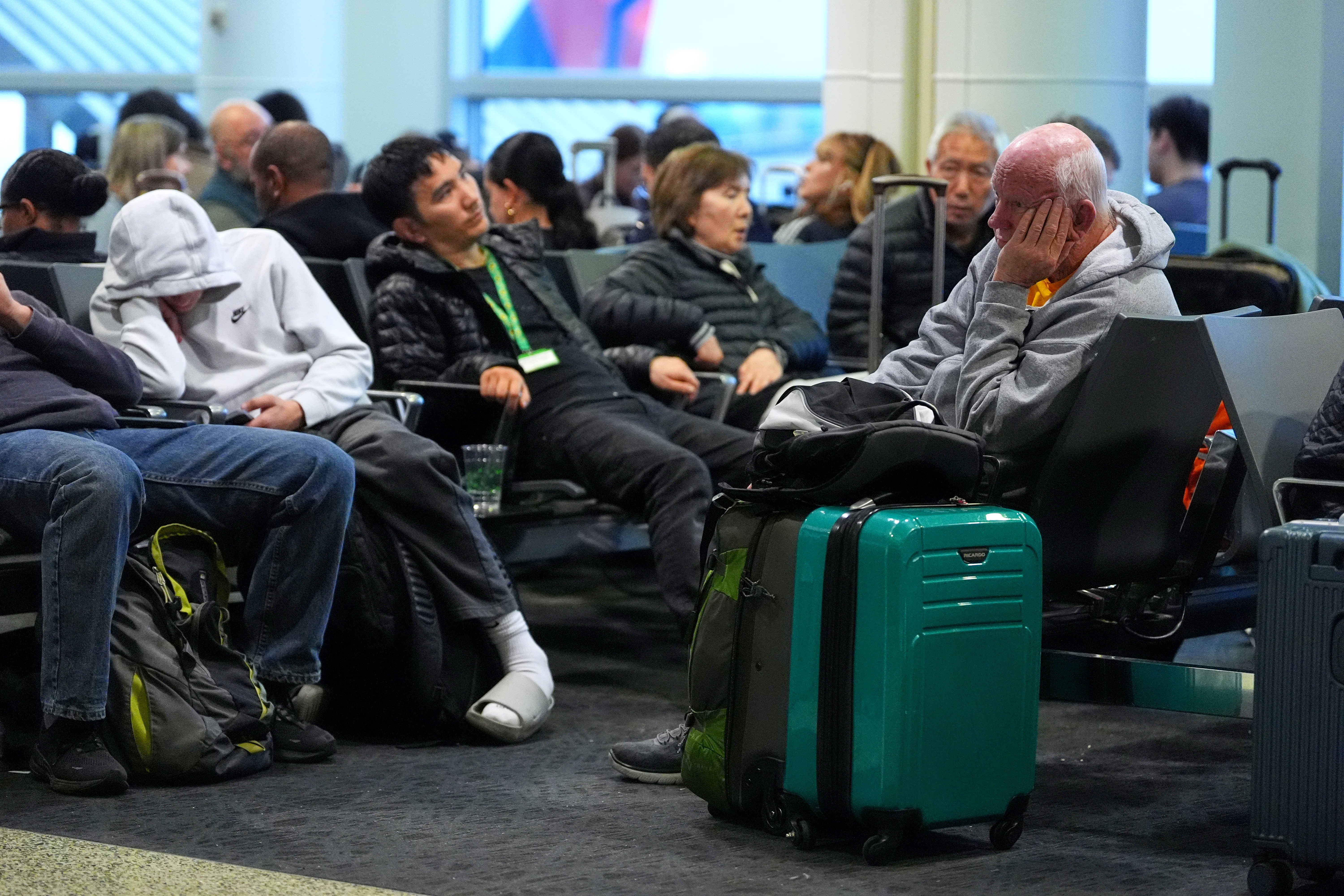 Passengers wait as flights are delayed inside a terminal at Seattle-Tacoma International Airport in Seattle on Nov. 13, 2026. (AP Photo/Lindsey Wasson)
“We were able to review what went wrong, and then reboot the system and go. But you will have more of these,” he said.
The FAA has replaced thousands of copper wires with fiber-optic lines and upgraded hundreds of radio systems under an overhaul begun last year after Congress approved $12.5 billion.
Reuters and The Associated Press contributed to this report.