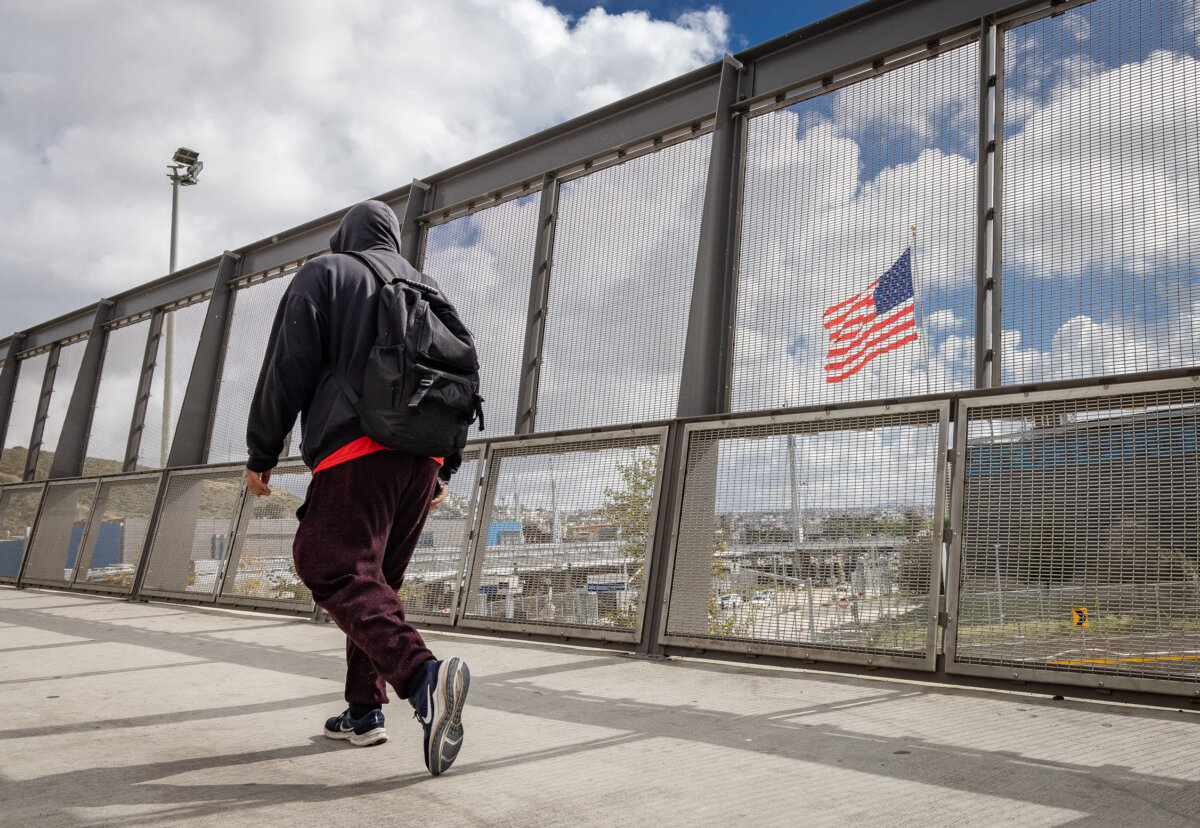

Ten new construction contracts that will add hundreds of miles of Smart Wall along the U.S. southwest border were awarded in September by U.S. Customs and Border Protection (CBP) and the Department of Homeland Security (DHS), CBP said in an Oct. 10 statement.
“The Smart Wall is a border security system that combines steel barriers, waterborne barriers, patrol roads, lights, cameras, and advanced detection technology to give Border Patrol agents the best tools in the world to stop illegal traffic,” the agency said.
“In total, these projects will add 230 miles of Smart Wall and nearly 400 miles of new technology. The technology additions will further secure existing wall in areas where the Biden Administration policies cancelled contracts to do so.”
The walls will be constructed across California, Arizona, New Mexico, and Texas. Out of the 10 contracts, three were awarded for the El Paso region, two for Del Rio, and one each for San Diego, El Centro, Yuma, Tucson, and the Rio Grande Valley Waterborne Barrier Project, according to CBP.
The most expensive among these is an $850 million project in El Paso, followed by a $606 million project in Tucson, and another $578 million project in El Paso. Altogether, the contracts are worth about $4.5 billion.
The contracts are the first batch of border wall projects to be funded under the One Big Beautiful Bill Act, signed into law by President Donald Trump in July. A small part of the funds comes from fiscal year 2021 border wall appropriations, which were put on hold by the previous administration.
“For years, Washington talked about border security but failed to deliver. This President changed that,” CBP Commissioner Rodney Scott said i the statement. “The Smart Wall means more miles of barriers, more technology, and more capability for our agents on the ground. This is how you take control of the border.”
Secretary of Homeland Security Kristi Noem also issued two new waivers for Smart Wall construction in the San Diego and El Paso sectors to speed up its construction and cut through bureaucratic red tape, CBP said.
The $4.5 billion Smart Wall funding is one of the latest actions taken by the Trump administration regarding the border infrastructure.
On his first day in office, Trump signed the “Securing our Borders” executive order to secure America’s borders.
Subsequently, DHS took steps to speed up construction. In June, for instance, the DHS issued waivers to expedite construction in New Mexico and Arizona. In August, a new waiver for the border wall in Texas was issued by DHS.
‘Cruel, Senseless’
In July, conservation group Center for Biological Diversity sued the Trump administration for “unconstitutionally waiving” dozens of environmental laws to speed up wall construction at the San Rafael Valley in Arizona’s Sky Island region, the group said in a July 9 statement.
The valley is a “biodiversity hotspot,” it said, warning that the wall would block the migration of dozens of imperiled species, including mountain lions, black bears, and jaguars.
“The Trump administration is unconstitutionally running roughshod over our bedrock environmental protections to build his cruel, senseless border wall,” Jean Su, a senior attorney at the organization, said at the time. “A 30-foot wall will stop majestic jaguars and other endangered animals dead in their tracks, so they’ll likely disappear from the U.S.”
The case is ongoing.
The Trump administration’s border infrastructure and policies aimed at curbing illegal immigrant presence in the United States have produced results.
In an Oct. 7 statement, the DHS said that fiscal year 2025 ended with the “lowest U.S. Border Patrol apprehensions” in the southwest border since 1970.
In total, 237,565 illegal immigrants were apprehended by authorities at the southwest border, which is 87 percent lower than the average of the previous four fiscal years, DHS said.
“This feat is a testament to the Trump Administration’s success in restoring control at the border—despite the handicap of more than three months of Biden’s open-border chaos at the start of the fiscal year,” the agency said.