
The Milwaukee Brewers’ 3–2 victory in Friday’s Game 1 of the 122nd World Series at American Family Field drew 43,250 fans.
Millions more tuned into the live telecast on FOX. The Brewers’ win was their first Fall Classic win in 44 years. In 1982, Milwaukee lost the best-of-seven playoff series to the St. Louis Cardinals.
Nighttime World Series games have been a tradition for generations of baseball fans.
For many Gen X and older fans, October championship baseball starting at 1 p.m. on weekdays and weekends is inconceivable. The MLB tradition of World Series day games ended on Oct. 13, 1971, in Pittsburgh.
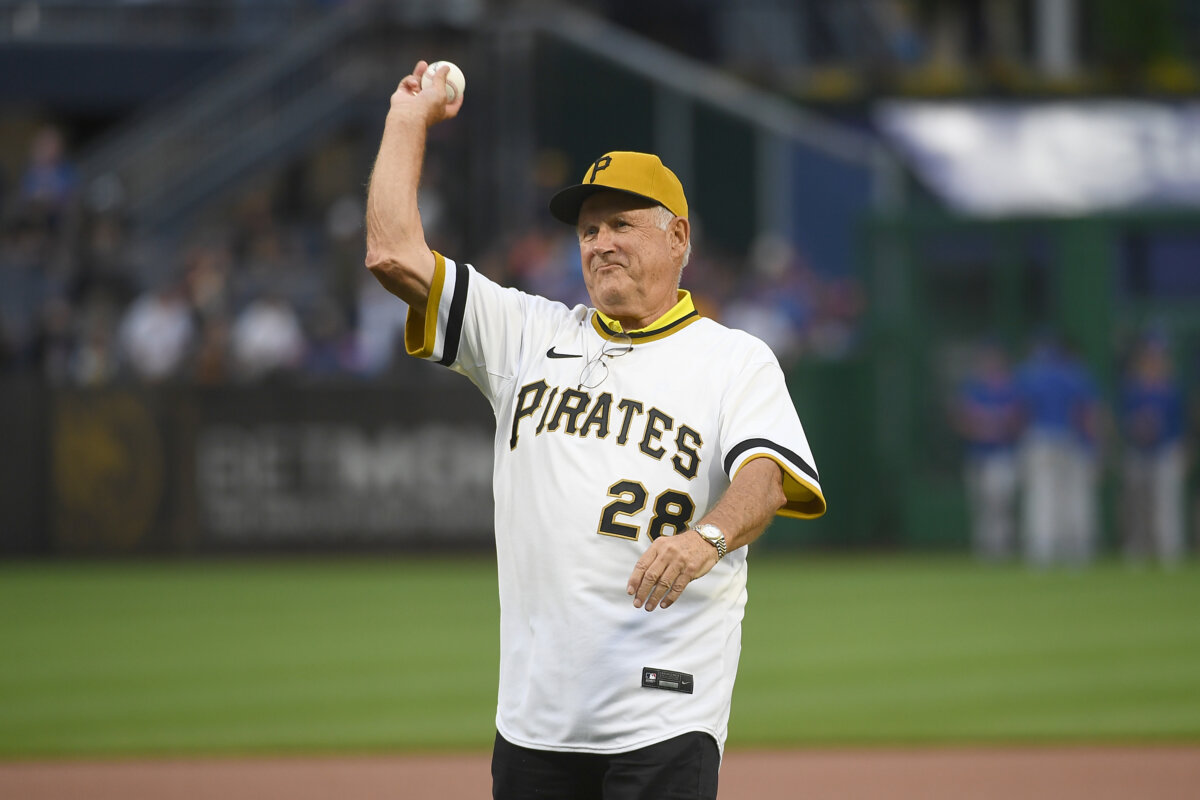
“Oh, yeah. That was a big deal the first night game,” Steve Blass, part of the Pittsburgh Pirates’ pitching staff of the 1971 World Series squad, told The Epoch Times.
“As a kid, part of our autumn was running home from school at about 3 o’clock to catch the last three innings on radio. You got on your bike, and flew home.”
Before spring training camps opened, then-MLB Commissioner Bowie Kuhn announced on Jan. 7, 1971, that Game 4 of the coming Fall Classic would start in the evening. The theory was that more people could finish their daily chores in time to watch.
At Kuhn’s urging to move the World Series to evening hours, television network executives were intrigued by the idea of generating higher TV ratings. After shifting the annual All-Star Game from afternoon to an evening start a few seasons earlier, moving World Series competition under the lights was a natural progression.
The Baltimore Orioles, winners of the American League pennant, and the Pirates, who captured top National League honors at the close of the 1971 season, would make MLB history in World Series play. In Game 4 at Pittsburgh’s Three Rivers Stadium, Baltimore led the series 2–1.
“The World Series is supposed to be played in the afternoon. Baseball is a traditional game,” Blass said, who had pitched a complete Game 3 the evening before the first night matchup.
“Starting pitchers, we never hung around with the guys in the bullpen. I was in the dugout for Game 4.”
Game 4 of the 1971 World Series began the slow shift to evening start times for all October games.
Game 6 of the 1987 World Series between the Minnesota Twins and St. Louis Cardinals at Hubert H. Humphrey Metrodome in Minneapolis was the last October MLB game played with an afternoon first-pitch start time.
As Kuhn had predicted and television network executives had hoped, viewership for a nighttime World Series game was a success.
NBC, the rights holder for the 1971 World Series, reached an estimated 21,610,000 households and 38,898,000 viewers, according to Nielsen. The Wednesday night game drew the most viewers of the seven games.
Breaking tradition and playing mid-October baseball under the lights wasn’t going to change Pittsburgh’s approach to battling Baltimore, according to Blass.
“We weren’t going to change our approach. We had just gotten back into it. We were down two games to none against one of the best-regarded teams in history: the ‘71 Orioles. I was just happy that we weren’t down by three games, when Game 4 came along. You were just not going to sweep that team in four games. They were too good,” he said.
Baseball’s postseason experience at Pittsburgh’s Three Rivers Stadium, which opened just a year earlier, was a rousing success.
After 397 World Series games started in the afternoon, the first evening contest drew 51,378 fans to the ballpark. Pittsburgh last hosted a World Series in 1960. They won the championship in seven games.
“I railed against it,” Blass recalls of breaking World Series tradition. He played an important role in the Pirates’ title run, throwing two complete games.
In Game 4, the Pirates defeated the Orioles 4–3, with reliever Dave Giusti locking down the final two innings to earn the save. Rookie right-hander Bruce Kison claimed the win for Pittsburgh.
Of the then-24 MLB clubs, only the Chicago Cubs wouldn’t have played night baseball in Game 4 of the 1971 World Series if they had qualified. Wrigley Field, where the Cubs had played home games since April 1916, didn’t get lights until August 1988.