The College Football Playoff system is running wild, and it doesn’t look like anyone can tackle it.
The College Football Playoff reached a “handshake agreement” with ESPN on broadcasting rights for a 24-team playoff that would start next season, according to ESPN on Oct. 16.
The 24-team field would include 19 at-large bids, the Power 4 conference champions—determined by conference play—and the highest-ranked teams from the Group of 6, according to ESPN.
The change could rattle everything from scoreboards to viewership ratings online and otherwise for the four major groups—the Atlantic Coast Conference, the Big Ten Conference, the Big 12 Conference and the Southeastern Conference.
According to the plan, the Group of 6, which is generally thought of as the American Athletic Conference, Conference USA, the Mid-American Conference, the Mountain West Conference, the Sun Belt Conference and the Pac-12, will also contemplate the proposal, which calls for a first-round bye then a home game for teams seeded Nos. 1–8.
Schools seeded Nos. 9–16 would all play their first-round games at home, the ESPN report said.
The possible move for postseason additions comes two seasons after the field was expanded from four to 12 teams.
No matter what the reasons for scaling up the playoff system, the extra games will have an impact that reaches far beyond the physical toll on the players and the TV money generated.
It is expected to reshape the college football landscape; it would put more material on the final exams for players contemplating their futures on the gridiron.
The importance of playoff games is expected to overshadow what any of the conferences do.
In fact, conference championship games might end up falling by the wayside.
The reports of College Football Playoff expansion led to Big 12 commissioner Brett Yormark saying his conference would pivot if this increase in playoff teams comes to fruition.
Yormark told a Big 12 media day gathering on Oct. 20 that the conference would “replace” its championship game.
And other conferences might take similar steps as the landscape undergoes a major redesign on the fly.
“It almost dilutes the need for conferences. With 24 teams and no conference title games, strength of schedule becomes everything,” Jack Tabb III, who performs player evaluation/recruiting for JB Sports management agency, told The Epoch Times in an email on Oct. 21.
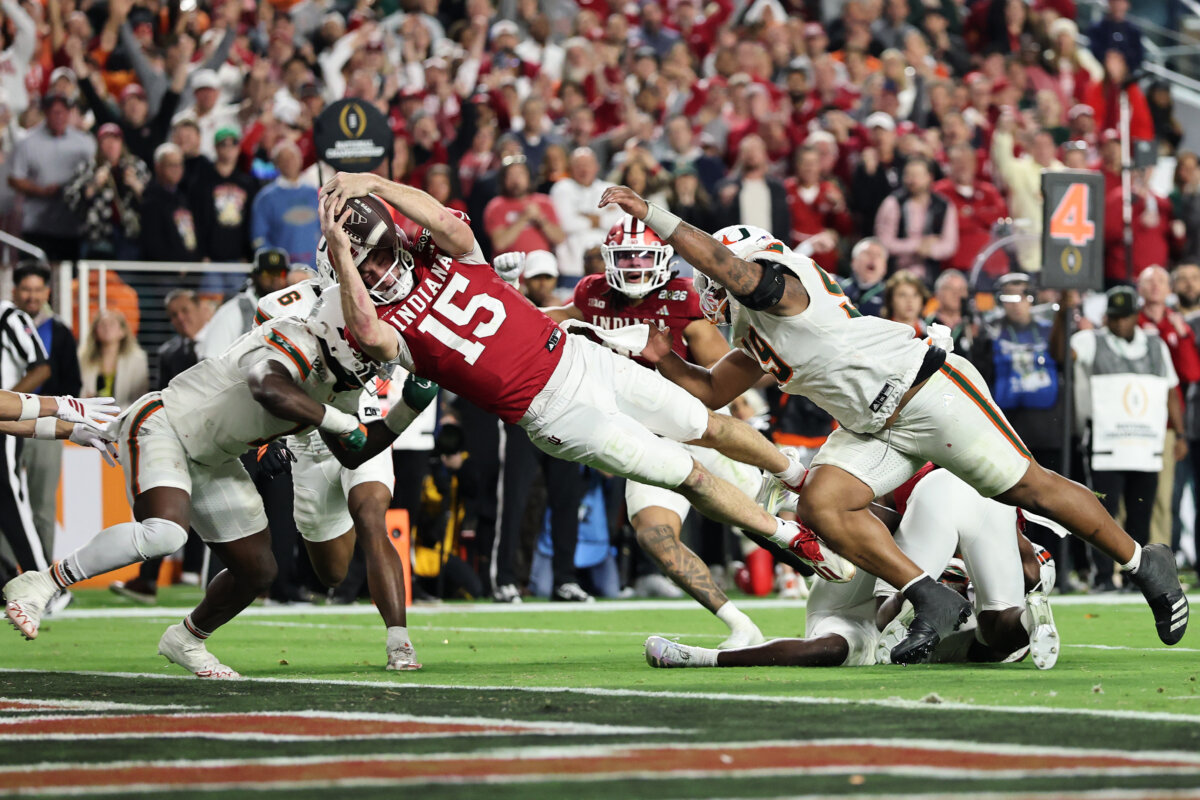
 A general view of Hard Rock Stadium before the 2026 College Football Playoff National Championship in Miami Gardens, Fla., on Jan. 19, 2026. (Megan Briggs/Getty Images)
Tabb said players are probably going to have to reexamine the timing of their preparation for the NFL draft.
And even though the season is expected to start earlier, progressing through the playoffs will leave less time for players to get ready for the draft, meaning they might make a business decision to step back from postseason play.
“As a former player and coach, I think the longer season makes decision-making the big story,” Tabb wrote.
“We heard the same worries going from four to 12, and now it’s happening again at 24. Coaches, players and families all have more calls to make about who plays, who rests and who opts out.”
And while opting out of sometimes meaningless bowl games is not new in recent years, it could increase in numbers as more of the draft-eligible players weigh the prospect of NFL glory and postseason college success.
Meanwhile, the advantage for big-school performers could increase over players at smaller colleges.
Student-athletes who are regularly on the biggest stage and have the opportunity to play for a national championship may have a clear advantage over elite performers from small schools.
Those lesser-known talents, some of whom end up undrafted free agents, have been making increased impact in the NFL over time.
And those who will likely end up in that lower tier of the player-acquisition pool are certain to land in the gray zone more so than the end zone, when it comes to getting NFL teams to notice them.
“The longer you play (during the season), the later your draft prep starts,” Tabb said. “My guy Riley Nowakowski (a running back with the Pittsburgh Steelers) started almost a month after everybody else, and that was fine.
“Film is what gets you seen, and playing well against Big 10 competition does more for you than the combine. That goes double for [an undrafted free agents], who needs every snap of tape he can get.”
So how do sports agents and players go about maneuvering through what could be around the corner?
“You plan for a late start and build a draft-prep schedule that can begin in late January without falling behind,” Tabb said.
“You also prepare for the downside. A longer season means more chances for an injury or something else to go wrong, so protecting the player has to be part of the plan.”