While many sports fans are looking forward to a college football showdown on Saturday—No. 1 Ohio State versus No. 4 Texas—there’s another must-see matchup featuring the top two in their respective domain battling it out. Instead of on the gridiron, it will take place on the hardcourt of Arthur Ashe Stadium at the U.S. Open.
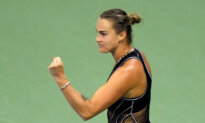
The women’s singles final features the 1-seed, Aryna Sabalenka, facing the 2-seed, Elena Rybakina, for the honor of being the 2026 U.S. Open women’s champion. Not only are these the top two seeds at this tournament, but they’re also the top two ranked players on the WTA Tour, with Sabalenka also first and Rybakina second.
However, there’s a twist that adds another subplot to Saturday’s match: Rybakina has already accumulated enough tour points to leapfrog Sabalenka, and the former will be ranked first, with Sabalenka second, when the next WTA Tour rankings are released on Monday, regardless of what happens in the U.S. Open final.
Even with that, Sabalenka can still make history with a victory, as she’s already the reigning two-time champion of this Grand Slam. She’s seeking to become the third woman in the Open Era (since 1968) to three-peat at this tournament, joining Chris Evert (1975–78) and Serena Williams (2012–14).
The Belarussian has already checked off one historic achievement at this event by simply making the final as it’s her eighth straight Grand Slam final on a hardcourt, which includes both the U.S. Open and Australian Open. That ties the all-time record, as Sabalenka matches Monica Seles’s run from 1991–96.
While this is Sabalenka’s fourth straight U.S. Open final, it is a new stage for Rybakina, as she never advanced beyond the fourth round over her previous eight starts at this tournament. She does, however, also share hardcourt success with her foe as Rybakina won the Australian Open earlier this year. It was her second Grand Slam win, after Wimbledon in 2022, and a Saturday triumph would move her to third base on achieving the career Grand Slam. It would also give her both hardcourt slams within a single year and make her just the sixth woman since 1988 to pull off that feat.
Both players breezed through the early rounds, as each won their first four matches in straight sets. Both Sabalenka and Rybakina were then pushed to a third set in the quarterfinals, with the former needing a tiebreaker to advance. Sabalenka then dominated her semifinals—7–5, 6–2—over 3-seed Jessica Pegula, while Rybakina had a bit more turbulence. Facing 4-seed Coco Gauff, Rybakina needed all three sets to emerge with a victory and keep Americans out of the U.S. Open final.
It was the first time since 1975 that all four of the top seeds made it to the U.S. Open semifinals, with chalk prevailing again to set up Saturday’s contest, which will be the 18th all-time meeting between the two.
Sabalenka leads the series 10–7, but it has been back and forth since the reigning two-time U.S. Open champ won the first four meetings. Over the last 13 matchups, neither player has won more than two times in a row, and their meeting history on a hard surface is dead even. They have split their 14 matchups on a hardcourt 7–7, with Sabalenka going 3–0 on grass or clay.
Rybakina does hold the 4–2 edge in tournament finals, but Sabalenka counters with a 2–1 record in Grand Slams, though that lone defeat came earlier this year in Australia. Thus, Saturday’s meeting will mark the first time since 1988 that a pair of women’s players meet in both the finals of the Australian Open and U.S. Open in the same year.
Given her head-to-head record and being the top seed, Sabalenka is the slight favorite to take home the trophy. There’s also some extra motivation: Not only did she lose the Aussie Open final to her opponent, but she’ll also lose her No. 1 ranking just two days later. Triumphing on Saturday would give her five majors, moving out of a tie with Naomi Osaka, and just the Williams Sisters, plus Iga Swiatek, would have more Grand Slams among active women’s players.
For Rybakina, a win would certainly justify her soon-to-be World No. 1 ranking and put a cap on what’s been a truly dominant calendar year. Since the 2025 U.S. Open ended, Rybakina has won 62 WTA-level matches, most of any player. Her six finals during that span are also not topped by anyone, and her four titles are also the most. Furthermore, she’s defeated 16 players ranked in the top 10 over the last 52 weeks, which is six more than any other woman. Adding a 17th would make her the sixth active player with at least three Grand Slam titles, joining Serena Williams, Venus Williams, Osaka, Swiatek, and Sabalenka.