
Commentary
While France, Italy, the Netherlands, Spain, and Lithuania supported tougher trade measures against China in May, Germany’s support for action is more recent.
After China joined the World Trade Organization in 2001, Germany benefitted by exporting large amounts of automobiles, chemicals, and industrial machinery to China. China Shock 1.0 was a China Boom 1.0 for Germany.
As recently as 2024, Germany lobbied other European countries against imposing tariffs on China’s electric vehicles. Berlin feared Beijing’s retribution against German exports.
With China Shock 2.0, a China Boom 2.0 never came. Instead, it is eating into Germany’s strategic industries and exports to China.
China has started to outcompete many of Germany’s automobile, engineering, chemical, and other industrial exports, even in Germany. In the first two quarters of 2025, Germany’s trade deficit with China was 40 billion euros. In the same period this year, the deficit was 55 billion euros.
Since 2021, China has fallen from Germany’s second-most-important export market (after the United States) to ninth place. Between 2022 and 2025, German auto exports to China dropped by 66 percent. Meanwhile, Germany has increased the import of Chinese cars by 121 percent in the first seven months of 2026.
As fewer orders come into German factories, Germany is losing about 15,000 industrial jobs each month. By 2030, Volkswagen alone is expected to cut 100,000 jobs.
Industrial job losses will redound negatively on Germany’s service economy and real estate. The housing, health, entertainment, and education sectors will lose workers who previously provided services to missing German factory workers. Just as China Shock 1.0 hollowed out American industrial centers, the same will likely happen to Germany during China Shock 2.0.
Predictably, German politicians are less excited about China as a trade partner. Chancellor Friedrich Merz has complained that one cause of Germany’s rapidly growing trade deficit with China is currency manipulation by Beijing.
Add to that China’s state subsidies, relaxed regulatory environment, fewer unions, lower labor costs, and increased automation of assembly lines.
In 2009, Germany led China in industrial robot installations. Seven years later, a German company sold its innovative industrial robot company, Kuka, to Chinese buyers.
Now, the number of industrial robots installed yearly in China is skyrocketing while that number in Germany is projected to fall for the third year in a row in 2026. Currently, Germany installs just one industrial robot for every 14 installed in China.
Berlin’s security agencies have also started to talk more publicly about the China threat. They allege that Chinese university programs and research collaborations risk Germany’s strategic intellectual property in sectors such as artificial intelligence, hypersonic flight, quantum computing, and biotechnology.
They view China’s tech exports as a threat due to data leaks or potential remote takeover. This could affect anything from a single autonomous vehicle to Germany’s electric grid.
China’s strategy of piggybacking on Western, Japanese, South Korean, and Taiwanese technology, including through cybertheft and industrial espionage, is paying major dividends at the expense of Germany.
According to the French government, China threatens 70 percent of Germany’s manufacturing output over the medium term. China is now a strategic threat to Germany’s industrial strength, and Berlin is getting tougher.
An early indication appeared on Oct. 5, when Germany and France proposed a systemic trade instrument that unnamed German officials called a “second-strike weapon” or “kill switch” to turn off imports from China. The tool could also be used against other countries that threaten harm to European industry.
The threat of complete decoupling (rather than just derisking) of Chinese–European trade gave the EU bargaining space to cap hybrid vehicle imports from China at 350,000 annually over four years (rising by 6 percent per year starting in year two).
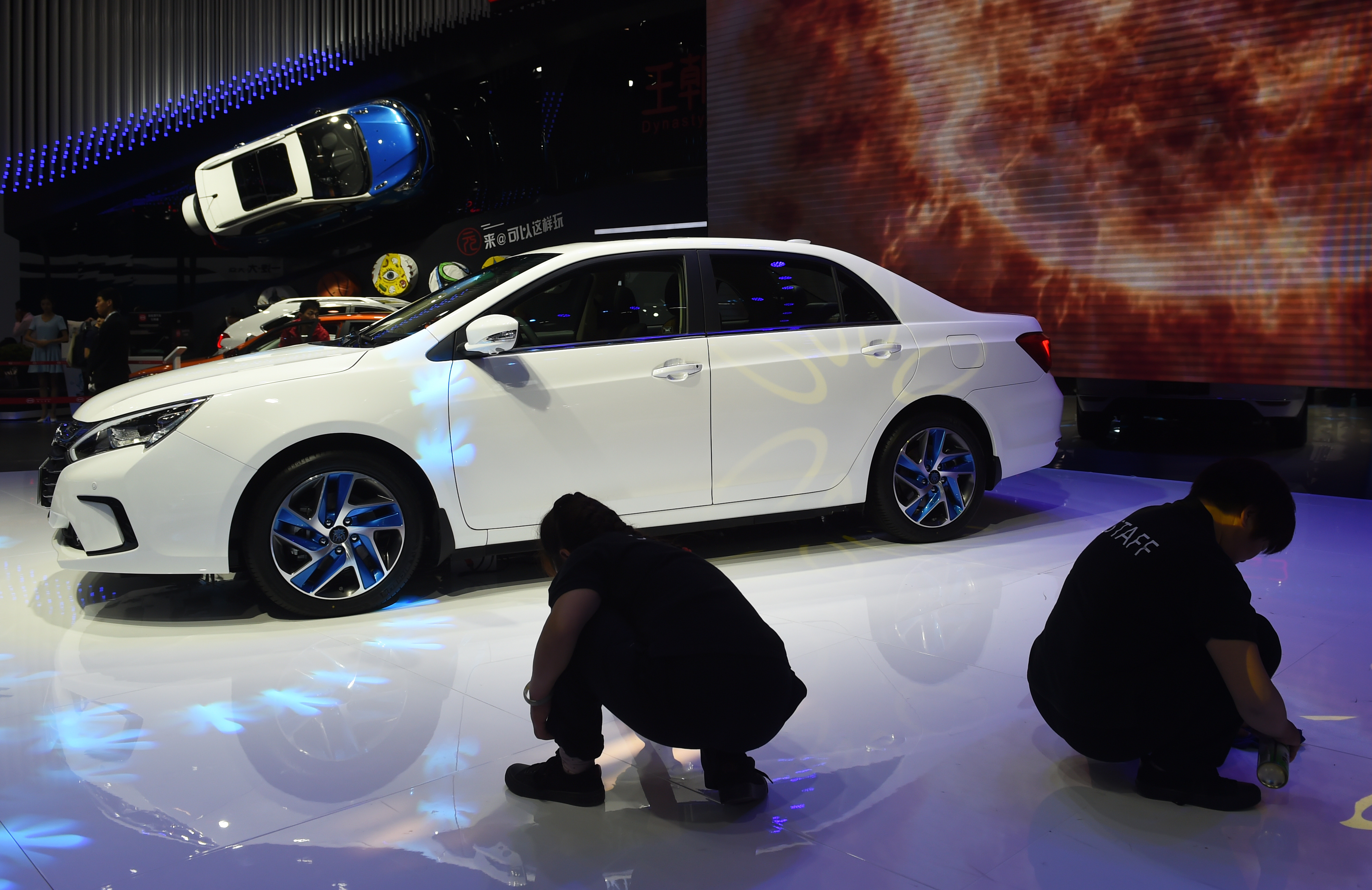 The domestic carmaker BYD Auto reveals the BYD Qin 100 hybrid car at the Beijing Auto Show in Beijing on April 26, 2016. (Greg Baker/AFP/Getty Images)
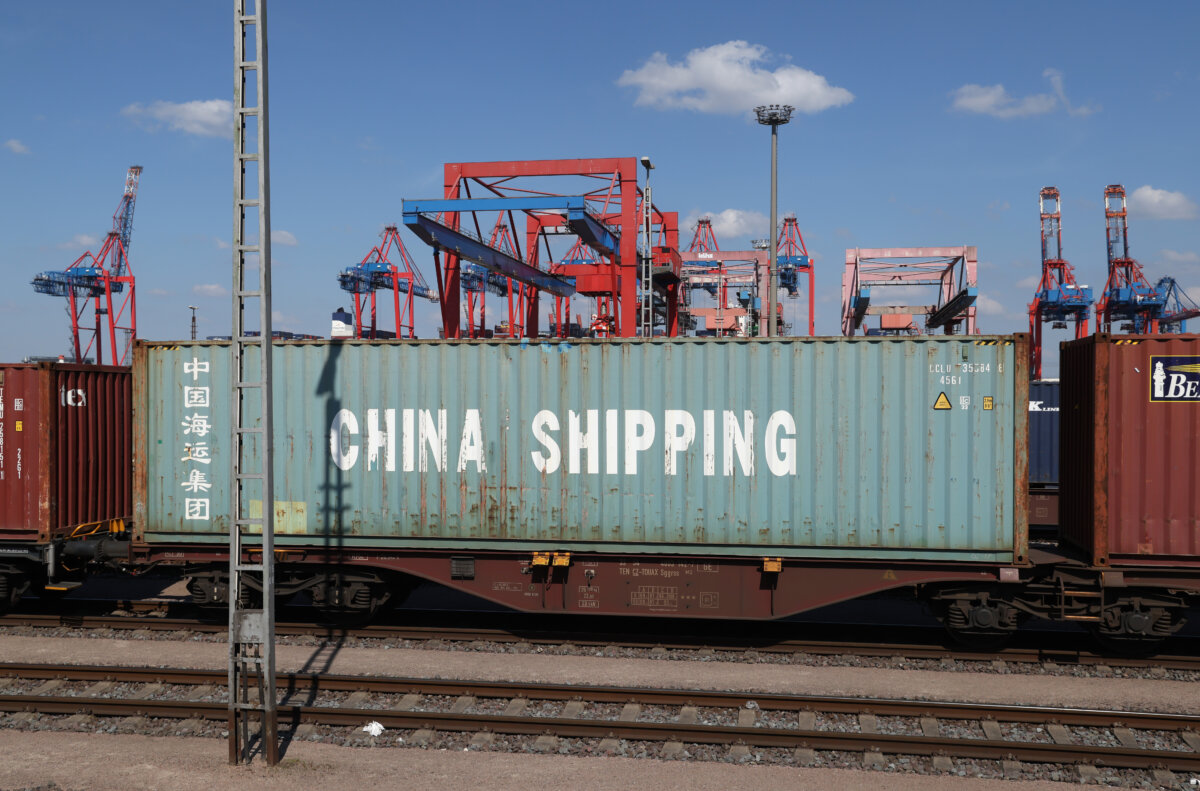
Two days later, Berlin blocked the sale of a German logistics company to China’s state-owned Cosco shipping group over security concerns. The company, called Zippel, specializes in sea-to-land containerized shipping. Germany’s ministry of economy said that “the acquisition would have deepened dependencies and jeopardized the resilience of Germany’s and the EU’s supply chains.”
Cosco’s minority stake in a port terminal in Hamburg, and the sensitivity of shipping data, likely influenced the decision. Much of the shipping data coursing through the world’s ports includes sensitive defense logistics and proprietary market information.
Then on Oct. 14, Germany encouraged the EU to extend caps on imports from China to the mechanical engineering, chemical, and potentially pharmaceutical sectors.
Berlin is also encouraging the UK to impose higher tariffs on Chinese vehicles and greater controls on Chinese foreign direct investment.
This would be the price of admitting the UK to a “Made in Europe” preferential trading regime for automobiles, making it harder for China to export cars to Europe. (The UK currently tariffs Chinese electric vehicles at only 10 percent compared with up to 45 percent in the EU. The U.S. tariff is at 100 percent.)
The kill switch plan reportedly got unanimous support, including from Spain, at a meeting on Oct. 15 of the 27 EU leaders. At a lunch debate the next day, Germany’s Merz was one of the strongest proponents of a tougher EU policy against China.
Belgian Prime Minister Bart de Wever noted the next day: “There’s not one country of the 27 that still has a positive balance with China. The advantage of being all in the negative is that we finally all agree that this cannot go on.”
Berlin took too long to publicly recognize the China threat and start taking action. Germany’s support for tougher EU trade measures is undeniably too little, too late. The government was driven by trade considerations, rather than principles and priorities such as democracy, human rights, and national security. On these matters, as much as on the issue of trade, the damage done will take a long time to remedy. It could be irreversible.
Germany and its democratic partners, including the United States, Canada, Japan, South Korea, and Australia, must get more united and take far tougher action on the Chinese Communist Party, or pay the price down the road. That price will be strategic and entail existential risk.
Views expressed in this article are the opinions of the author and do not necessarily reflect the views of The Epoch Times.