
Commentary
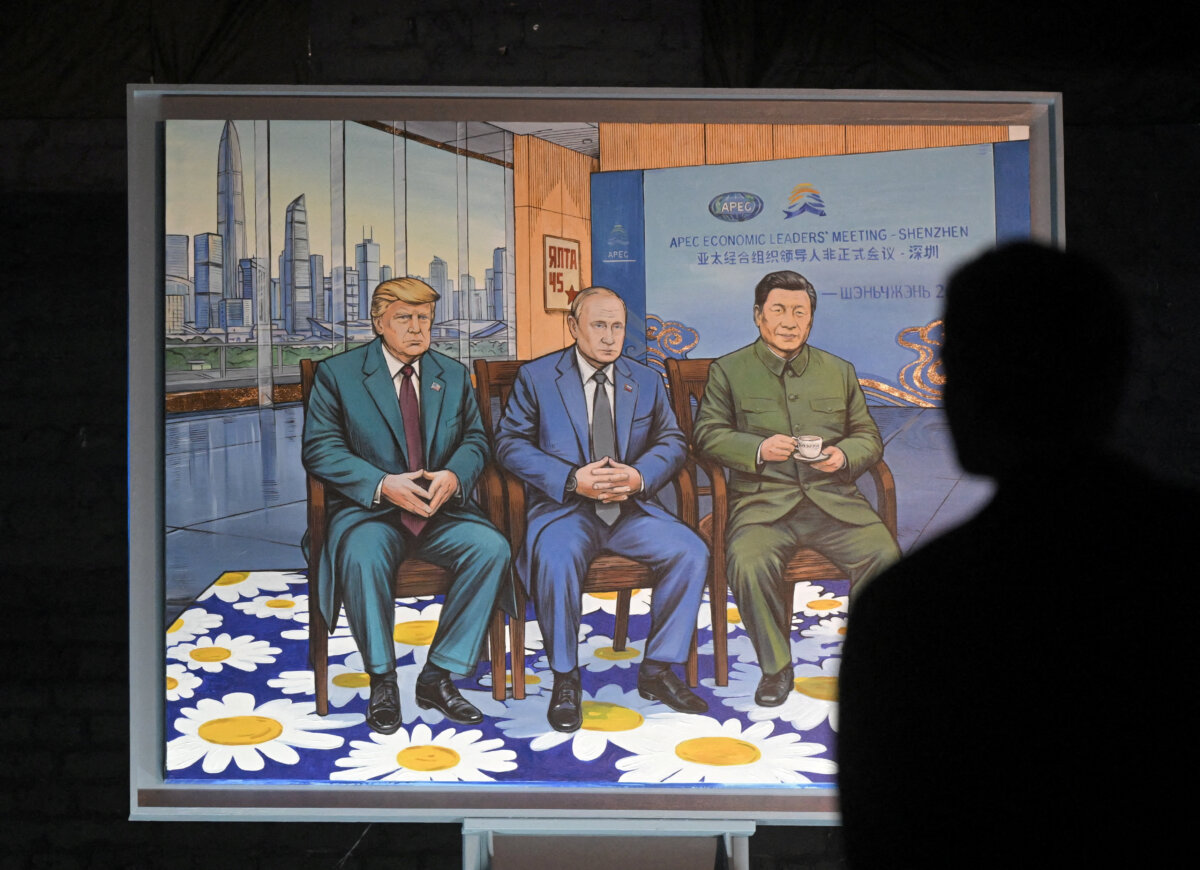
The speed with which the upcoming three-way summit meeting in Shenzhen between the American, Chinese, and Russian leaders came together tells us that it’s a top priority for all three leaders.
The world is experiencing the most significant realignment since the end of the Cold War. Alliances are changing, reliable trade and traffic are not so reliable, and new modes of warfare make it easy to kill more people and destroy infrastructure very inexpensively.
The war in Ukraine has hardened Europe into an anti-Russian camp, with the risk of escalation rising each day. Russia has recently lifted the ban on targeting Ukrainian President Volodymyr Zelenskyy for elimination and has even threatened the U.K. with nuclear annihilation because of its assistance to Ukraine.
In the Mideast, the war waged against Iran by U.S. and Israeli defense forces has brought inflation, shortages, and uncertainty into the world energy markets. There, too, escalation is on the horizon, as Tehran threatens to hit Washington, D.C., with a dirty bomb.
Such junctures can be high-risk periods, as fears and miscommunications multiply and nations scramble to obtain the most advantageous positioning on the global stage.
That’s perhaps why the three leaders have agreed to meet in such a relatively hastily planned and unprecedented manner. Despite framing the summit as a meeting to work out minor trade differences, President Donald Trump, Chinese leader Xi Jinping, and Russian President Vladimir Putin all recognize that much of the global economic structure, international norms, and trade relationships are undergoing massive distortions.
Is Nuclear Arms Control and Proliferation a Top Priority?
With arms control agreements between the U.S. and Russia having expired, and China rapidly expanding and modernizing its strategic forces, the global strategic balance has entered uncharted territory.
President Trump has made it clear that reducing nuclear arsenals is a central pillar of his agenda, arguing that a three-way nuclear race poses an existential danger to the world.
China and Russia, however, seem less interested in arms control and more interested in shifting the balance of power in their favor.
This meeting has already helped their cause.
But with President Trump going to China to meet Xi and Mr. Putin, the optics are not great for President Trump and the U.S.
The War in Iran and Middle Eastern Instability
The ongoing U.S.-Israeli war in Iran should also be on the agenda.
The cost, damage, loss of life, and disruption of global energy supplies have forced energy-dependent countries to make big adjustments, but China’s oil stores have largely insulated it.
At the same time, Beijing is the main buyer of sanctioned Iranian oil, which provides the mullahs running Iran with the hard currency they need to fund their regional proxies and military apparatus.
Meanwhile, Moscow is expanding its military-technical cooperation with Tehran, trading advanced weaponry and intelligence in exchange for drones and ballistic missiles.
But both Mr. Putin and Xi know that the prolonged war has tested American resolve and strategic resilience. Also, as the cause of the Republicans’ midterm defeats for the control of Congress and President Trump’s loss of political power, why should they want it to end?
To his credit, President Trump has publicly condemned the enormous human toll of the conflict, noting that Ukraine and Russia are losing tens of thousands of lives every month.
Yet the main points of a Ukrainian settlement are being worked out on a separate diplomatic track, which may include a separate Putin-Trump meeting.
Still, Xi’s role as the indispensable economic backstop for Russia’s war machine makes Ukraine an inescapable topic of discussion for the trilateral meeting.
What Trump Wants
The U.S. president knows that once the new Democrat-led Congress takes power in January, he won’t have the power he has enjoyed since taking office for a second time.
To improve the world and the U.S.’s position in it, President Trump would like to add nuclear de-escalation and ending the Russia-Ukraine war and the U.S. war in Iran to his political legacy. Such geopolitical accomplishments would secure his reputation and perhaps provide some protection against the lawfare that undoubtedly will occur in 2027.
Finally, President Trump would like to preserve the bilateral trade truce with China, secure rare-earth mineral flows, and potentially leverage Xi to broker a meeting, which he has mentioned, with North Korea’s Kim Jong-un.
What Putin Wants
For Mr. Putin, the summit provides a new sense of legitimacy for Russia, for his war against Ukraine and NATO expansion and his own political legacy at home. Sitting with the two economic giants of the world can only help both his and Russia’s reputation.
In fact, Mr. Putin’s real goal is not to make painful concessions on Ukraine or nuclear weapons, but to cement Russia’s status as an equal co-architect of a new global order. Notably, no European power will be there, just two Asian powers and the U.S. on its own.
The optics are powerful and help Russia much more than they do the U.S., or President Trump, for that matter.
What Xi Wants
For Xi, the optics of hosting both the American and Russian presidents are much needed. China faces severe domestic economic headwinds, structural debt, and mounting international backlash over Chinese industrial overcapacity and espionage.
With the Nvidia scandal still unfolding and China getting the finger of blame—and rightfully so—Xi desperately needs a win at home, and this is the perfect opportunity.
By positioning himself as the center or arbiter of “world peace,” Xi becomes a personal symbol of China’s ancient Middle Kingdom identity at home, as he seeks to unwind President Trump’s tariff and technology containment strategies.
As with Russia, Xi will seek to underscore the point that the U.S. and President Trump are there, in China, without any Western allies.
Again, the optics help Xi and Mr. Putin, and only diminish the U.S. The world understands that President Trump is going to Mr. Putin and Xi to make deals, and from a position of relative weakness compared to past meetings.
Meanwhile, Xi and Mr. Putin are playing a longer, more cynical game, using American engagement to legitimize authoritarian parity and accelerate the decline of the U.S.-led international order.
Views expressed in this article are the opinions of the author and do not necessarily reflect the views of The Epoch Times.