
Commentary
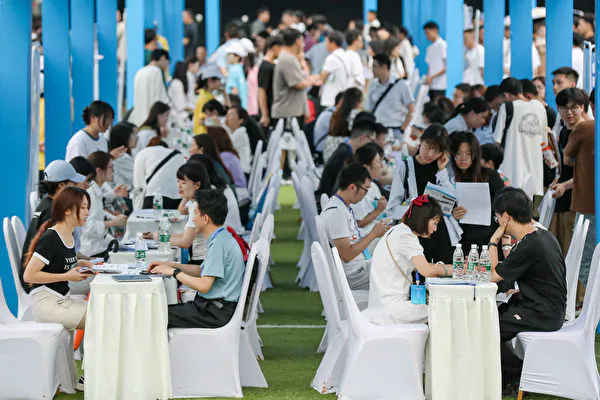
As China’s youth unemployment remains close to 20 percent, a new wave of business activity is gaining traction throughout the country. “Micro-entrepreneurs” are leveraging generative artificial intelligence to start small companies on their own. Most of these so-called one-person companies (OPCs) are formed and operate in cramped apartments and subsidized coworking spaces across the country.
The emergence of OPCs may just be a brief reaction to a challenging job market, or it may be something else. What’s clear is that OPCs are making headlines and garnering support across China. Local governments are pouring millions into subsidies, while state media hails these “solopreneurs” as proof of economic vitality in the AI age.
Are OPCs proof of economic vitality?
The short answer is “probably not.”
Illusion of Entrepreneurial Vitality
On paper, the numbers look explosive. By mid-2025, China had more than 16 million registered OPCs. By the end of 2025, more than 7.3 million new OPCs had been registered that year, a 42.3 percent year-over-year increase.
This rapid expansion certainly speaks to the creativity and innovation of China’s younger generation. It also speaks to the need for jobs. Despite those numbers, youth unemployment remains a major challenge, as traditional manufacturing, real estate, and corporate tech jobs continue to dry up.
Official state narratives present AI as the ultimate equalizer, which is true to a considerable extent. Tasks that once required entire teams, such as coding, copywriting, graphic design, video production, and customer support, can now be handled by a single founder using domestic AI models or open-source software agents. Startup costs are only a few hundred dollars, and young adults with no technical background can launch a business overnight.
However, these figures hide a grim reality. The millions of educated, unemployed graduates aren’t turning to solo work out of ambition, but because the job market has collapsed.

CCP Puts Its Hand In
Rather than letting market forces work naturally, local governments have aggressively stepped in to subsidize and direct this trend, turning OPCs or “solo-preneurship” into state policy.
Cities such as Suzhou have launched dedicated OPC service networks with goals to cultivate more than 1,000 AI-driven solo businesses. Municipalities such as Shanghai offer computing-power vouchers worth hundreds of thousands of yuan, while Hangzhou’s Shangcheng district committed office space and nearly $150 million in support.
There’s also support at the provincial level. Guangdong and Shenzhen have established programs making state-backed AI agents available directly to solo business development, as well as subsidizing computing costs and training tokens.
This policy is not, of course, an organic innovation. It’s a top-down strategy from political levels to help the unemployed youth and keep them loyal to the Chinese Communist Party (CCP). By funneling laid-off tech workers and fresh graduates into subsidized solo businesses, the Party keeps young citizens economically active, at least on paper, while tying them directly to state-supported platforms.
OPCs Just Scraping By
But as creative and innovative as it is, micro-entrepreneurship–even on its impressive scale–can’t fix the broader economy. Nor are they the answer to the younger generation, as most OPC operations barely generate enough income to survive. A survey of 1,500 one-person firms found that more than half generate less than $1,000 per month in revenue. Most solo operators rely on China’s manufacturing hubs in Yiwu or Dongguan—sectors currently struggling with weak domestic consumer demand and overseas trade friction.
Unlike the tech boom of the 2010s, today’s young solopreneurs are not building the next big tech platform. They’re churning out AI-generated marketing copy, short web dramas, and niche e-commerce listings just to cover rent, basic meals, and social insurance.
Even worse, AI micro-entrepreneurship effectively converts unemployed graduates into a digital underclass engaged in highly monitored piecework. Every AI query, automated video build, and online transaction leaves a digital trail. All of China’s AI models operate under strict censorship guidelines, and online platforms must enforce state data controls.
Temporary Lifeline, Not a Solution
While solo founders may feel freer than in a grueling corporate office job, their daily livelihood remains entirely visible to and dependent on the state’s digital infrastructure.
Unfortunately, microbusinesses can’t solve China’s structural economic issues, which include a collapsed real estate market that wiped out household wealth, persistent deflation, and an aging population.
Additionally, technical constraints limit how far these micro-businesses can grow. For instance, U.S. chip export controls restrict China’s access to cutting-edge hardware, meaning domestic AI models lag behind top international standards. And, while AI can automate routine tasks, solo operators cannot overcome the drag of a broader national economy weighed down by debt, low consumer confidence, and overcapacity.
What’s the future look like for AI-driven OPCs?
If past experience is any guide, when the CCP gets involved, markets get distorted, and industry advantages diminish. From solar panels to electric vehicles, state intervention has led to massive overfunding, bloated budgets, and overcapacity, so that they couldn’t survive without state funding.
AI-driven solo businesses may be following a similar pattern. Many don’t make enough to survive on their own and will fold the moment local government subsidies, free desk space, and computing vouchers expire.
Ultimately, AI-based microbusinesses won’t solve China’s youth unemployment crisis. They don’t create enough high-paying, high-productivity jobs, nor do they restore the private sector dynamism that previously drove growth. Instead, they function as a technological band-aid that keeps millions of educated young people busy, monitored, and reliant on the state while the broader economy continues to struggle.
Views expressed in this article are the opinions of the author and do not necessarily reflect the views of The Epoch Times.