Commentary
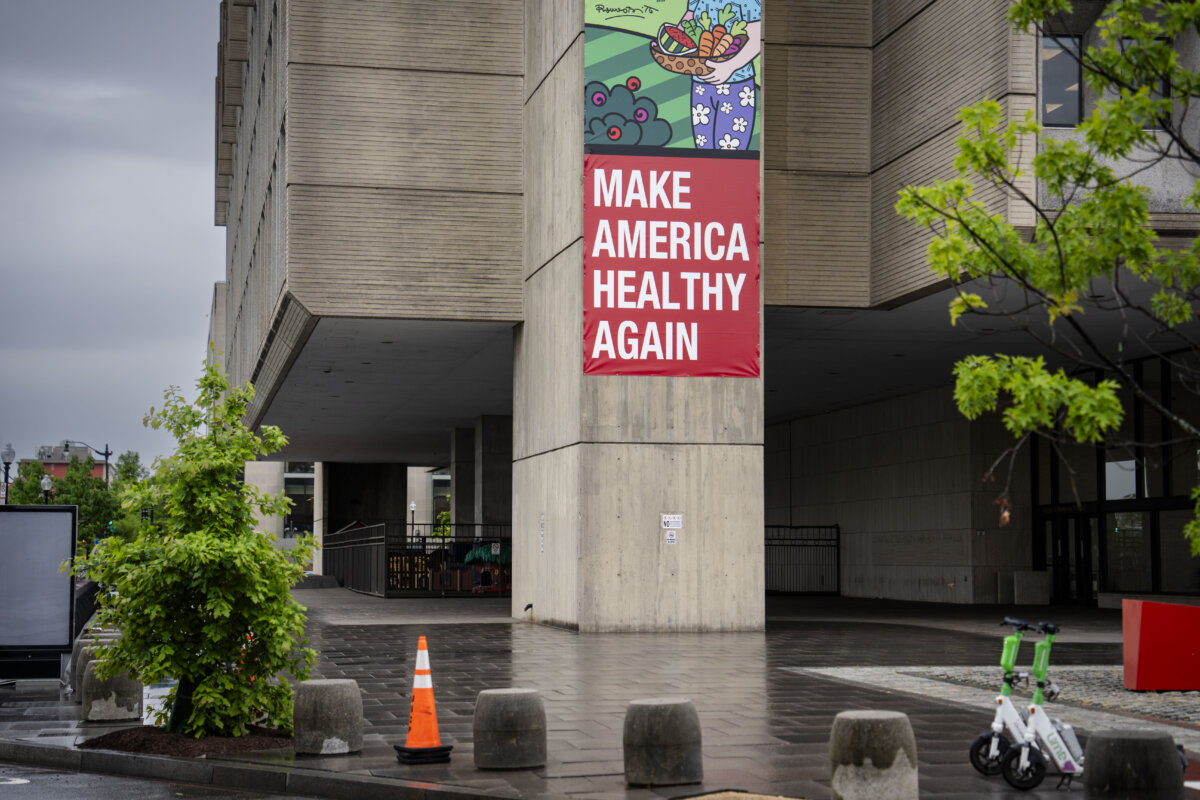
About a year ago, I sat late into the night at a farm-to-table restaurant in Washington with a group of people, and we jokingly called ourselves the Food Avengers. We were preparing for a presentation at The Heritage Foundation the following day, and the conversation had turned into a spirited debate about the Trump administration and the Make America Healthy Again movement.
Calley Means was sitting at the table, and he was getting an earful.
Several of us were questioning why things weren’t moving faster, why promises hadn’t materialized, and whether the administration would accomplish the reforms so many of us had worked toward.
What I remember most wasn’t simply that Means defended President Donald Trump and Health and Human Services Secretary Robert F. Kennedy Jr., although he certainly did. It was the extraordinary patience with which he navigated a table full of frustrated people.
He made everyone feel heard while standing his ground. He reminded us that politics is a slow-moving ship, that nothing meaningful is built in a day, and that we shouldn’t become shortsighted in our expectations.
He acknowledged frustrations of his own, not as complaints against the administration but as a way of validating what we were experiencing.
It was artful, really. I left that dinner with even more respect for a man I already respected. We had been able to converse, disagree, and genuinely hear one another with respect and understanding, something increasingly rare in our world.
Now, about a year later, Means has resigned from the administration.
Reporting surrounding his departure suggests that he, too, had grown frustrated with the pace of reform and resistance within Washington. I couldn’t help but think about that dinner.
I don’t know everything that went into his decision. Means has been a steadfast voice for food reform and was instrumental in bringing Kennedy and Trump together. We’re excited to welcome him to Sovereignty Ranch for our Food Is Medicine conference in May.
But his departure raises a bigger question.
What if the people who enter government to change it eventually find themselves choosing between defending the institution and leaving it?
I like Kennedy. I supported him, I’ve read the vast majority of his books, and he’s been to my ranch. Both Kennedy and Means are also friends of my brother, Ryland Engelhart. These aren’t distant political figures to me. They’re people whose work I’ve followed, whose convictions I’ve respected, and whose efforts to change our food and health systems I’ve supported.
Which is precisely why I’m having difficulty reconciling some of Kennedy’s recent statements about measles.
Kennedy has attributed measles outbreaks to children who missed vaccinations during the COVID-19 lockdowns. He has also publicly encouraged measles vaccination.
For someone unfamiliar with his work, these statements might seem unremarkable. But Kennedy spent years challenging conventional narratives about measles, vaccine safety, and the pharmaceutical industry’s influence over public health.
In 2021, he wrote the foreword to “The Measles Book,” challenging what Americans had been told about the dangers of measles and the necessity, safety, and effectiveness of measles vaccines.
This wasn’t an offhand comment or a sentence taken out of context. It was a book he put his name on.
I understand that someone can oppose mandates while believing that vaccines prevent disease. But Kennedy’s questions went considerably deeper than mandates alone.
Perhaps his understanding has changed. People are allowed to change their minds. I certainly have.
I was a vegan chef who believed that animal agriculture was destroying the planet. Then I became a farmer, and nature taught me things that contradicted much of what I believed.
But I couldn’t simply begin serving meat and pretend I had always held those beliefs. I had to acknowledge what had changed and explain why.
If Kennedy’s understanding of measles has evolved, I would genuinely like to understand what evidence led him there and how he reconciles his current statements with his earlier writing.
I ask not as an adversary, but as someone who respects him and believes that the questions he spent decades asking still deserve answers.
When Kennedy visited Sovereignty Ranch, someone in the audience asked whether he would accomplish the changes he had promised.
His answer stayed with me.
Kennedy acknowledged that, in many ways, his hands were tied. He explained that the real power wasn’t necessarily sitting in Washington. It was sitting in the audience, with the mothers, families, and ordinary Americans willing to organize and speak up.
He pointed to pesticide-related language in the Farm Bill being challenged at the time and credited MAHA mothers who pushed back against provisions that they believed would protect chemicals such as Roundup.
He told us that our collective voices were making the difference.
I believed him then, and I believe him now.
There is no leader, no king, no president, and no cabinet secretary we can put in Washington who will suddenly take responsibility for everything we believe needs changing.
We cannot elect someone, go home, and assume the work is finished.
But I’m beginning to wonder whether we have misunderstood what changing the system actually means.
I’ve spent much of my adult life fighting government interference in the most ordinary parts of human existence: growing food, feeding people, raising children, running restaurants, and making decisions about our own bodies.
I don’t want a government that makes all the decisions I agree with. I want a government that makes fewer decisions for me in the first place.
That’s a distinction I think we’ve lost.
We get so excited when someone we agree with gains power that we forget to ask whether the power itself should exist.
We celebrate when our people take control of agencies that we’ve spent years criticizing. But have we changed anything fundamental if those agencies retain the same authority over our lives?
If the machinery remains intact, eventually someone else will operate it. And that person may not share our values.
Perhaps we have confused getting our people into positions of power with actually changing where power resides.
But what if neither Kennedy nor Means has given up? What if they’re simply employing different strategies?
Perhaps Kennedy believes that he must remain inside the institution, even defend parts of it, to accomplish the changes he came to make. Perhaps Means believes that he can accomplish more from the outside.
I don’t know. That’s speculation, and I don’t pretend to understand the pressures either man faces.
It’s easy to sit on the sidelines and explain how we would do things differently. It’s much harder to take responsibility for actually changing something.
Both men have changed the public conversation about food, health, chronic disease, and the institutions that shape our lives. They have introduced ideas into our culture whose ripple effects we cannot possibly measure.
And perhaps that’s the point.
The machinery of government remains slow-moving, but the ideas these men have helped bring into public discussion don’t have to move at the speed of government.
Once those ideas enter our culture, it’s up to us to carry them forward.
Maybe we all need to do a little less backseat driving and a little more defending of what we believe in our everyday lives.
We can keep questioning our leaders while recognizing that we have responsibilities of our own. We can demand accountability without assuming that every compromise represents surrender.
Kennedy told us at my ranch that the power was in our collective voices.
Perhaps we need to stop measuring the success of a movement by what its leaders accomplish inside government and start measuring it by what the rest of us are willing to do outside of it.
Because if we truly want to be a free people, we must stop asking for permission and start remembering that the power lies with us.
Views expressed in this article are the opinions of the author and do not necessarily reflect the views of The Epoch Times.