
Commentary
In one week, we have watched historic flooding hit Florida, California brace for more water, the stock market plunge, bank and technology services falter, and a USDA security breach interrupt farmer payments.
There is also a steady stream of warnings and alarming headlines about what might happen next.
These events reach people through the same chain of work, money, services, and family obligations. The consequences don’t stop with the person whose screen goes dark or whose deposit is delayed. They travel downstream.
The market’s decline is not just a financial story. On Nov. 20, the S&P 500 fell 3.7 percent, and the Nasdaq fell more than 5 percent. For people whose retirement accounts are tied to the market, those numbers show up as a smaller balance and new questions about whether they can retire when they planned. Someone already drawing from savings may have to watch that money lose value while still paying ordinary bills.
Flooding has its own chain reaction. Roads close. Businesses shut their doors. Workers can’t get to their jobs. Deliveries are delayed. People miss work or lose income while trying to protect their homes. Florida continued to deal with flooding over the weekend, while Northern California prepared for very high tides and further flood risk. Weather disruptions don’t stay at the shoreline.
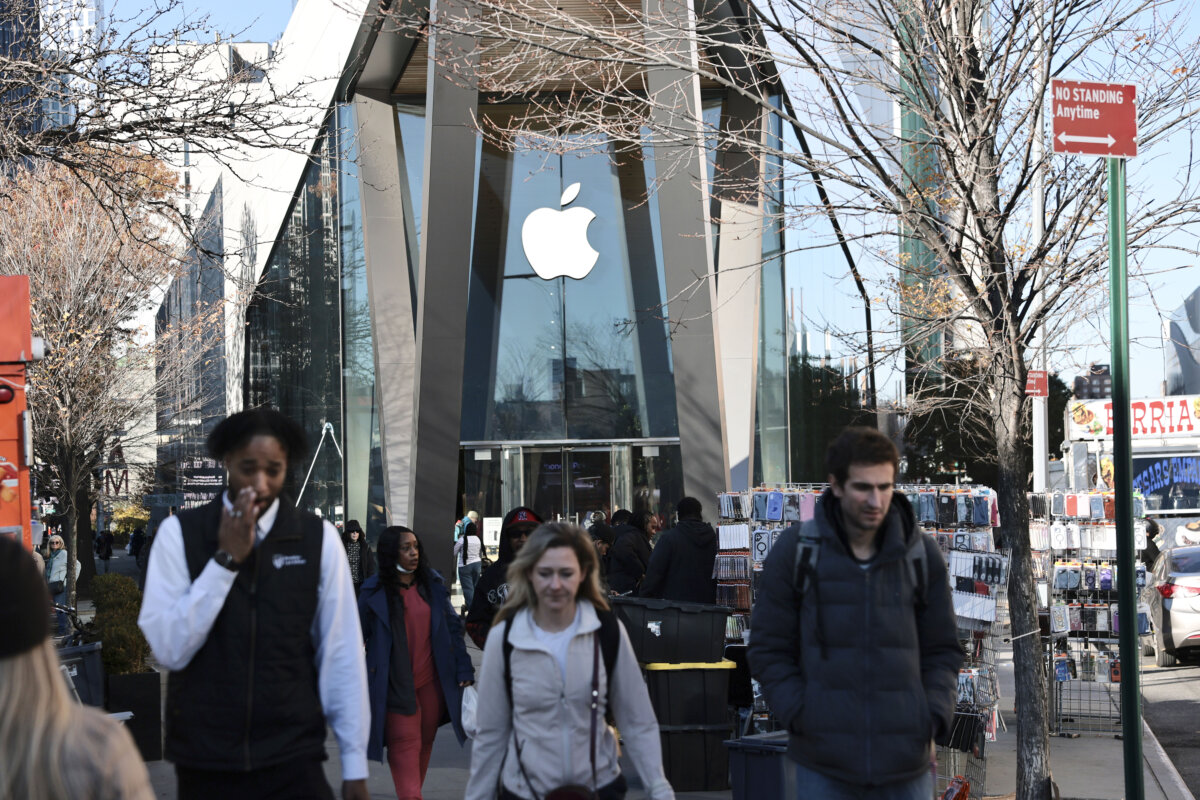
In recent days, I felt the effects of several disruptions in our own accounts and devices. I had trouble accessing my Bank of America and Chase accounts. Apple services interrupted me, too. For several hours, I couldn’t move money from one account to another. I bounced two paychecks to my employees.
That is where a temporary inconvenience becomes someone else’s uncertainty. Those employees were counting on their pay. They have families and bills of their own. When the money didn’t arrive as expected, the stress didn’t stay with me or the farm. It moved to them, and then to the people depending on them.
A business is not separate from its workers. A farm is not separate from the businesses that serve it or the families who work there. We are all part of an interconnected economy of human beings. Stall one part and the strain moves outward. The owner worries about payroll. The employee wonders when the money will clear. A family delays a payment. Another business waits for its customer to pay. That is how a disruption in one place becomes pressure in many places.
The USDA breach has put our farm in that position, but in a different way. Earlier this year, after Agriculture Secretary Brooke Rollins announced the regenerative agriculture grants, I spoke about applying. My experience with our local FSA office has mostly been excellent.
The program also has rules that don’t always make practical sense. We couldn’t be paid for practices we were already doing, because the program was meant to encourage farmers to begin them.
Even with those frustrations, we got contracts for land clearing, biochar spreading, and a well on the far side of the property where our livestock had no water. Those are important projects for our farm. We spread the first section of biochar and received payment without a problem.
Then we completed the second section. The fiscal year changed, USDA needed another piece of paperwork, and I filled it out. I followed up by phone. No payment came. Now, I’m told the system was hacked and that there is no timeline for the delay.
We have already spent a large part of that money doing the work. We are waiting for a $50,000 payment, and I don’t know when it will be initiated.
I have my criticisms of government grants. But if the government is going to support farming practices that damage our health and the environment, I will apply for the small share it makes available for regenerative agriculture.
The money is not theoretical to us. It represents completed work and costs the farm has already carried. If that payment stalls, the effect can reach our employees, our suppliers, and the families who depend on the farm’s business.
This is not only about one person’s nervous system trying to make it through the week. It is about the nervous system of a whole community. When alerts, delays, account problems, and frightening headlines arrive one after another, people stay on edge. They check their phones again. They recalculate. They try to decide what they can postpone. Even when each disruption passes, people may still be bracing for the next one.
And the messaging never stops. Flood warnings. Market warnings. Cybersecurity warnings. Preparedness campaigns. Concern after concern, alarm after alarm.
Life is going to keep life-ing. Weather will keep weathering. There will always be another crisis, another warning, another reason to be afraid. As artificial intelligence grows more powerful and more of our lives depend on systems built with it, I expect hacks and disruptions to become more common.
The question is how we meet the next one. How do we regulate ourselves when the alarms are constant? How do we stay positive, steady, and connected to the knowledge that everything will be OK?
I think about the first weeks of COVID and the decisions I made. I think about the decisions I made six months later, and a year later, after living under a relentless media campaign of fear. Would I have made different choices if I had stayed centered in the belief that everything would be OK?
I hope that when the next crisis comes, I can stay centered, stay focused on my family and God, and remember that fear doesn’t have to make my decisions for me.
Views expressed in this article are the opinions of the author and do not necessarily reflect the views of The Epoch Times.