Commentary
I was walking through an airport on my way to a conference when I began watching the people around me. Thousands of us moved between gates, following the next instruction on a screen.
It struck me that much of modern life is organized around following the breadcrumbs of money. We go where the job is. We live where the opportunity is. We give our best hours to whatever provides the most reliable return. Looking around that airport, I wondered how many people loved the lives waiting for them at the end of those breadcrumbs. How many believed their work mattered? How many felt inspired by what they were building?
I was not judging them. I was carrying my own fear through that airport.
Life has felt hard lately. My family and I are working extraordinarily hard—pushing, building, solving one problem and then the next. We are far out on the skinny branches, with no net beneath us. I am trying to manage my own fear without allowing it to steal my presence from my children. I am trying to remain attentive to my husband while carrying all the burdens that are mine to carry. I believe profoundly in what we are creating, but I would be lying if I said I was not scared.
I do not want a different life. I just want what we are doing here to work.
Opening a restaurant in the middle of nowhere, on a ranch at the end of a caliche road, is not the most obvious business plan. It asks our family to raise and prepare food, care for land and animals, employ people, welcome strangers, and keep showing up when convenience might suggest something easier.
But it also asks something of the customer.
Coming to our restaurant requires more than pulling off the highway at the nearest familiar sign. It requires a drive into the country. It requires choosing a family business when a centralized system can deliver almost anything to your front door by tomorrow morning. It requires believing that where you spend your money helps determine what kind of world will remain.
That makes the relationship between a small business and its customers a joint commitment to something larger than either of us.
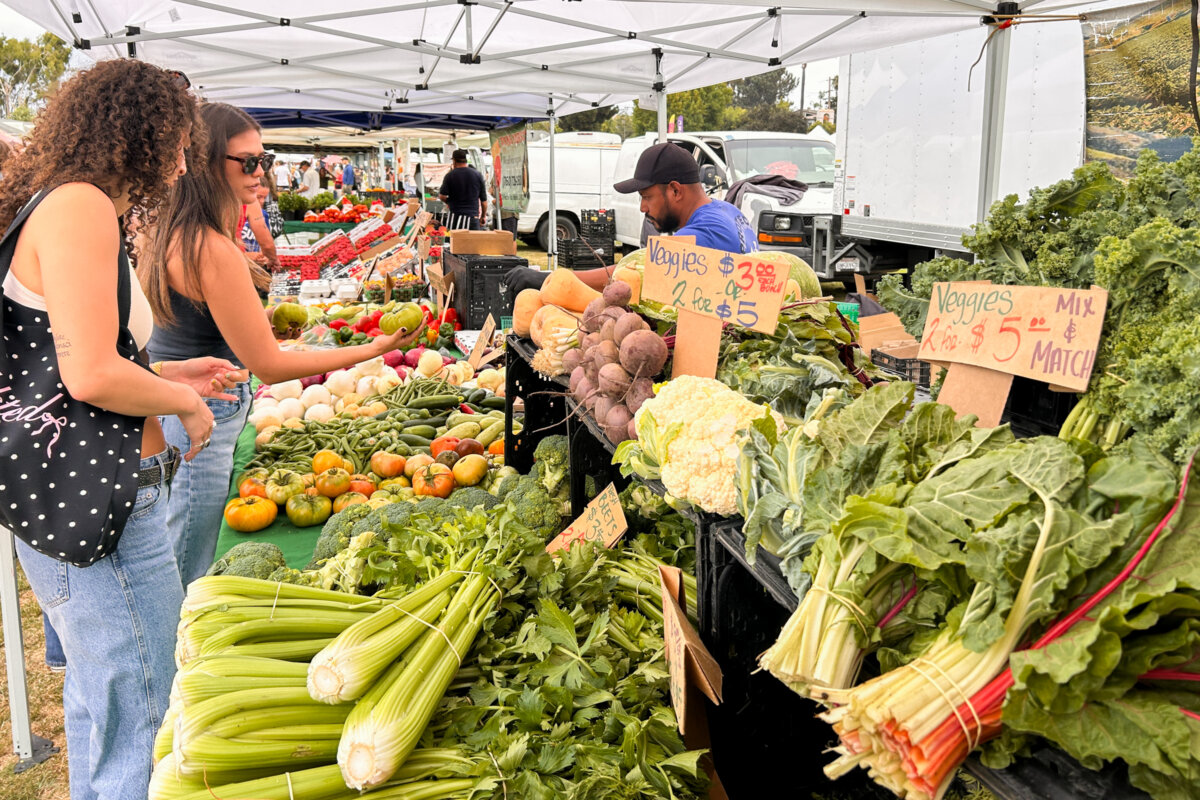
In a progressively centralized world, how do we decentralize our spending? How do we siphon a little of our abundance away from the machine of centralization and direct it toward the local bookstore, coffee shop, restaurant, farm, butcher, hardware store, or family business that makes our community distinct?
We do it one ordinary decision at a time.
Yesterday, my husband needed something. I told him I could order it. It would soon appear at our door.
“No,” he said. “I’ll go to the hardware store.”
It was a tiny decision, almost too small to notice. Yet that is how we say “I want this store to be here.” We say it with our dollars.
We often speak as though corporations simply took over our communities, but we participate in that transfer each time convenience wins by default. This is not an argument that no one should ever order online or shop at a chain. Families are busy. Money is tight. Sometimes the centralized option is the only practical one. But convenience has become so constant that we barely notice what we are trading for it.
The local hardware store cannot survive on our affection. The independent bookstore cannot pay rent with our good intentions. A family farm cannot repair a tractor with social media praise. A restaurant cannot keep employees because the community says it is glad the restaurant exists. Admiration matters, but participation keeps the doors open.
I know that purpose and prosperity can coexist. Before this calling, I built businesses that inspired me and made millions of dollars. COVID-19 policies dismantled what I had spent years building. I did not come to Texas because I believed struggle was noble. I came here to begin again.
Now we are building something different: a working ranch where food, soil, animals, family, hospitality, and education meet. My children are growing up inside the work. Guests can eat food connected to a place and to people they can meet. The ranch is ours, but the vision has never grown through our effort alone.
People have offered to give us livestock. One man gave us 30 goats because he wanted to participate in what we were building. Others have supported us by coming regularly to the restaurant, ordering our boxes online, commenting on my articles and social media, subscribing to my Substack, and sometimes even sending money. Support arrives in a thousand ways, and I receive all of it as the community saying “We want you to survive.” What we are building works only if the community supports it—but that is true of every family business in every community.
Tenacity alone, without community support, makes no difference. But tenacity married to community support? The possibilities are endless. Each act becomes part of the ripple.
Perhaps people do not merely want to stand outside and applaud something they believe is good. Sometimes they want to place their hands inside it. Those of us doing the building must be honest enough to let them see where they can enter the story.
That is difficult for me. I am accustomed to carrying the weight, finding the answer, and presenting the finished result. It is more vulnerable to say that the outcome is not guaranteed. We are holding it together, but holding it together is hard. Inspiration does not erase the numbers, and something worthwhile does not automatically become financially sustainable.
I suspect many people know this feeling. Maybe you are not opening a restaurant on a ranch. Maybe you are caring for a spouse, raising grandchildren, keeping a small business alive, planting a garden, rebuilding after a loss, or trying to create something no one else can see yet. You are grateful for the life you have chosen and frightened that it may not work. Both things can be true.
As the holidays approach, perhaps we can ask a different question before we buy: What do I want my money to keep alive?
Maybe the answer is a Christmas basket from a farm, a book from a local shop, dinner at an independent restaurant, or a gift made by someone in your town. Maybe it is paying slightly more, waiting slightly longer, or driving a little farther. Perhaps it means choosing the imperfect, human-scale option when the machine offers us frictionless convenience.
This is not charity. It is commerce with intention. It is recognizing that every purchase sends a signal about the world we want.
Ultimately, I want my life to create a ripple of positivity. I want people to see themselves in me—not because everyone should build a ranch, but because everyone has something valuable to strengthen. When one person chooses deliberately, another person gets to keep building. That builder employs someone, feeds someone, teaches a child, or keeps a piece of community alive. The ripple moves outward.
I still want what we are doing here to work. That is the vulnerable truth. But I also want our work to remind people that they are not powerless against centralization. We can redirect a little of our abundance. We can choose participation over passive admiration. We can use our dollars to say, clearly and repeatedly, “This is what I want to remain in the world.”
Views expressed in this article are the opinions of the author and do not necessarily reflect the views of The Epoch Times.