
Commentary
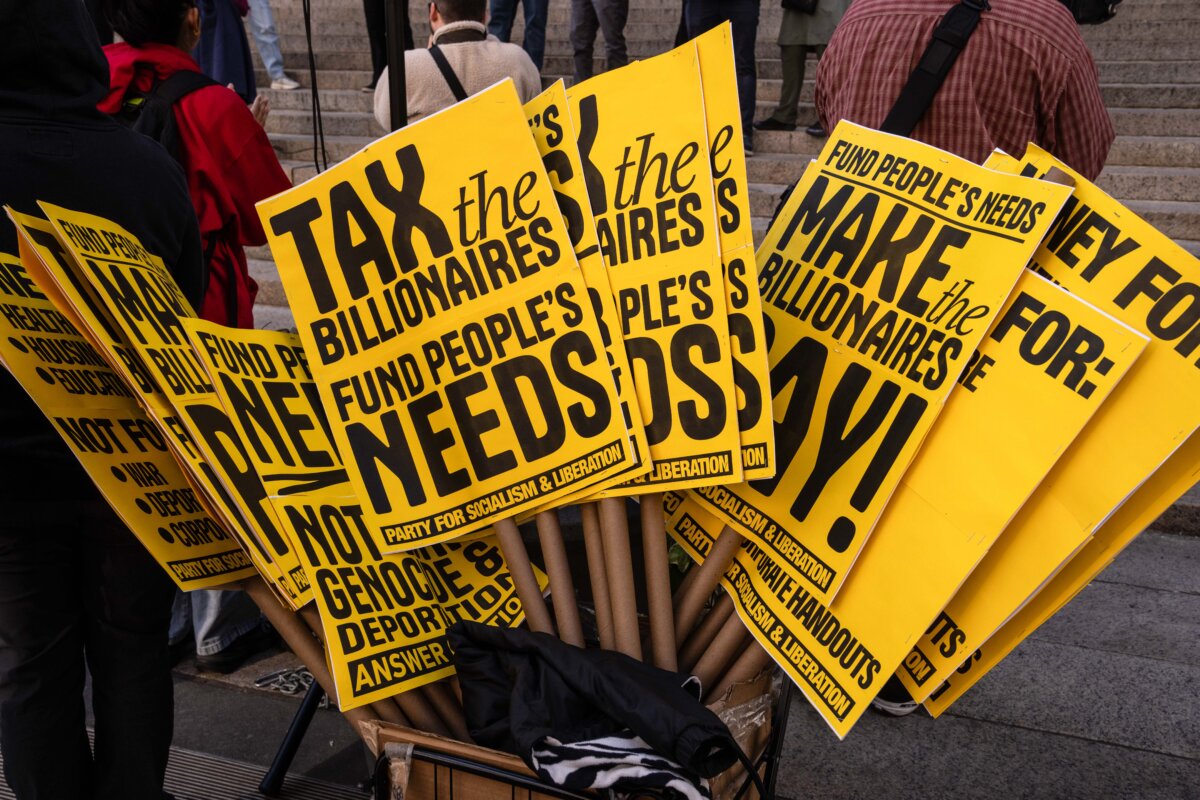
This year, in states from Florida to Michigan, candidates backed by the Democratic Socialists of America (DSA) won their primaries, upsetting established candidates by pushing a slate of DSA positions.
Although not all of the DSA candidates agree on some of the party’s more adventurous proposals, such as abolishing the U.S. Senate, they are all in loud agreement on a demand for universal healthcare (UHC).
A call for government-paid UHC is not new or unique to the DSA. As far back as President Franklin D. Roosevelt, mostly Democrats (but some Republicans) have claimed that healthcare is a right and therefore owed to all Americans.
Legally speaking, this argument has not held up well. “Rights,” as defined in the Constitution, are liberties guaranteed to the people and are better classified as things the government must not do to us, not things the government should do for us. This is no minor distinction, and I often wish that those who advocate for, well, a number of things would be more mindful of it.
Perhaps sensing that the “healthcare is a right” argument has lost traction, advocates for UHC have switched tactics, calling healthcare for all a “moral obligation,” one that falls on Americans.
An obligation is either a legally binding duty or an expectation of what we should be doing for one another. It is, most fundamentally, a statement about a relationship in which the parties agree to see to the needs of one another.
Given this, and please correct me if I am wrong, at least two of the obligations that would fall on those expected to pay for UHC are as follows.
First, they would be expected to pay for it through higher taxes. Second, they would be obliged to accept the penalties for supporting, and refusing to support, UHC. In the first instance, the higher taxes needed to fund UHC would oblige some to work extra hours or forgo the purchase of things deemed necessary or desirable, and that is a penalty. Those who try to opt out of paying for UHC by evading the tax would incur the penalty of explaining their choices to an IRS agent.
All well and good.
But what are, we should ask, the obligations incumbent on those who will receive the care? Since they are not expected to pay for it, what will they be expected to bring to the “moral obligation” of UHC? And what penalties, too, should they be expected to accept for choosing not to do their part?
In other words, since advocates for UHC frequently assert that it is something that “everyone” should “stand up and fight” for, what will those who receive the care bring to the fight?
This is not a question rooted in pettiness or a dislike of the poor. Rather, if UHC is an obligation, and if, according to its proponents, “everybody [is] in” and “nobody [is] out,” what are its recipients “in” for? What is fair and equitable?
Is it not equitable to expect those who might receive UHC to keep themselves as healthy as they reasonably can? Don’t they have an obligation to not take drugs, to not smoke or overeat? Don’t they have an obligation to do some sort of exercise on a regular basis? What penalties should be meted out to those UHC recipients who refuse to meet their obligations and will not do their part?
Advocates never discuss—or, in most cases, even mention—any reasonable and prudent obligations or penalties that might be expected from would-be UHC recipients.
As the great American salesman Zig Ziglar once said, “A goal properly set is halfway reached.” The inverse of this adage is also true.
Consider the following: Among those who receive Medicaid, some 40 percent are obese, compared with 27 percent of those who pay for their own insurance. Depending on how obese a person is, his medical costs are anywhere from 100 percent to 300 percent higher than someone with a normal body mass index.
The result? According to some data, 82 percent of Medicaid dollars are spent on chronic illness related to or driven by obesity, and over the past 10 years, Medicaid spending has risen by nearly 100 percent.
Such increases are not sustainable, especially when, on average, anyone who currently receives taxpayer-funded healthcare and overeats, or smokes, or does drugs, or refuses to exercise and maintain a healthy body weight is using up his share of healthcare dollars, plus those that could be used to treat one to three other people in need.
The inequities of obligations within our current system of taxpayer-funded healthcare are as unjust as they are indefensible. Expanding this unfair arrangement by way of UHC would catastrophically compound that effect.
I am sympathetic to those advocating for affordable healthcare. I grew up poor and sick with asthma that frequently led to hospitalization for severe respiratory infections such as pneumonia. I watched, helplessly, as my mother bent under the strain of medical bills totaling tens of thousands of dollars that took her decades to pay in full.
Yes, it is clear that our healthcare system is not working well. In the United States, we spend more per person as a percentage of gross domestic product on healthcare than most of the world, but Americans are some of the sickest folks on the planet.
Might this mismatch between money in and health out be driven, at least in part, by not expecting those who benefit from taxpayer-supported healthcare to do more, even just a little more, to take better care of their health?
The DSA and its advocates are correct when they predict that UHC will only work if all Americans are obliged to support it. What keeps me—and, I suspect, millions of others—from backing their scheme is the grossly lopsided nature of the obligations they propose.
Views expressed in this article are the opinions of the author and do not necessarily reflect the views of The Epoch Times.







