
Commentary
From afar, the Chinese Communist Party (CCP) appears to have pulled off an unprecedented economic miracle. Official figures reveal that China’s cumulative trade surplus has breached the astounding $1 trillion threshold for two consecutive years.
That’s an enormous accomplishment.
To casual observers, these jaw-dropping numbers suggest an ultra-productive economy running rings around its global competitors. In a sense, that’s true, and the CCP is not shy about lauding itself for those figures.
But there’s another reality, too—one that matters far more over the long term than two or three excellent years of exports.
Structural Imbalances
China’s economy is marked by deep structural imbalances that manifest in a number of ways.
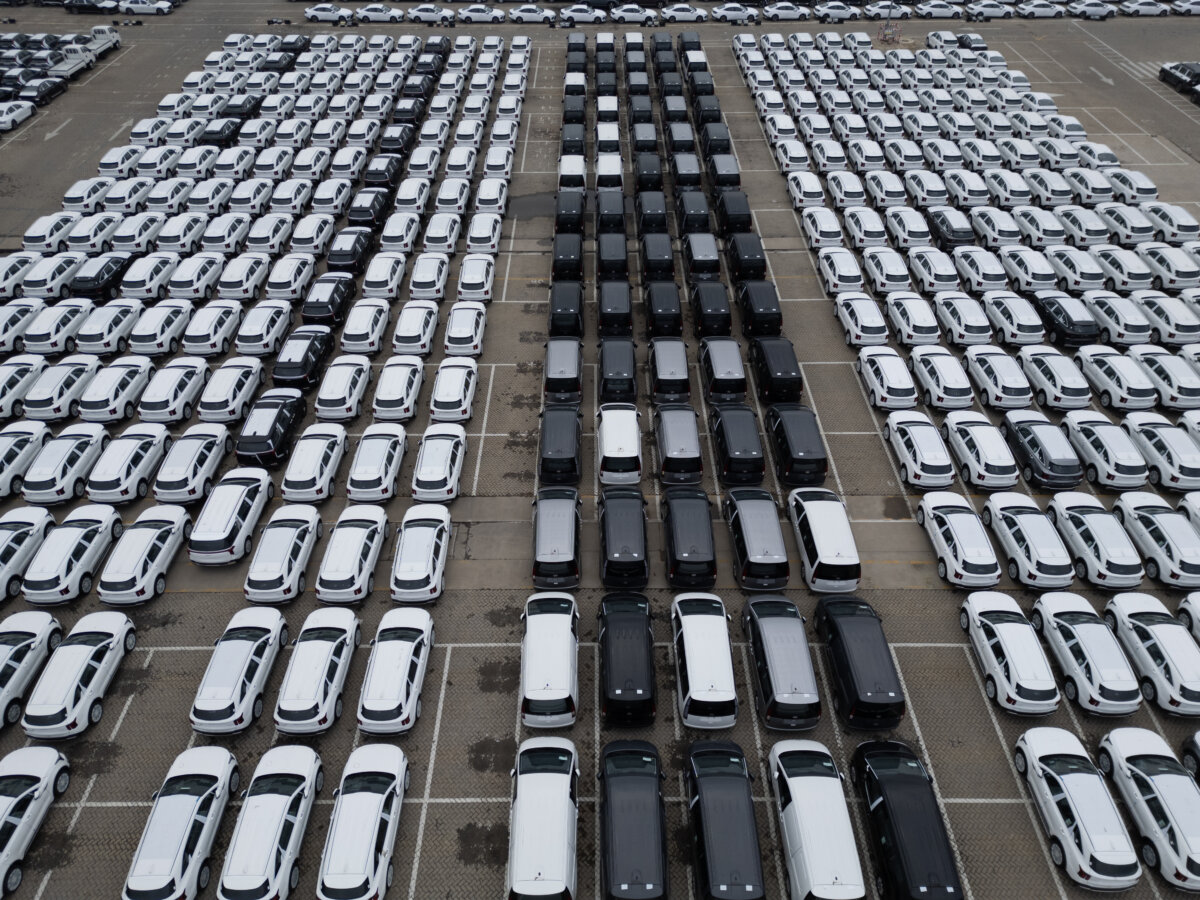
For example, its record trade surplus is driven by forced manufacturing overcapacity rather than genuine productivity growth. The idea is to employ as many people as possible in the export sector to minimize unemployment challenges.
That helps keep the economy going, but it also creates overcapacity. That overcapacity forces prices on Chinese exports lower, which undercuts foreign competition. In short, China is exporting deflation to its trading partners, costing them business and market share and leading to falling employment and hardship.
Trading with China, as they now know, comes with a steep price tag.
Domestic Economy Slowdown
Meanwhile, the domestic economy remains depressed.
As noted above, low and slow domestic demand plays a big role in China’s distorted export policies. China floods world markets with state-subsidized factory output because its own citizens cannot—and will not—afford the goods produced within its borders.
China’s domestic economy remains mired in deep stagnation. Consequently, Chinese retail sales growth has slowed to negligible levels, hovering near historic lows outside the pandemic lockdowns. The fundamental driver of this consumer freeze is the multi-year collapse in the real estate sector, which—together with related industries—once accounted for nearly one-third of the Chinese economy.
Recall that for decades, urban Chinese households held nearly 70 percent of their private wealth in residential property. It worked for a generation or two, as China’s standard of living rose and its factories fed Western markets with everything they could buy.
But as developers and investors overleveraged themselves, they defaulted and home values plummeted, wiping out trillions in household wealth overnight. China’s households were left with real estate portfolios that, according to some estimates, have lost up to 20 to 40 percent of their value.
The real estate crash’s impact continues to reverberate today and is compounded by record youth unemployment, wage stagnation, and a weak social safety net. The average Chinese citizen has entered a defensive posture to keep things going.
Rather than spending on consumer goods, electronics, or dining out, households are hoarding cash. Beijing’s factory floors continue to churn out consumer goods at full capacity, but because local workers lack the confidence or cash to purchase them, the state forces those products onto cargo ships bound for foreign ports.
Thus, as the domestic economy remains flat or even shrinks, the export economy becomes a larger part of the national economy. That’s not entirely bad, but the reasons for it—flat domestic consumption and overcapacity, as well as exporting deflation and unemployment to its trading partners—certainly are.
More Tariffs Are Coming
The CCP’s current export-led survival strategy is approaching a hard economic ceiling. Looking ahead, both the export engine and the internal economy face unprecedented headwinds.
First, Western democracies and developing nations alike are recognizing Beijing’s tactic of exporting its internal deflation.
In response, the United States and the European Union are expanding targeted tariffs, anti-dumping investigations, and regulatory blockades. This won’t happen all at once, but it will, and it will get stricter over time.
Even so-called Global South nations are raising import duties to protect their own young industrial bases from being wiped out by cheap Chinese imports. As these trade doors close, China will find it increasingly difficult to unload its excess capacity abroad.
With factories facing more tariffs and exporting less, margins will narrow and profitability will collapse. That will lead to broader wage cuts and further layoffs—a vicious cycle that only depresses domestic consumption further.
The CCP will have to manage a shift from state-directed industrial investment toward directly supporting household consumption for Chinese enterprises, but that won’t happen overnight.
China’s trillion-dollar trade surplus is not a position of strength, but a monument to structural imbalance. By prioritizing industrial subsidies over consumer purchasing power, the CCP has forced its economy into a dangerous corner.
As foreign markets build tariff walls to defend their domestic industries, Beijing will soon find that exporting its way out of a domestic recession is no longer an option. When the global market finally stops absorbing China’s excess, the economic reckoning inside the Mainland will be impossible to hide.
It’s noteworthy that all of these failed policies that are driving China’s economy and society to the edge of sustainability have been brought about by none other than the CCP.
Views expressed in this article are the opinions of the author and do not necessarily reflect the views of The Epoch Times.