Commentary
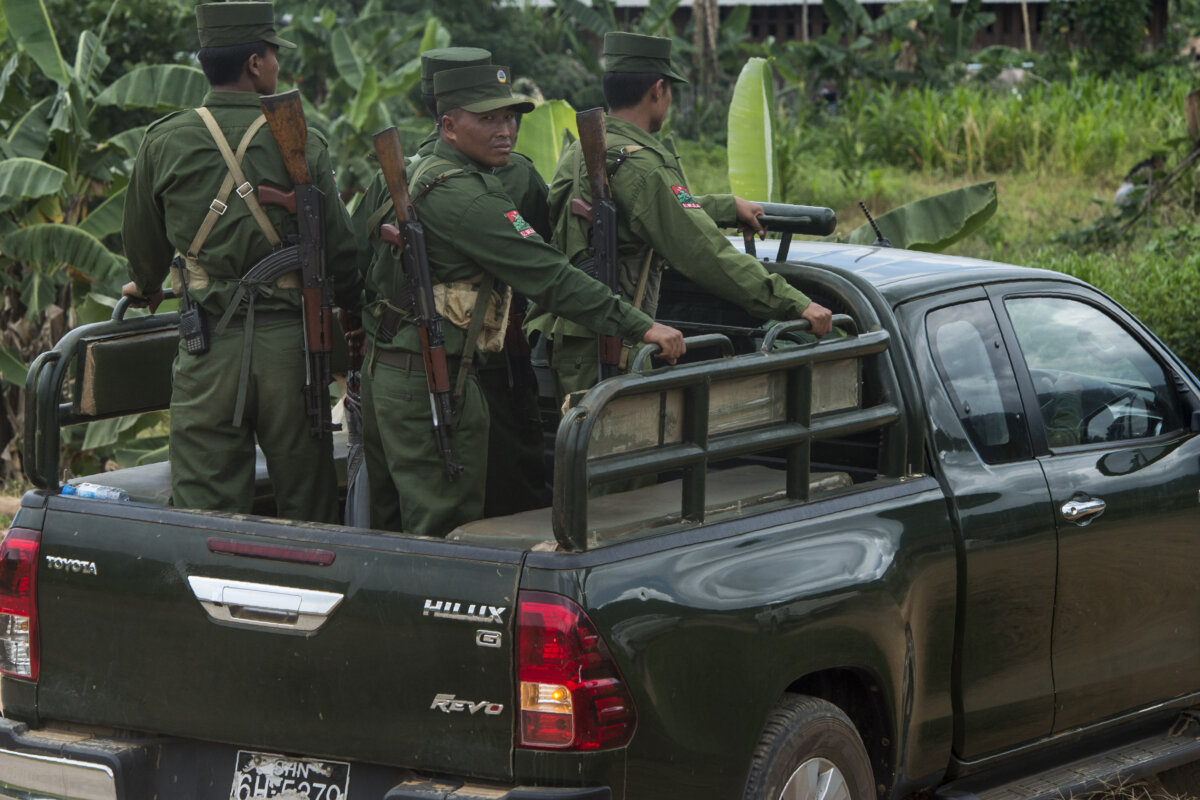
China controls the flow of heavy rare earths out of eastern Burma’s (also known as Myanmar) Shan State, the same minerals Washington is now seeking to access. Chinese-backed companies operate there under the protection of the United Wa State Army (UWSA), an armed ethnic organization that the U.S. Treasury designated a drug kingpin in 2003.
The Shan Human Rights Foundation (SHRF) has reported that the UWSA and China reached a deal allowing Chinese-backed companies to mine and export rare earths from Wa territory without the military government’s approval. Almost all output crosses into China for processing. This creates a problem for Washington, which is negotiating with a government that does not control the mines.
The Trump administration has opened direct talks with Burma’s military rulers, initially focused on shutting down scam centers targeting Americans but potentially extending to rare earths. Assistant Secretary of State for Intelligence and Research Michael Vance met military leader Min Aung Hlaing in Naypyidaw in September. A second round followed in Tokyo in October.
The talks come weeks before China’s suspension of its October 2025 rare earth export controls expires on Nov. 10, 2026. Beijing’s April 2025 controls remain in force, requiring case-by-case licenses for seven medium and heavy rare earths. These include dysprosium and terbium, used in high-temperature magnets for electric vehicles, wind turbines, and defense systems.
Burma is China’s main outside source of heavy rare earths. S&P Global calculates that it supplied 52.8 percent of China’s total rare earth imports in 2025. Gracelin Baskaran of CSIS said Burma’s production gives Beijing a “de facto monopoly over the global heavy rare earths supply chain.”
Shan State’s role grew after the Kachin Independence Army (KIA) seized the Pangwa rare earth hub in neighboring Kachin State from a junta-aligned militia in October 2024. China closed border gates, halting mining until Beijing negotiated with the KIA to regain access.
During the disruption, Chinese-backed mining expanded into Shan State, where the UWSA maintained a ceasefire with the military, and the border remained open. Kachin still accounts for nearly 80 percent of rare earth mines established since 2022, but the Stimson Center has identified at least 86 active sites in Shan State. SHRF reported that UWSA mines at Mong Bawk increased from three in 2015 to 29 in 2025.
Benchmark Mineral Intelligence analyst Neha Mukherjee told Reuters that dysprosium and terbium would be the main targets. Chinese firms, she said, can produce heavy rare earth oxides in Burma at one-seventh the cost in other regions with similar deposits.
The UWSA’s dependence on China extends beyond mining. Its territory uses the Chinese yuan and Chinese mobile networks, while China is its main export market for rubber and tin. Mandarin is widely used in communication and business, although the UWSA ordered schools in March 2026 to prioritize Burmese, followed by Wa.
China has also provided weapons to the UWSA for more than two decades, including shoulder-fired missiles, artillery, armored vehicles, and weaponized drones. Shipments often pass through Laos to disguise their origin.
Chinese investment connects the mines directly to major producers. China Investment Mining Company operates rare earth and gold mines on the Kok River near Thailand, according to an April 2026 communication from U.N. human rights experts. The company is 90 percent owned by Shanghai Chijin Xiawu, a joint venture of Chifeng Gold and state-backed Xiamen Tungsten, a major rare earth producer.
A stronger military government serves Beijing’s interests. China wants stability along its 1,300-mile border and protection for the pipeline terminus and port at Kyaukphyu. Pipelines to Kunming bypass the Strait of Malacca, while the planned deep-sea port would provide an Indian Ocean foothold.
After the junta’s elections ended in January 2026, Beijing welcomed the results, pledged diplomatic backing, and agreed to accelerate the China-Burma Economic Corridor. The government that Washington is negotiating with owes much of its battlefield recovery to Beijing.
Beyond its strategic and geopolitical interests, the United States has a direct economic stake. China supplied 71 percent of U.S. imports of rare earth compounds and metals during 2021–2024. A minerals deal would challenge Beijing’s exclusive access to Burma’s heavy rare earths, which underpins its near-monopoly on dysprosium and terbium.
But U.S. officials acknowledge that most deposits are controlled by ethnic armed groups and that China could object. Beijing could threaten to withdraw investment and economic backing from the junta or use its influence over the UWSA, export routes, and processing facilities to block U.S.-bound shipments. Without a deal, Burma’s minerals would continue flowing into China, preserving Beijing’s export-control leverage over the United States.
On the other hand, direct sales to Washington would reduce the junta’s economic dependence on China. Beijing is also unlikely to abandon its crucial investments in Burma. It would be more rational to negotiate an arrangement like the one in Iraq, where Chinese companies continue extraction while the product goes to multiple countries, including America.
With so many moving parts, armed groups, and competing interests, it all boils down to President Donald Trump’s art of the deal.
Views expressed in this article are the opinions of the author and do not necessarily reflect the views of The Epoch Times.