

Commentary
It’s all over the news that the yield curve is steepening at a rapid rate. Ten-year bonds are higher than they have been since 2007, while 30-year mortgage rates just surpassed 7 percent. One implication is obvious: It costs more to borrow. Housing just became less affordable for borrowers, while cash buyers experience a relative advantage in bidding.
It also has implications for holders of the old bonds. Those older bonds were issued when yields were lower. Their coupon payments are now less attractive than what a newly issued Treasury or mortgage-backed security pays. Because bond prices and yields move in opposite directions, the market value of those existing holdings falls.
An investor who needs to sell before maturity realizes a capital loss. Even if the bonds are held to maturity and principal is repaid in full, the holder locks in a lower income stream than the market now offers.
The effect is larger the longer the remaining maturity. A 30-year bond issued a few years ago at 3 percent or 4 percent can drop several points in price when the 10-year yield sits near 5.1 percent and the long end of the curve is still rising. Bond funds that mark their portfolios to market see their net asset values decline, even if they never sell a single security.
Banks and insurers that hold large inventories of older fixed-rate paper carry unrealized losses on their balance sheets; those losses stay paper losses only as long as the securities are not sold and deposits or policy claims do not force a sale.
The same dynamic that raises the cost of new borrowing therefore transfers wealth from existing lenders to new borrowers. Holders of the old bonds absorb the mark-to-market hit so that the market can clear at the new, higher yield. That is the less-discussed side of a steepening curve.
Bond prices are usually reported in nominal terms; that is, not adjusted for inflation. Once you add in existing and expected inflation, matters change dramatically. For example, even now, overnight Treasury debt, the price of which is set by the federal funds rate, sits right at zero, even though the Federal Reserve keeps raising rates. That’s right: We still live in the zero-interest rate policy world.
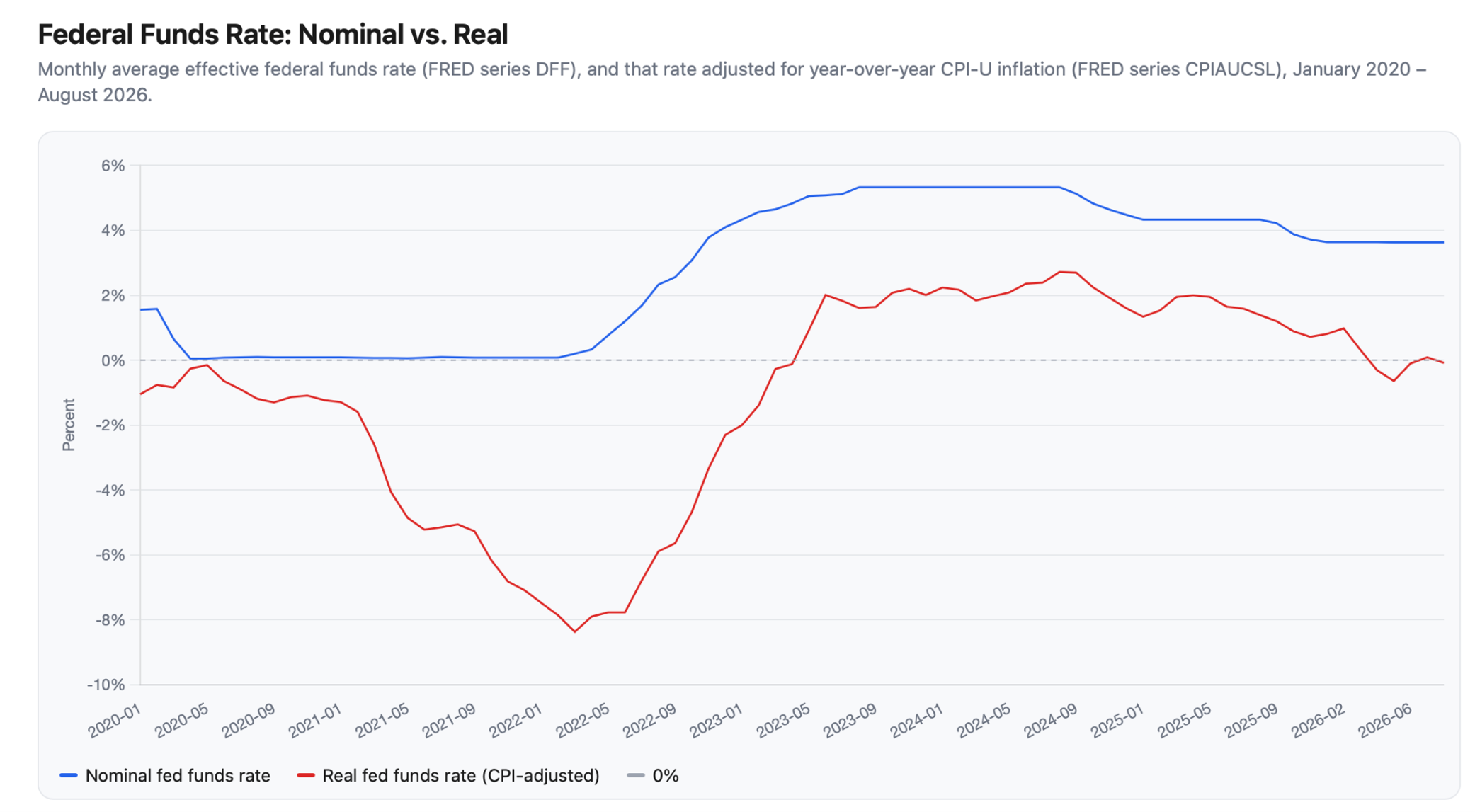
During much of the COVID-19 pandemic era, with its wild expansion and distribution of monetary goodies, we lived with this downward-sloping curve that a normal market would not generally reveal. Just the intuition here: Why should it ever be cheaper to borrow much longer rather than much shorter?
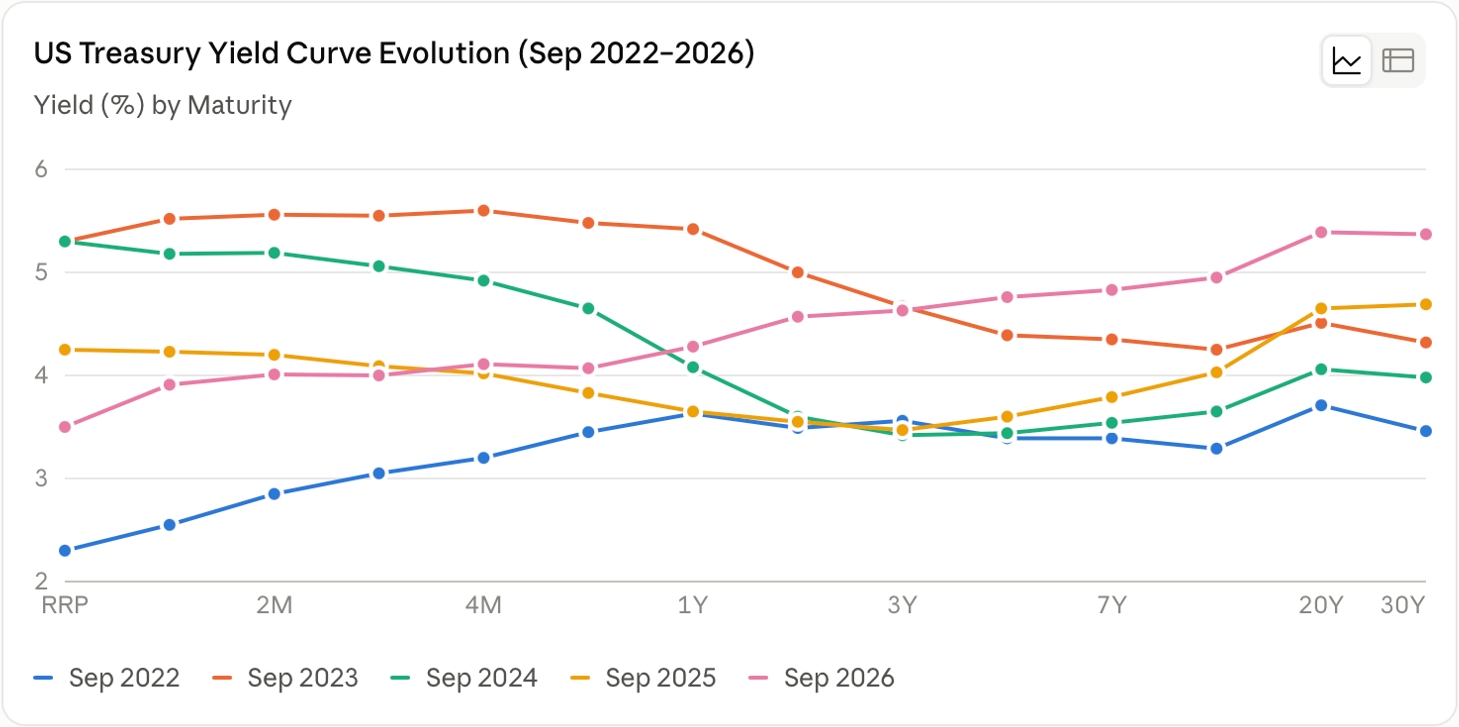
In this case, it is highly likely that the escalating curve suggests widespread expectations of higher inflation, rockier financial markets, and tightening money over the long term. In the background is the reality that everyone knows. For a quarter of a century, the Fed has massively subsidized credit markets through extremely generous open-market operations. A result has been a grueling inflation that has also distorted capital and financial structures. None of this is sustainable, especially in light of congressional spending habits that have created unfathomable debt burdens.
Let us pause for a moment to consider the mystery and magic behind the yield curve that gets almost no attention at all from the media or even in introductory classes in economics and finance. It has to do with the wondrous coordination function that is both revealed and imposed by the very existence of the curve. It serves as a constant reminder that the government and its friends can only control so much of the world.
To understand, let’s return to an imaginary primitive state of economic order that consists of nothing more than daily subsistence. You forage for food, trap an animal to eat, make a soup, and, if you have some leftovers, maybe you barter what remains or even sell it for money. Your time structure of production is a day or a few days, nothing more.
If everyone operates this way, there are no lending and borrowing markets, no real investment, no meaningful capital accumulation, and no robust time structure of production at all. Under these circumstances, there is no escape from material deprivation. Survival is the watchword and the only way anyone knows. It’s barely a stage out of the state of nature.
If the regime or tribe permits the accumulation of property—you are good at making pots so you make extra and sell them, provided no one steals them—then it becomes a form of capital. You can begin to calculate your return on capital based on how much time it takes to make them and how much in the way of resources is required to bring your pots to market.
Your business grows and now you can start to plan. You plan out a week. That becomes a month. That becomes a year or more. You begin to layer out your decisions with a future in mind. You develop what is called a low time preference, deferring consumption in the present in favor of an expected higher rate of consumption at a later time.
Or perhaps you decide to get risky. You are confident in your ability to make a return over time so you want to expand now. But you lack the resources. You ask friends for resources and make deals with them: You will pay 5 percent back in a year with the money your business generates.
Your promise takes on its own value and becomes commoditized and sold to others. Once capital holders are in a position to lend and others need to borrow, you get a secondary market that goes beyond mere goods to become a financial economy that is trading returns stretched out over periods of time.
Now you have a bond market. If everyone in this society does this, what emerges is called a financialized time structure of production. No one needs to plan this from the center; it emerges organically from the decisions of people within a social and economic structure of emergent complexity.
Those who are investing for a year can borrow from people who have saved resources from having made investments in the past. The same is true over five years or 10 years or 30 years. You can develop a mental map of how these time preferences look in society overall.
The manifestation of this time structure is revealed in the range of pricing of borrowed assets; that is, a yield curve. The shortest time frame will equilibrate to become identical to measured output of the economy, which is also identical to the return on capital saved.
This is where the yield curve becomes so enormously interesting. It is like a map of the time structure of production itself. It can be influenced by monetary policy from the central bank, but it ultimately has a mind of its own. That mind is the multilayered systems of trading in goods, services, lending, and borrowing.
How the shape of this beautiful thing turns out depends on countless numbers of factors. The people who have a stake in this are the traders who buy and sell bonds, plus the issuers and holders of existing bonds.
A steepening curve has implications for government finance. It raises the government’s cost of borrowing, but the pain arrives in stages rather than all at once. Most government debt is constantly rolling over. Bills and notes that were issued at lower rates mature and must be refinanced at whatever the market now demands. When the long end of the curve is rising faster than the front end, the average interest rate on the entire stock of debt drifts upward over several years.
This is a very serious problem right now as COVID-19 pandemic-era spending saddled the government with levels of debt that no one ever thought possible.
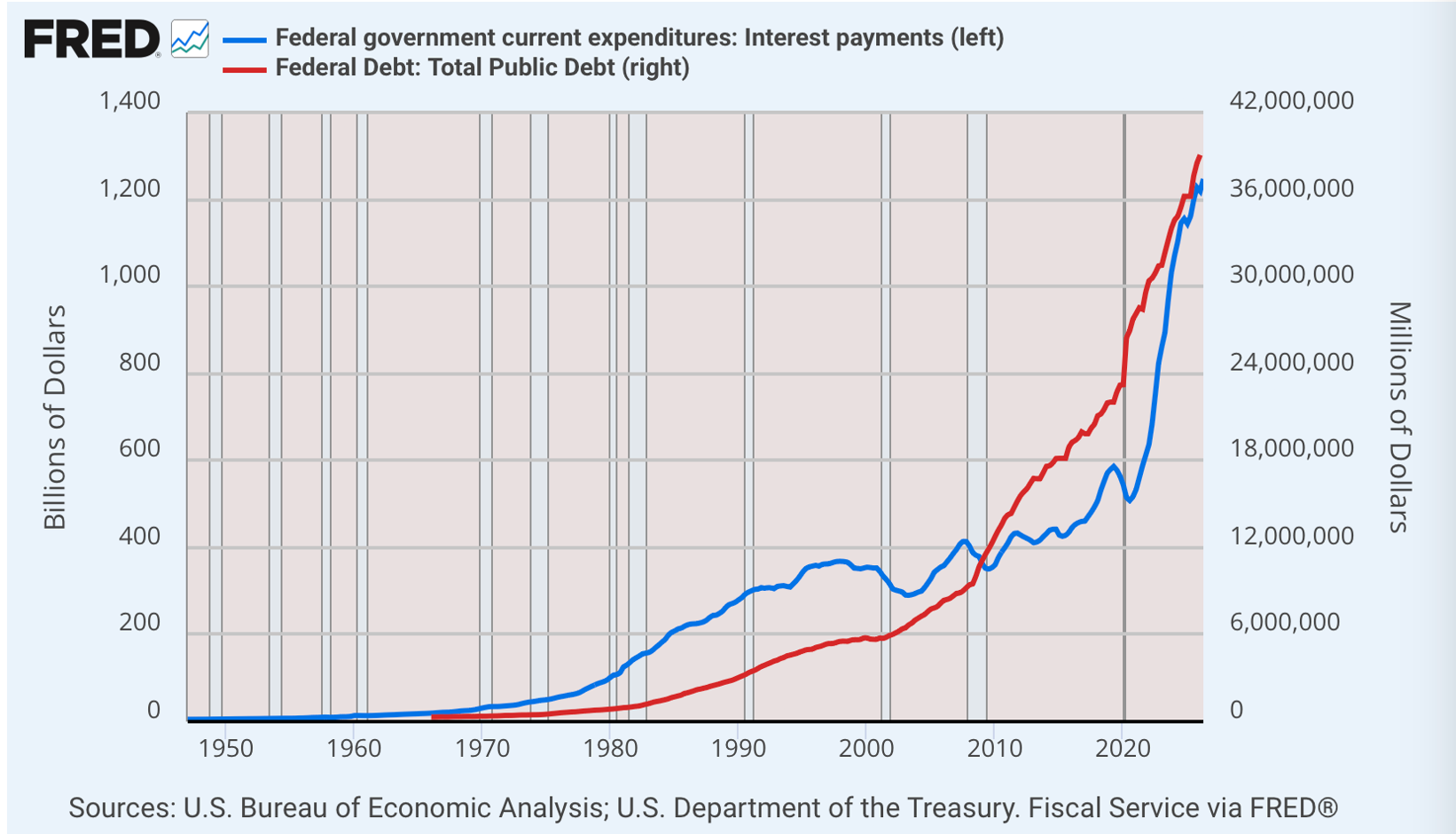
Additional borrowing compounds the problem. Taxation drains the private sector of the very capital needed for recovery. Inflation, the most politically palatable choice, acts as a stealth default that destroys the purchasing power of savings and distorts price signals throughout the economy.
What the steepening curve ultimately signals is the end of an era. For 25 years, policymakers operated under the illusion that money could be created without consequence, that debt could expand indefinitely at negligible cost, and that the yield curve could be flattened or inverted indefinitely through central bank intervention. The curve is now reasserting its natural shape, and with it comes a brutal reckoning. It’s the market’s way of saying that the bill has finally come due.
Views expressed in this article are the opinions of the author and do not necessarily reflect the views of The Epoch Times.