Commentary
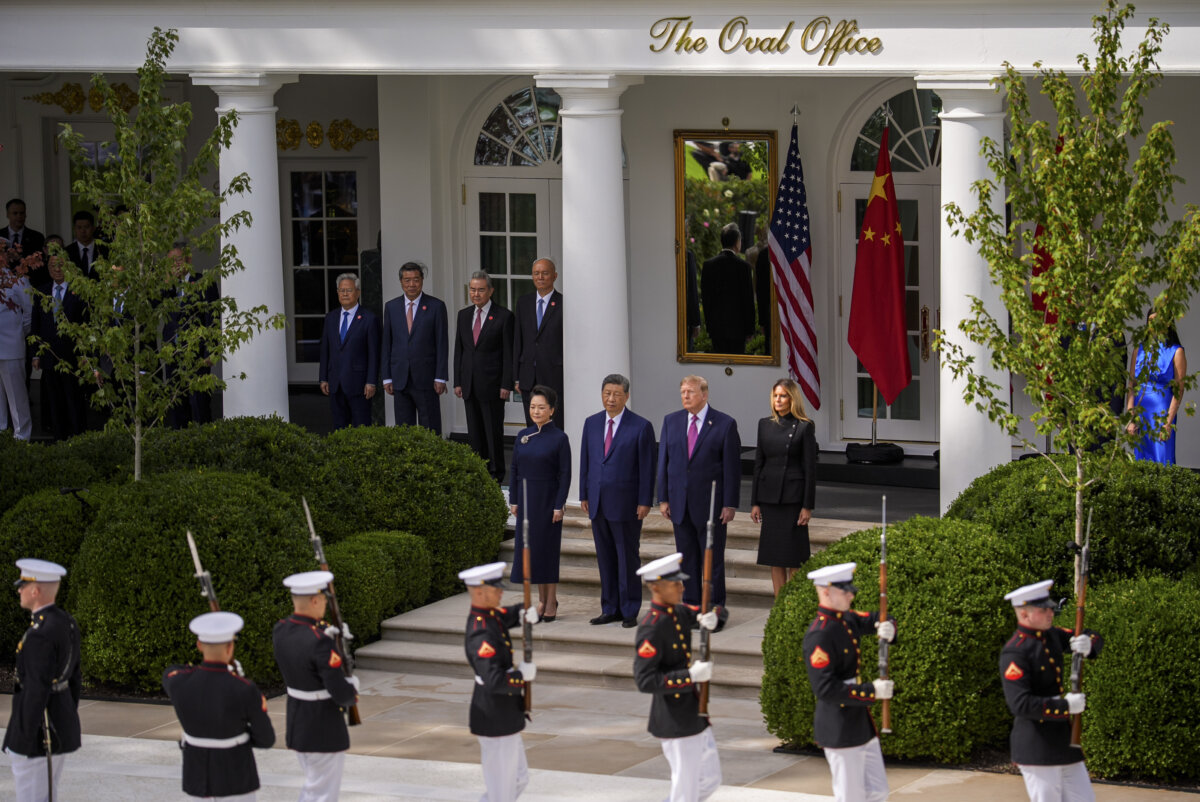
For three days, from Sept. 23 to Sept. 25, Washington rolled out the red carpet for Xi Jinping during his state visit to the United States: military honors, a flyover, a lavish state dinner, a toast of American sparkling wine, and plenty of smiles.
The message was clear: engagement matters and diplomacy requires giving your counterpart “face.”
President Donald Trump and his team created the setting for the leaders of the world’s two most powerful countries to sit down, talk, and hopefully, lower tensions.
But beneath the ceremony lies a harder question: When the toast is over, and the cameras are gone, what actually changes?
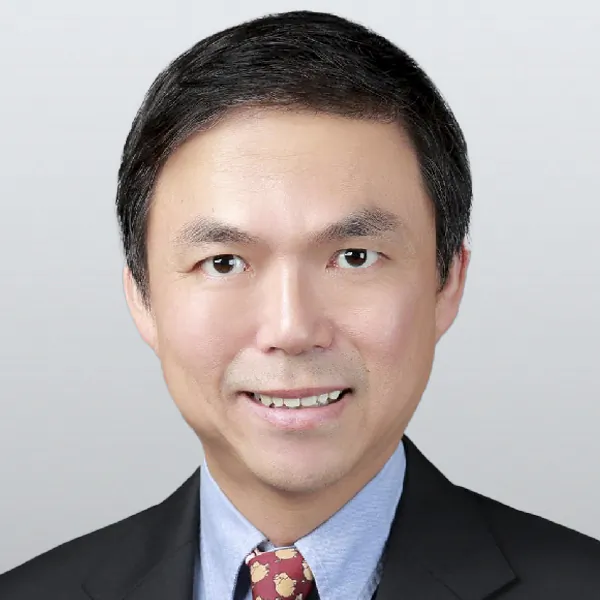
I see this summit through the lens of a Hongkonger shaped by more than three decades in hedge funds and global finance, with a long-standing commitment to human-rights issues. I have learned to look beyond the headlines and the presentation—and ask what lies underneath.
That is why I watched this summit with hope, but also caution.
Xi was born in 1953, the Year of the Snake. So when I use the word “dragon,” I am not referring to Xi personally or to the Chinese people. I use it as a metaphor for the enormous political power of the CCP and the system Xi leads.
From my perspective as a Christian, we should approach this “dragon” with discernment. Xi is not simply another head of state. Under his rule, I see political power as increasingly concentrated around the top of the Communist Party. So yes—give Xi face. Sit at the table. Talk. Negotiate.
But diplomacy is not trust, and beautiful words are not the same as changed behavior.
Tibet, Hong Kong, the CCP’s Promises
Hong Kong is not the only place where promises have to be measured against history. Look at Tibet. In 1950, the Chinese regime entered Tibet by force. In 1951, Tibetan representatives signed the Seventeen-Point Agreement with Beijing, which promised regional autonomy, the preservation of Tibet’s political system and the status of the Dalai Lama, and the protection of religious freedom.
What is striking for Hongkongers is that historians have described this arrangement as a precursor to the “One Country, Two Systems” formula later used for Hong Kong. The phrase came much later, but the idea of one sovereign state while promising a distinct political, cultural, and religious system has an earlier history in Tibet.
In 1954, the young 14th Dalai Lama met then-CCP leader Mao Zedong in Beijing. Five years later, after the 1959 uprising in Lhasa, he fled to India and never returned.
Think about the historical span. The Dalai Lama has confronted China’s leaders—from Mao Zedong to Deng Xiaoping, Jiang Zemin, Hu Jintao, and now, Xi—spanning nearly eight decades of political change, while remaining in exile and continuing to speak for Tibet.
I am not Tibetan Buddhist. But I have great respect for the courage and resilience of the Tibetan people. In some ways, their story reminds me of David facing Goliath: one side vastly more powerful than the other, yet the smaller side refusing to disappear. For Hongkongers, there is a lesson here: when governments make promises, remember what happened afterward.
The White House’s Very Witty Choice: ‘The Moon Represents My Heart’
Then came one of the most fascinating details of the entire visit.
Before the state dinner, a harpist played a song called “The Moon Represents My Heart.” Was the United States being very witty? Maybe it was simply an elegant musical choice, especially around the Mid-Autumn Festival. But the symbolism is hard to ignore.
The song was first recorded by Taiwanese singer Chen Fen-lan in 1973 and later became internationally famous through Teresa Teng, one of the most beloved Chinese-language singers of her generation.
During the Cold War, her music was associated with Taiwan’s broadcasts to mainland China, and Beijing at one point banned her music. So here we have a song deeply associated with Taiwanese popular culture, played inside the White House as Xi arrived for his state dinner.
Maybe Xi noticed. Maybe he didn’t.
But I suspect Xi’s wife, Peng Liyuan, would understand the musical significance. Peng is a professionally trained singer and soprano who rose to prominence through China’s military arts establishment and became one of the country’s most prominent cultural figures.
Sometimes, diplomacy speaks through music without saying a word.
‘One Day More’ and ‘Do You Hear the People Sing?’
Then came another remarkable musical moment inside the White House banquet hall. The guests heard “One Day More” from “Les Misérables.” For those familiar with the musical, the symbolism is difficult to miss. It is about political struggle, revolution, oppression, and the yearning for freedom.
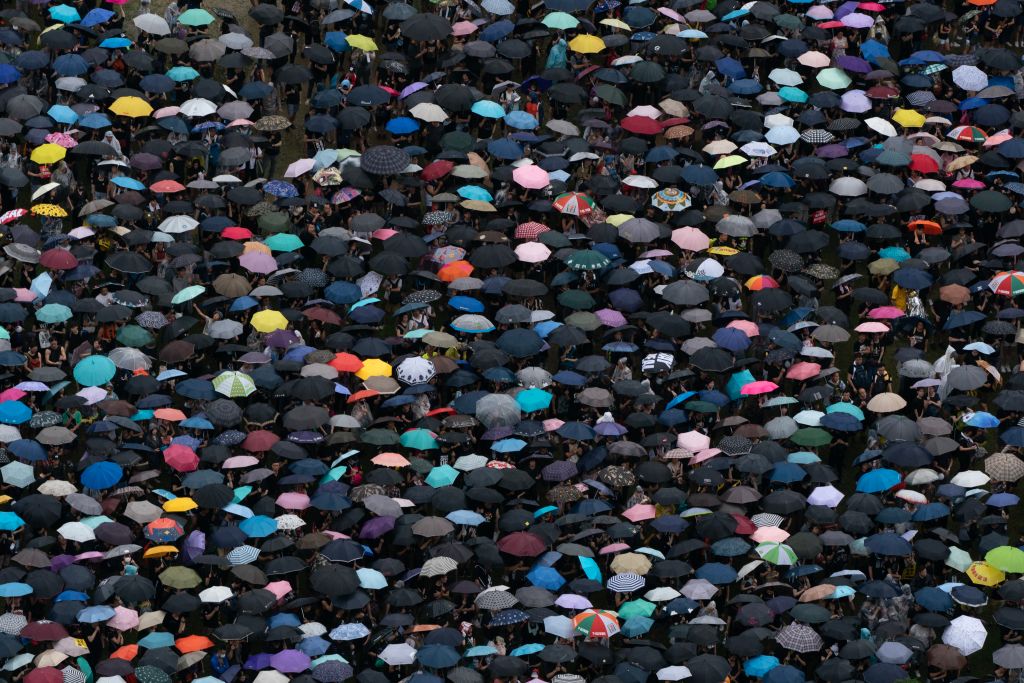 Pro-democracy protesters take part in a rally as they march on a street in Hong Kong, China, on Aug. 18, 2019. (Anthony Kwan/Getty Images)
Did Xi know the significance? Perhaps not. Maybe to him it was simply a famous Western musical. But his wife might have recognized the symbolism.
Outside the White House, hundreds of protesters had gathered to oppose Xi’s visit, including Tibetans, Hongkongers, Chinese democracy activists, and others calling attention to human-rights issues.
Inside the White House: “One Day More.” And within that musical: “Do You Hear the People Sing?” Outside, meanwhile, people were singing, chanting, and making their voices heard.
Maybe it was a coincidence. Maybe it was simply music.
Sometimes, the most interesting messages are the ones that never appear in an official statement.
Jimmy Lai: Did His Name Reach Xi?
On Sept. 22 in New York, British Prime Minister Andy Burnham met Trump on the sidelines of the United Nations General Assembly and urged him to raise the case of Jimmy Lai—the Hong Kong publisher and British citizen—with Xi.
Lai was sentenced to 20 years in prison by a Hong Kong court, in a case his family and supporters regard as punishment for defending press and political freedoms in Hong Kong. Whether Trump raised Lai’s case directly with Xi behind closed doors, we simply do not know—but I hope he did.
Iran, Taiwan, AI, and the Threats Ahead
This was the second face-to-face meeting between Trump and Xi this year, following their meeting in Beijing in May. I hope it is a constructive step forward. I hope the two countries can communicate, reduce tensions, and avoid miscalculation. But the relationship remains complicated.
Iran, Taiwan, trade and technology—particularly artificial intelligence (AI)—all remain important areas of tension between Washington and Beijing. Taiwan remains one of the most sensitive issues in the relationship, while AI is becoming an increasingly important area of strategic competition.
And this is where I become cautious. A summit can produce agreements. A state dinner can create goodwill. A handshake can open the door to further dialogue. But none of these, by themselves, changes the fundamental differences between the two political systems.
There is also a much bigger question about AI. The United States—and the wider world—should not underestimate China’s determination to become a leading power in AI, robotics and humanoid systems, including their potential military applications.
The AI race is no longer simply about who builds the best chatbot or the most valuable technology company. It could affect intelligence, autonomous systems, robotics, military decision-making and the future character of warfare. Washington, therefore, needs to engage Beijing while also taking the strategic competition seriously.
Kings Come and Go
The dragon may smile, sit at the dinner table, and raise a glass. But for Hongkongers, words alone are no longer enough. We have heard the beautiful words. Now, we need to see the deeds. Political leaders come and go. Presidents come and go. Governments come and go.
As the Old Testament reminds us, kings can go as well.
Daniel 2:21 puts it simply: “He changes times and seasons; he deposes kings and raises up others.”
Trump will not be president forever. Xi will not lead China forever. Political power is never permanent. So after the handshakes, the photographs, and the speeches, I will continue to watch—not simply what leaders say, but what they do.
Words matter. Deeds matter more.