
Commentary
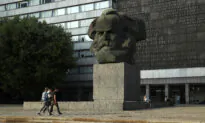
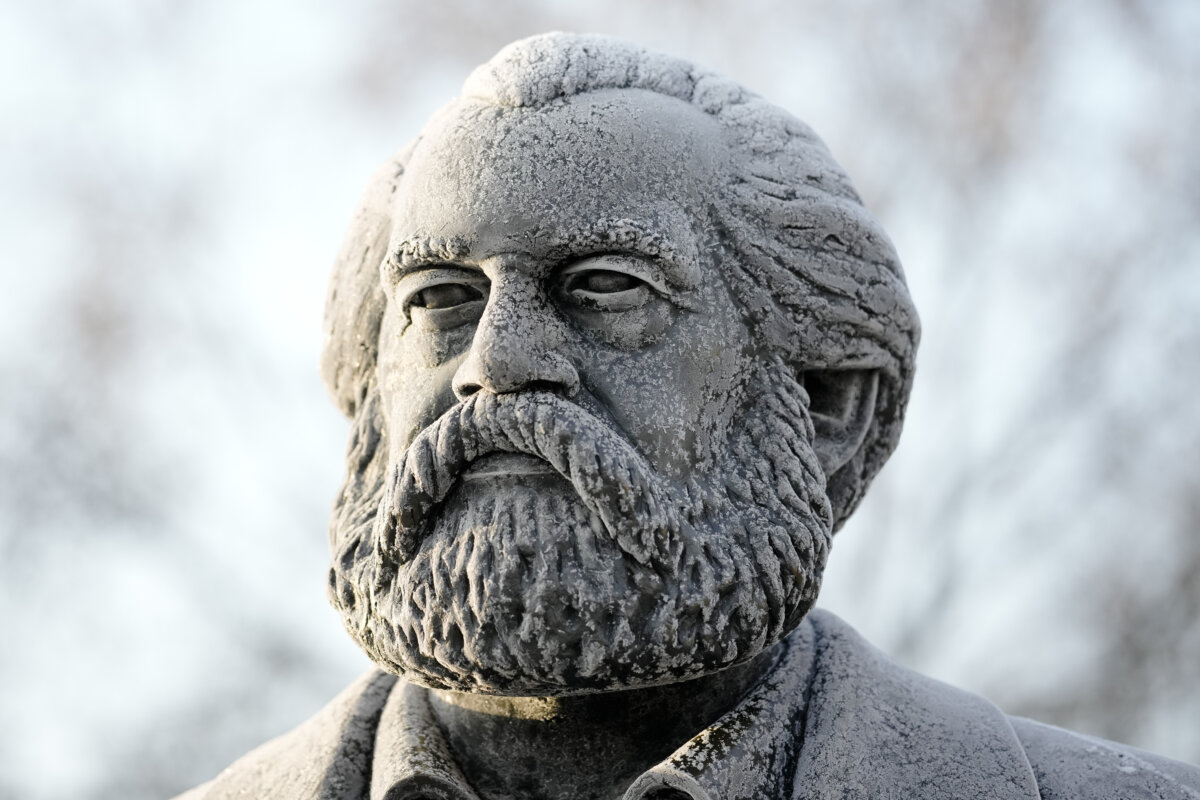
Most students in college are made familiar with the teachings of Karl Marx. His writings are all about victimization of the little guy and the excess rewards flowing to big shots who control the system. As time goes on, it’s pretty much the only theoretical model that the students retain. They also recall the prescribed answer, which is socialism.
In college, there is a superficial plausibility to the whole. Academia is not a world of business. It’s a world of leisure, privilege, and bureaucracy. The more the students learn about how the university is set up, the more it seems just like Marx described. Academia is organized to reward administrators, not professors or teachers, while students are jabbed and gagged.
Then they enter the real world. What do they find?
It’s exceedingly difficult to find anyone willing to employ you at a price new graduates are willing to accept. They sit at home and send in hundreds and thousands of resumes, most of which go unacknowledged. Then they watch the financial press celebrating trillion-dollar valuations and wonder why they are being excluded from this bounty.
If they do get a job, they find that large companies pay the big bucks to no-talent managers and crush the creativity of talented workers. They sign away their lives with huge stacks of paperwork and come to live in fear of the HR department, while obeying the dictates of incompetents.
In the high-end publishing business, the model is to steal the authors’ intellectual property on mostly false promises of royalties that never arrive.
In big music production, the system is to exploit the talent to benefit the financiers and managers.
The medical system funds vast layers of bureaucracy and finance that have nothing to do with healing people.
The financial system rewards speculators, tricksters, and usurers, not savers and real investors.
The agricultural system benefits processors, transporters, middlemen, and retailers, while farmers barely survive and are not even allowed to sell their milk or food to their neighbors.
And you wonder why people are attracted to Marxism? It’s because it offers a superficially plausible explanation for all this. The illuminating feature of this model is that it posits a conflict between elites and everyone else. There can be no doubt that this is real. People see it daily. It is reflected in economic data. Any examination of power shows that some are more equal than others.
What young people do not know is that Karl Marx made egregious errors in his economic analysis. His analysis of power can be compelling but his foundation is all wet.
He began his investigations into capitalism with an attempt to understand the source of value in the material world. In particular he wanted to solve the mystery of profit. What is its source? He added up raw resources, production costs, consumer demand, and labor. He concluded that profits are a result of human labor.
Then he looked at what owners make and compared it with what laborers make. He came to believe that owners and managers were pillaging value from the workers. The workers were being exploited. The solution, to his mind, was for the workers to violently seize the means of production and establish some kind of collective ownership.
The trouble is that his analysis was all wrong, and that includes the analysis of the economist from whom he took his thinking, the English economist David Ricardo. They both concluded that the source of economic value and hence profit was labor. But in fact there were many real-world contradictions to that claim.
Work alone does not establish value. I could paint all day and never come up with something valuable in the marketplace. Mud pies have no market no matter how much time you spend making them. A restaurant where cooks spend 80-hour weeks making bad food will fail.
Meanwhile, I could stumble across a nugget of gold and find myself well-to-do with no more labor involved than reaching down and picking it up. I could trade a stock or bet correctly on sports teams and rake in the big bucks. Hunter Biden drew nonsense on canvas and brought in vast revenue.
The labor theory of value just doesn’t hold up. And yet it was the whole foundation of Marxian economic theory. The man who exposed all of this was Eugen von Boehm-Bawerk, who wrote treatises the length of Marx’s own. He explained, following his mentor Carl Menger, that value traces to the minds of individuals and what they think and demand. It is ultimately unquantifiable. Prices for goods and for loan markets (interest) are a result of the haggling over resources and the products that result from their combination into consumer goods.
Capitalists make things that consumers want but the process is always and everywhere a speculation. Consumer demand can change. The cost calculation can change too. It’s the accounting system that delineates profits from losses, and one can flip to the other entirely based on the subjective valuations of the public. This means that the core of Marx’s exploitation theory is flat-out wrong.
In any case, the solution is itself unworkable. These labor cooperatives still have quasi-owners, systems of hierarchies of decision-making. There will always and everywhere emerge a vanguard that claims to act on behalf of the whole, which is why socialism on any scale ends in dictatorship and the oppression of all. Forms of informal socialism can work on the smallest scale, like the family, but that does not scale society-wide without despotic impositions on everyone. This is why Marxism in practice yields tyranny.
What of Marxian power analysis? The valid parts have a long history that predates Marx. One can even find them in the writings of the ancients. The struggle between the powerful and the oppressed exists in Biblical sources too. In fact, this is a major theme of the entire Bible, both the Hebrew and New Testament sources.
In the best parts of Marx, there was nothing new. We don’t need Marx to understand. And we certainly do not need to collectivize the means of production, which only creates economic chaos and the end of rational accounting and resource allocation. It always ends in poverty for all.
All of the problems listed above have solutions besides those offered by Marx. The problems in office culture can be addressed by ending the cartels through a more competitive economic environment. The problems in health care, the arts, publishing, and finance are addressed by freeing the market from monopoly control and state-granted privilege.
Freedom, not tyranny, is the answer to systems that oppress people. But if the only thing you know is the writings of Karl Marx, you will think according to his fallacious understanding of economic theory. Devolving power structures is the actual answer to real-world exploitation.
The reason Marxism survives is not because it is theoretically sound. It is because it seems to offer a path to understanding all that has gone wrong in economic structures that are ever less free. This is a dangerous path we are on. The more we create systems that Marxism seems to explain, and the less literate are the people now coming up through the ranks, the more we risk trading a bad system for something that is infinitely worse.
Views expressed in this article are the opinions of the author and do not necessarily reflect the views of The Epoch Times.