Commentary
Looking back through history, we often laugh at past beliefs that modern people shake their heads at with incredulity. “How could they have believed that?” We wonder how entire cultures—even most of the world—could have thought such things.
Perhaps the most famous is the notion that the Earth is flat. Although flat earthers still exist, they are quite few; most of us these days believe that the Earth is round. Pictures of Atlas holding up a huge saucer dominated perceptions for centuries.
Another example is the prevalent view that diseases were caused by evil spirits. Go to any old home in Ireland, and you will see hex signs carved into doorways to ward off these spirits.
Data assimilated by coroners and, of course, the invention of the microscope, gradually debunked the spirit myth.
How about the notion that slavery is both necessary and good? Fortunately, we have moved past that one.
For decades, the world’s agricultural academics promoted feeding dead cows to cows. With the subsequent rise of mad cow disease, this practice is now universally unacceptable.
How about margarine, Crisco, and hydrogenated vegetable oil, being pushed by dietary academics and government agencies, including the Department of Agriculture, into the school lunch program? Demonizing lard and butter ruled the day for several decades. And how much hydrogenated vegetable oil is okay to use now? Did I hear a “zero” loud and clear? Yes.
How about “six feet to stop the spread” or “two weeks to stop the spread” and then Operation Warp Speed and Dr. Anthony Fauci’s preposterous positions? But most of the nation bowed and submitted, with fallout continuing today.
All of this has me thinking about a common, even axiomatic, belief that our nation may hold today, one that our great-great-grandchildren will look back on, amused, shaking their heads and laughing: “How in the world could they have believed that?”
Here are four ideas.
Life Is Mechanical
From DNA manipulation (genetically modified organisms) to chemical fertilizers and now to artificial intelligence and lab-concocted fake meat, life’s mysteries are reduced to parts. This whole notion really gained traction with German chemist Justus von Liebig, whose plant experiments showed that vegetation relies on nitrogen, phosphorus, and potassium.
While his intentions were noble—to solve the soil fertility problem—his conclusions were not only false but also devastating to soil life around the globe. Whether conscious or subconscious, the philosophical underpinning was a belief that you could have life without death.
You can’t have life without death. Everything is eating and being eaten. The ongoing life-death-decomposition-regeneration cycle of a compost pile is perhaps the most visceral testimony of this foundational ecological principle.
While the tug to maintain a mechanical view remains strong in Western culture, the undeniable trajectory is toward a biological basis. Mechanical things can’t heal; biological beings can.
Whether it’s a scab on your hand or emotional healing after an unkind word between spouses, the most dramatic difference between inanimate and animate things is the ability to respond, adapt, and ultimately heal when injured.
Safety Requires Sterility
While operating rooms and microchip manufacturers do well to maintain sterile environments, practical everyday living requires a microbially rich habitat.
No country in the world has done more to connect the dots between dirt and robust immunology than Finland. Their studies comparing farm- and barn-raised children to city cousins confirm the anti-sickness outcome of less-than-sterile environments.
Ultra-processed food is notoriously devoid of living microbes. And it won’t carry living microbes into your microbiome.
If you can put the cheese you buy on the kitchen table and it doesn’t grow mold in two days, you don’t have food; you have a food-like substance. Real cheese gets fuzzy fast and, within a week, sprouts legs and walks off the table.
The current raw milk tsunami is a testament to millions of folks, especially moms with kids, waking up to the fact that authentic food is not sterile but teeming with living microbes. Unfortunately, operating room protocols have encroached on food regulations, and all of us are more susceptible to illness as a result.
Segregating Food and Farm Spheres
Segregating food and farm spheres is better than integrating across species and culinary processes. According to John Ikerd, an unconventional professor of agricultural economics, the four pillars of industrialization are specialization, simplification, routinization, and mechanization. But nature isn’t like that. It’s the opposite: complex, diversified, dynamic, and biological.
The result of this hype-segregation is that 80 percent of landfill waste is compostable. That’s an unconscionable assault on nature, which depends on decomposition to drive fertility. All food waste should be fed to animals, not buried in landfills.
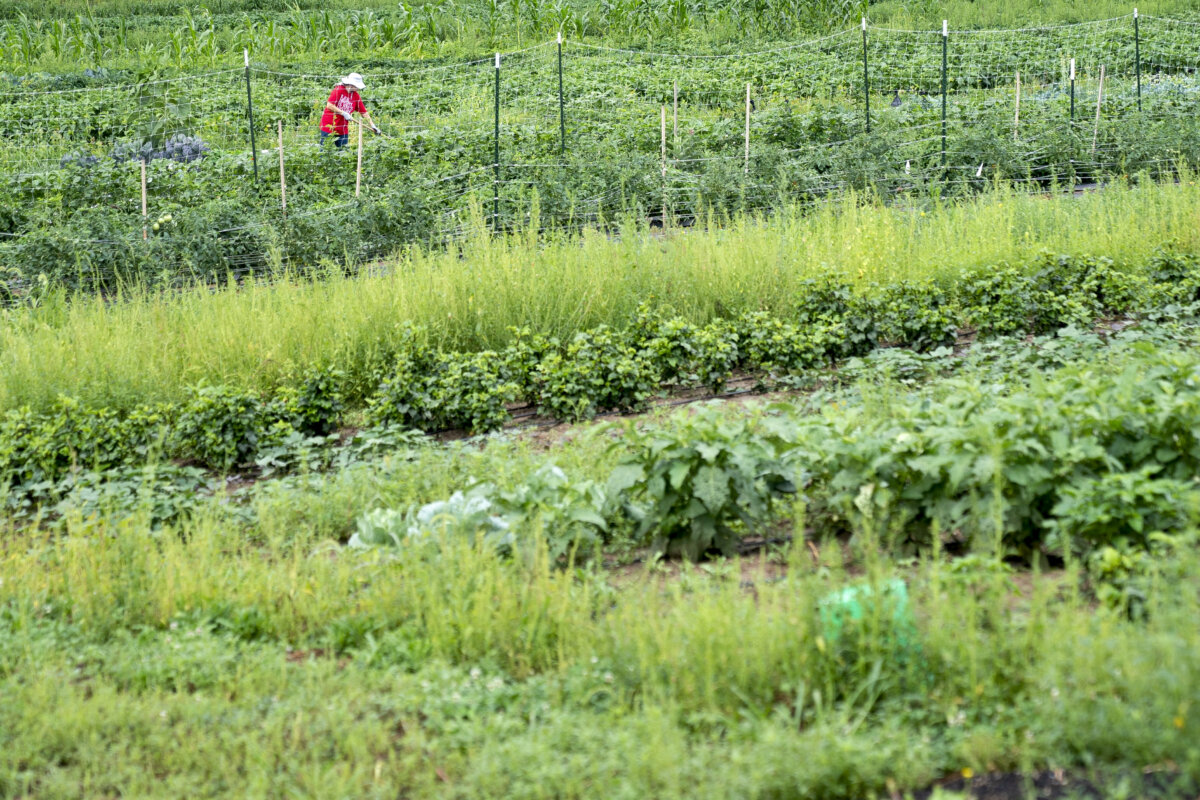
Green policies would require every restaurant and dining service to install a chicken house, enabling food scraps to go straight to the chickens and their eggs to go straight into the kitchen. Perhaps the worst offenders in this regard are homeowners’ associations that prohibit vegetable gardening and backyard chickens.
While many members send checks to environmental charities, these same householders aggressively prosecute anyone who dares to close the cycle of life with a decomposition-regeneration model.
Food Should Be Cheap
In every other sector of the economy, we say “you get what you pay for.” But our culture has a nearly universal belief that food should be cheap. In fact, over the past few decades, per capita expenditure on food has dropped to 9 percent from 18 percent; over the same period, expenditure on health care has increased to 18 percent from 9 percent. Is it possible the two are related?
Thanks to the relentless and wonderful exposure from the Make America Healthy Again movement led by Health Secretary Robert F. Kennedy Jr., more Americans now realize that you either pay now or pay later. That payment can be personal disease or community dysfunction, like a dead zone the size of Rhode Island in the Gulf of Mexico.
Perhaps in less than a century, our nation will realize that nutrient-dense, poison-free food is more valuable than Disney vacations and Caribbean cruises.
Perhaps when good farmers are viewed as our nation’s natural-resource first responders, worthy of more than marginalization, we will have better ecological stewardship and fewer chronic health needs. Wouldn’t that be a change? Right when beef becomes profitable, people scream “foul” and accuse farmers of greed.
These four are not the only ones on my list, but this ideological exercise, I think, can offer hope for a future that is better than the past or the one that appears to be on the horizon. What we need is for people like you and me to be aware today, right now, that conventional thinking needs a new framework. We need round-earthers to speak the truth. I challenge you to join me in this pilgrimage.
Views expressed in this article are the opinions of the author and do not necessarily reflect the views of The Epoch Times.