Commentary
Governments around the world are telling their citizens to prepare for emergencies. Britain is encouraging households to maintain three days of emergency supplies. Norway recommends a week. Germany advises households to keep enough supplies for up to ten days. The European Union has developed an entire preparedness strategy encouraging citizens to survive at least 72 hours without outside assistance.
And apparently, this is news. Three days? That’s a long weekend.
When did we become so dependent on the systems around us that surviving three days without electricity, running water, or a trip to the grocery store became something governments needed to launch public awareness campaigns about?
Don’t get me wrong. Three days without electricity or running water would be annoying. It could be expensive. Food could spoil, businesses could lose revenue, and life would be uncomfortable. For people dependent on medical equipment or living in extreme temperatures, it could even be dangerous. But for most of us, three days without services should be an inconvenience, not a life-threatening catastrophe.
Britain launched a new preparedness campaign this October. In March 2025, the European Commission introduced its Preparedness Union Strategy. Norway increased its recommendation from three days to seven days in 2024, although its original preparedness campaign dates back to 2018.
So these warnings aren’t all new. Some have been around for years, and the media is suddenly reporting on them together. But there is also a real expansion of government preparedness efforts, driven by concerns about war, cyberattacks, natural disasters, and vulnerable infrastructure. Governments know things we don’t. That’s not speculation. Whether these particular warnings are connected to something specific that’s coming, I don’t know.
But I understand why people are paying attention.
I used to be a prepper. A serious prepper. I had buckets of black beans and rice, salt, sugar, baking soda, freeze-dried food, guns, ammunition, and enough emergency supplies to make my husband absolutely crazy. I was always preparing for something. An economic collapse, a natural disaster, a disruption in the food supply, something that would make the world as we knew it stop functioning.
My husband would get so annoyed with me. “Nothing is ever going to happen,” he would say. “You’re always worried about something.”
And I would explain that I wasn’t worried. I was being responsible. I was protecting our family. But the truth is, I was worried. I was spending an enormous amount of energy anticipating everything that could possibly go wrong.
One day, during an argument about my endless supplies, I started crying. “I don’t understand,” I told him. “I’m trying to protect our family.”
He looked at me and said, “Honey, whatever happens, I’m going to protect our family. We’re OK.”
Then he explained something that fundamentally changed my understanding of preparedness.
“I lived in the wilderness. I didn’t have a toilet until I was 13 years old. I didn’t have electricity until I came to the United States. My father never had a car. He only had a horse. I can hunt. I can forage. I can shoot. We’re going to be OK.”
My husband grew up in rural Oaxaca, Mexico. The things I was terrified of losing were things he had spent much of his life living without. I was trying to prepare for a world without modern conveniences. He already knew how to live in that world, and he wasn’t afraid.
I had confused accumulating supplies with accumulating security. He understood that security came from knowing how to survive, knowing how to work, knowing how to feed yourself, and trusting your ability to figure things out.
Then COVID happened.
I had spent years preparing for some kind of catastrophe, but when the catastrophe finally arrived, it wasn’t the kind I had imagined. The electricity stayed on. The water kept running. For the most part, the food supply continued functioning.
What threatened my livelihood wasn’t the collapse of essential services. It was government intervention and the economic decisions that followed.
At the time, I was involved in a major hospitality deal that was partially financed through banks. When COVID restrictions began, financing for hospitality became extraordinarily difficult. The deal fell apart. I had buckets of rice, beans, sugar, salt, and ammunition. None of those things could save a hospitality deal when the banks stopped wanting to finance hospitality.
It was an extraordinary lesson in the limitations of prepping. You can spend your entire life preparing for the catastrophe you imagine, only to discover that the catastrophe that arrives looks nothing like what you anticipated. And no amount of ammunition or freeze-dried food can guarantee protection from the decisions of governments, financial institutions, or other powerful organizations.
I’m not suggesting people shouldn’t prepare. Quite the opposite. But I wonder how much of the modern preparedness industry is built around convincing people to be afraid. Afraid of war, economic collapse, food shortages, the electrical grid failing, or the next pandemic.
I believe our collective energy has an impact on the world around us. I believe what we focus on matters, and I don’t want to spend my life focusing on everything that could go wrong. Living on a farm has taught me that you can prepare for a drought and get a flood. You can prepare for a flood and get a drought. You can do everything right and still lose a crop or an animal. Preparation matters, but so does adaptability.
Today, I am still more prepared than my husband thinks is necessary. He jokes that I’ve become so accustomed to comfort that even in an emergency, I need to be comfortable.
He’s probably right.
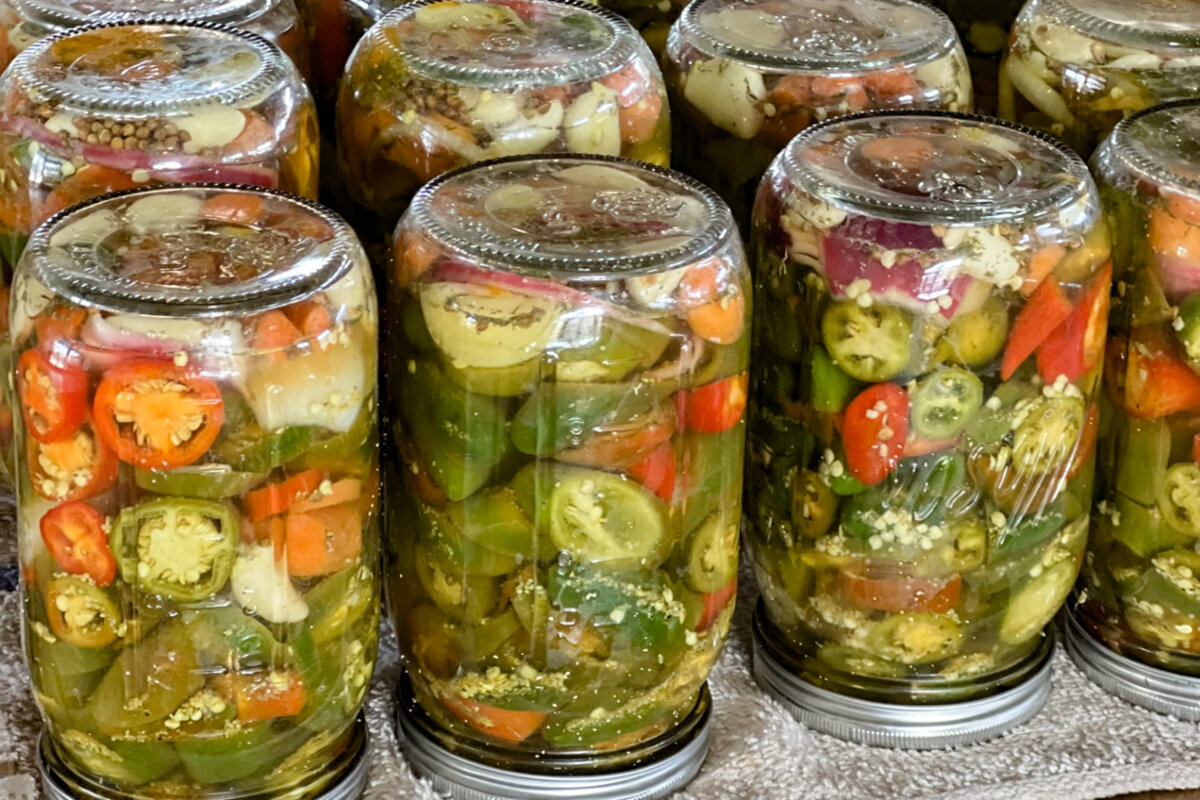
I still have hundreds of pounds of salt, sanitation supplies, about a thousand gallons of vinegar, more firewood than you can imagine, and multiple wood-burning cookstoves on the property. Water filtration systems, manual pumps, diesel pumps, guns, ammunition, and on and on and on.
The prepper in me didn’t throw away her supplies. She just stopped being so afraid.
Something else has changed, too. I don’t have closets overflowing with freeze-dried food anymore. I have cows in the field and goats on the hillside.
Livestock used to represent wealth. Living stock. Animals that could reproduce themselves, feed a family, and provide security in uncertain times. Before refrigeration, people traveled long distances with herds of animals that could provide food along the way. Meat and dairy on the hoof. No freezer, no electrical grid, no refrigerated truck. Just grass, water, animals, and the knowledge of how to care for them.
I understand that kind of wealth differently now. And maybe that’s what we’ve lost as a society. Not just our ability to survive three days without electricity, but our understanding of what actually makes us secure. We’ve become so accustomed to convenience that we’ve mistaken it for necessity.
Of course, everyone should have drinking water, food, medications, and basic emergency supplies available. I don’t even understand why we need governments to remind us of that. But preparedness should give us peace, not become another reason to be afraid.
I don’t know what’s coming. Maybe something terrible is around the corner. Maybe nothing is. Maybe the next catastrophe will look nothing like what any of us have prepared for.
I think we’re going to be OK. But maybe we’re not.
And worrying about it isn’t going to make me a better mother, a better wife, or a better farmer. It’s not going to help me raise my children, grow food, love my husband, or appreciate the life I have right in front of me.
I haven’t stopped preparing for tomorrow. I’ve just stopped sacrificing today to the fear of what tomorrow might bring.
Views expressed in this article are the opinions of the author and do not necessarily reflect the views of The Epoch Times.