
Commentary
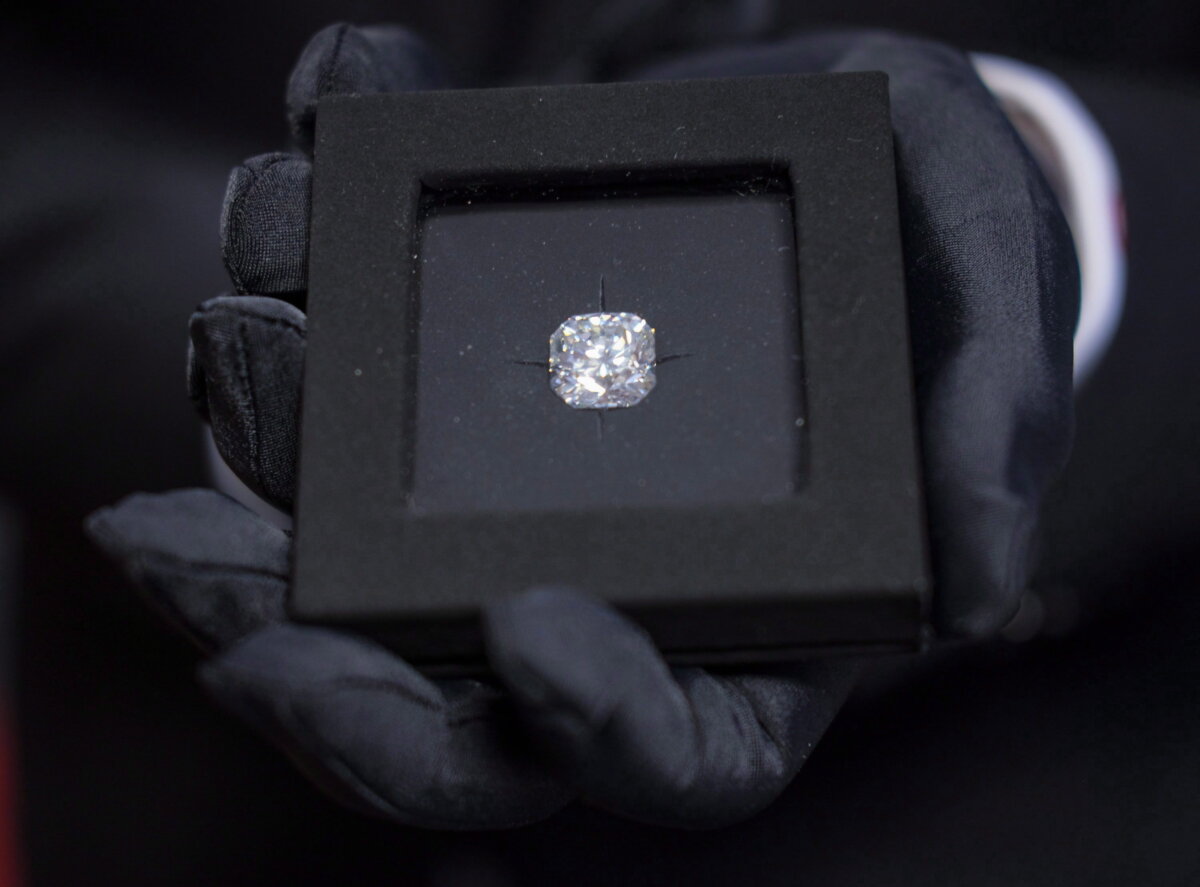
An astonishing collapse is happening right now, one that was easily foreseen five years ago but which still defies belief. The world’s longest-running industrial resource cartel has fallen apart due to technological innovation. The resource is diamonds, the company is De Beers, and the reason for the upheaval is lab-created diamonds which are indistinguishable from natural ones to the eye. Only a professional can tell based on imperfections.
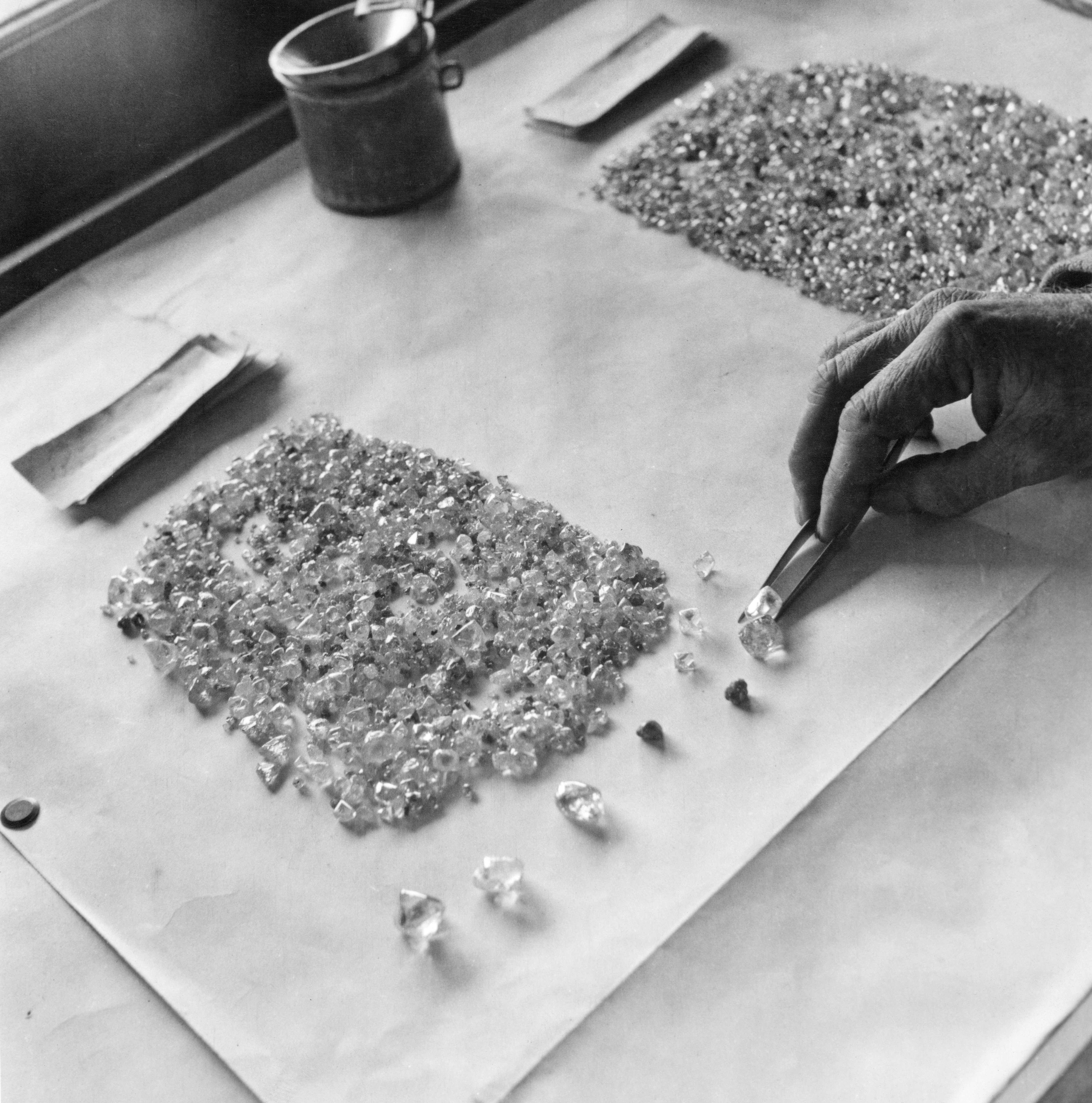 A man uses tweezers to handle an uncut diamond at De Beers in Cape Town, South Africa, c. 1955. (Keystone View Company/FPG/Archive Photos/Getty Images)
You see what’s happening here. The diamond is not only losing its economic status. Next comes its cultural status. It will soon become a gemstone like any other. Perhaps there will be a reaction such that new brides will prefer anything but a diamond just to make the point. They will move to emeralds, rubies, sapphires, and aquamarines. They were popular in the 19th century.
Indeed, the diamond as a wedding ring is a 20th century phenomenon, a result of one of the most brilliant marketing campaigns ever. In 1947, copywriter Frances Gerety at N.W. Ayer coined the slogan “A Diamond Is Forever.” Diamonds became permanent symbols of love and commitment, discouraging resale, and creating cultural necessity for engagement rings. Supporting ideas like the “two months’ salary” guideline further raised average spending.
All of this secured the cartel by the De Beers company of South Africa, which had controlled 90 percent of the world’s diamond supply by 1900. The company was taken over by Ernest Oppenheimer in the 1920s. The brilliant strategy was to restrict supply to keep the price as high as possible. They did this for a century, creating one of the mightiest industrial empires on the planet.
Finally, lab-created diamonds came along. At first, they were dismissed as fakes. The trouble is that they were indistinguishable in chemical composition. The idea of natural is great except when you pay a huge premium for that and the results are identical to what is created in a lab. It was obvious years ago that the diamond would lose its status under these circumstances.
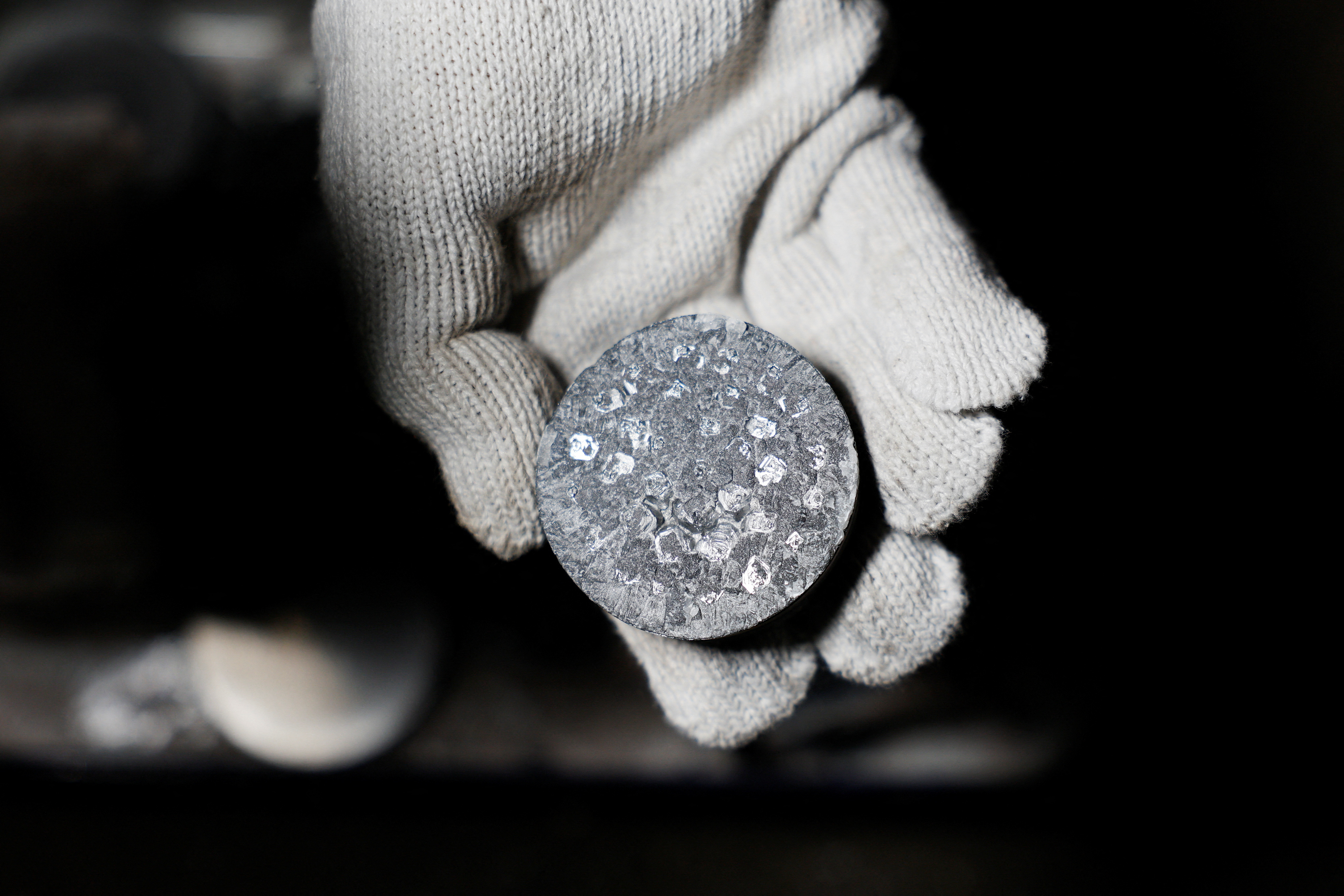 An employee holds a growth cell containing lab-grown diamonds after it was removed from a six-sided hydraulic press machine following the growth process at the Jiaruifu Diamond factory in Zhengzhou, Henan Province, China, on Sept. 14, 2026. (Go Nakamura/Reuters)
Surely that will never change.
But it did change, nearly all at once, due to a single technological innovation. It reveals a core point. Whatever you think is materially valuable is only temporarily so. Economic value is not intrinsic to anything. Moral value, familial value, religious value, sacramental value: these are a different matter. But material value can always change and dramatically so, based on supply and demand. Maybe that sounds obvious to you but it took centuries to discover this core truth.
The diamond market illustrates the point well. And the truth of this is illustrated by an old puzzle that intrigued economists for hundreds of years. Diamonds are obviously more valuable than water, even though water is more essential to life based on its seeming intrinsic merit. But change the environmental conditions and the calculation changes. A man dying of thirst in a desert has no use for diamonds but might give up his life savings for a glass of water.
What does this actually illustrate? It shows that economic value traces to the minds, perceptions, and judgments of individuals and the circumstances of time and place. There really are no exceptions to the rule.
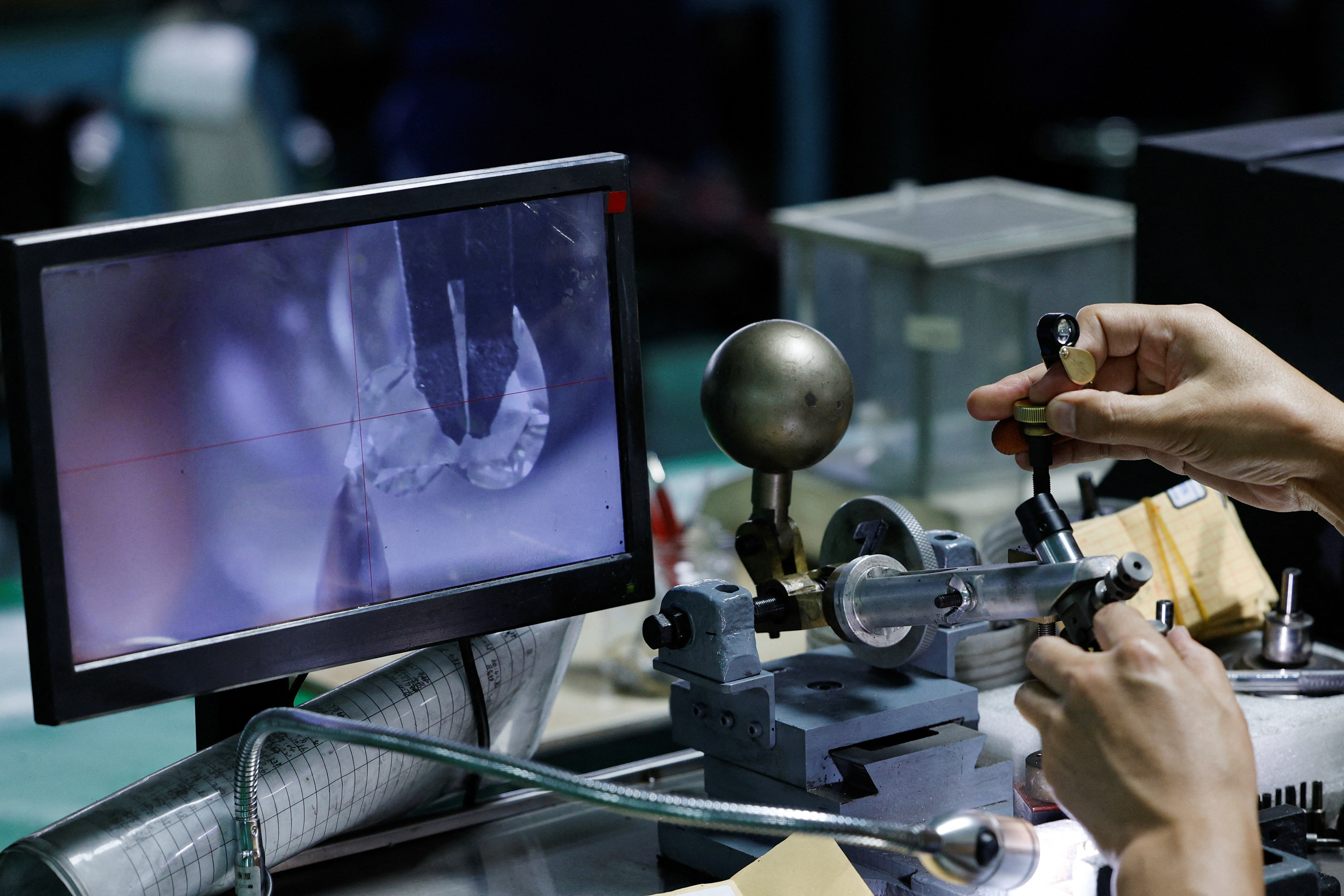 An employee uses a machine to cut lab-grown diamonds on a production line at the Zhengzhou Solstar Diamonds factory in Zhengzhou, Henan Province, China, on Sept. 15, 2026. (Go Nakamura/Reuters)
“Apparently nobody happened to want such a river, nobody needed it, nobody was curious about it; so, for a century and a half the Mississippi remained out of the market and undisturbed. When De Soto found it, he was not hunting for a river, and had no present occasion for one; consequently he did not value it or even take any particular notice of it.
“But at last La Salle the Frenchman conceived the idea of seeking out that river and exploring it. … Naturally the question suggests itself, Why did these people want the river now when nobody had wanted it in the five preceding generations? Apparently it was because at this late day they thought they had discovered a way to make it useful; for it had come to be believed that the Mississippi emptied into the Gulf of California, and therefore afforded a short cut from Canada to China.”
Here we have a characteristic passage by the remarkably insightful Twain. He was actually a great economist in addition to being America’s best author. He saw the essential point about something as mighty and wonderful as the Mississippi River. It meant nothing outside its actual value in use. And so it is with everything.
The notion of use itself is tricky. You can use something just for its beauty, its ability to inspire, the pure delight of having something even if it is otherwise useless. The use of a pet rock in the 1970s was to brag to your friends that you had one. That’s its use. Then when the bragging rights went away, so did its value.
You can think of countless things that are this way now. The Cybertruck put into production by Tesla had a good run so long as people felt prestige by owning one. But the first time I saw one parked in a high-end suburban neighborhood, in the midst of houses with slate roofs and windows with functioning shutters, my thought was: this thing is monstrously ugly.
The aesthetics of the thing were supposed to be about the future. In point of fact, it looked like a garbage truck. The newness of the machine wore off quickly and it became nothing but an eyesore. Tesla has announced it is ending production. Not even the wealth and power of Elon Musk could make it work. It will be seen forever as an embarrassing chapter in 21st century automotive design.
The Cybertruck might be the most useful truck ever but that doesn’t matter if it looks ridiculous.
That’s a long way of saying: the diamond is not forever. It was for a century. But that century is over, and I fully expect a sweeping reaction to take place. It probably already is. What bride will want one now that you can snag one for $100 on TikTok? Other gems will take their place if they haven’t already.
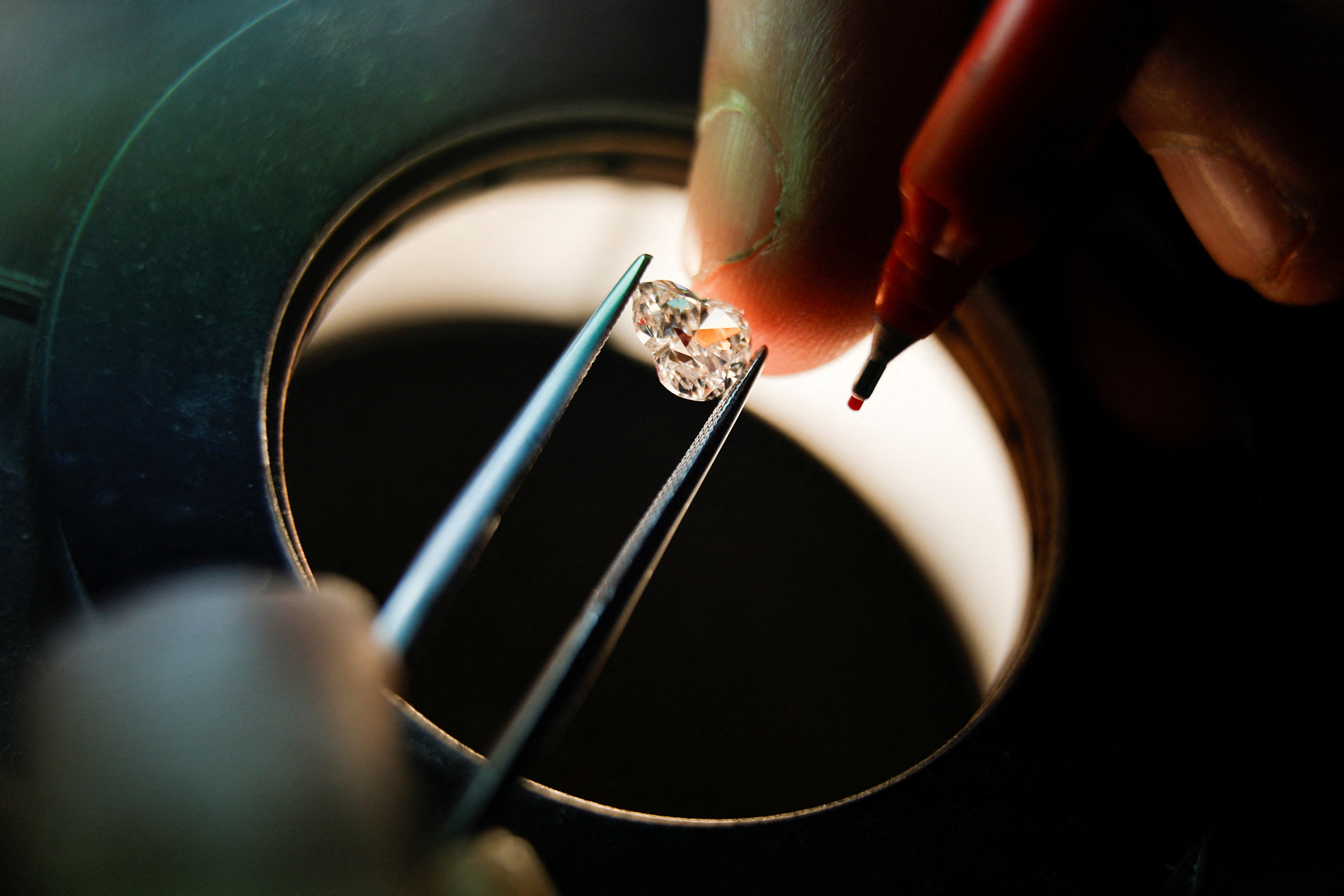 An employee conducts a quality check on a lab-grown diamond on a production line at the Zhengzhou Solstar Diamonds factory in Zhengzhou, Henan Province, China, on Sept. 15, 2026. (Go Nakamura/Reuters)
Views expressed in this article are the opinions of the author and do not necessarily reflect the views of The Epoch Times.







