

Commentary
Coffee prices are through the roof, and seemingly out of nowhere. I had just written a paean to the percolator and so sauntered to the store to buy some ground coffee. That’s when my eyes popped out at the prices. I thought it was just that one place but nope—it’s everywhere.
There are floods in Brazil and Vietnam, bad weather and pestilence in Latin America, supply chain problems, and rising demand in China, and tariffs are not helping. New regulations are coming to Europe that concern coffee growers too, and that could put some smaller growers out of business.
Additionally, monetary pressures are up again, pushing prices in general higher than one would like. As with the last wave, price pressures are migratory and land in unexpected places.
On the matter of tariffs, the higher prices that have resulted are now thoroughly documented in a new Harvard study of domestic and imported prices. Imports are rising much faster than domestic prices—hardly a surprising conclusion.
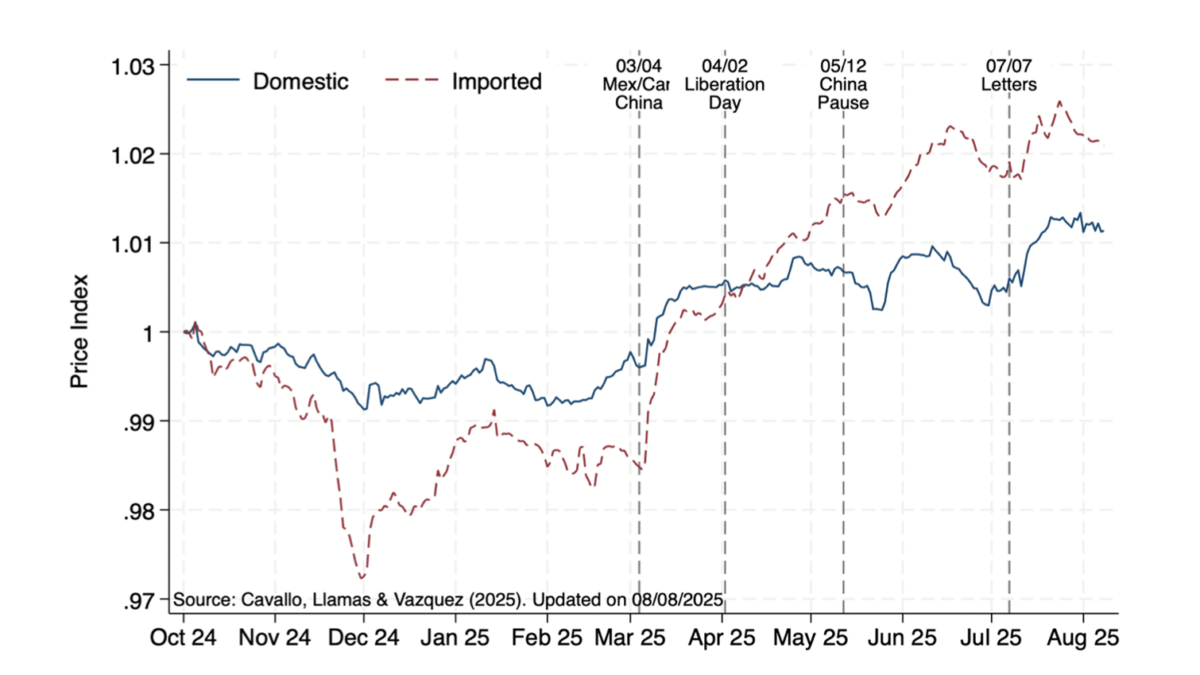
As a result, consumers are facing a growing problem affording coffee!
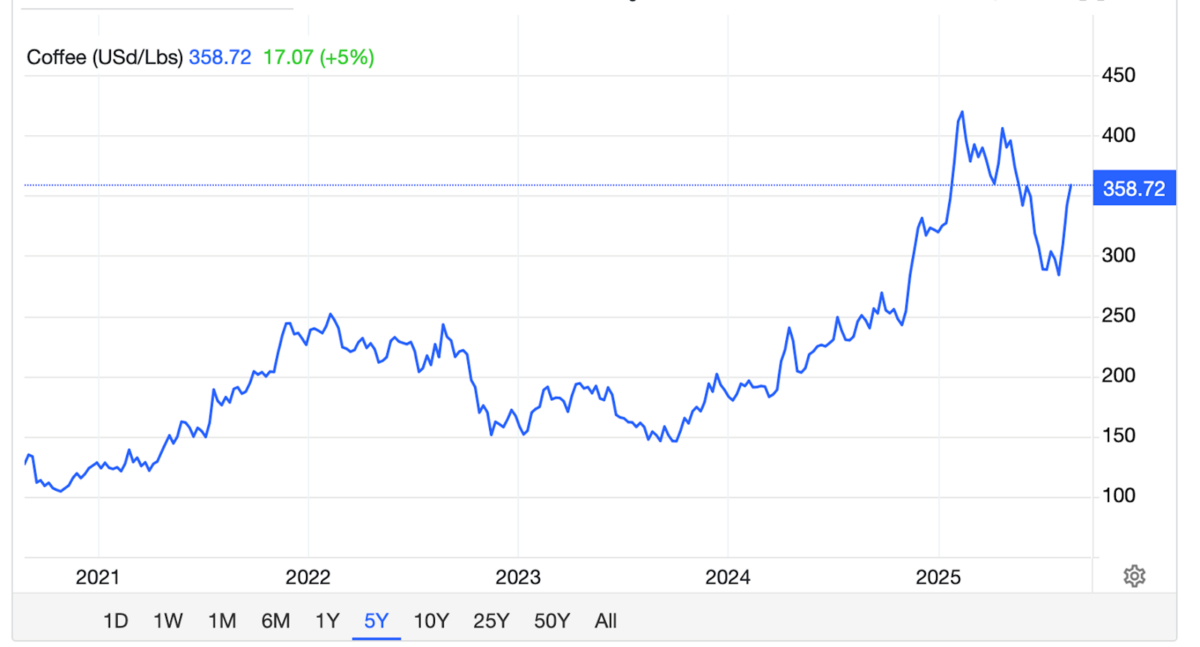
Consumers respond by giving up their quest for the perfect organic, locally roasted brew and instead go for the mass-produced stuff in a can. This is what inflations do: They purge the market of the specialty items and subsidize the large-scale producers with name brands.
The issue of coffee occupies a huge place in Western economic and social history, so its fate truly matters to us as a free people.
In 18th-century Europe, many products and services reached a newly emergent middle class for the first time in human history. The commercial age was maturing, and that meant that average people had money for the first time and lots of choices on how to spend it. One of the new products they could buy was coffee. With that came a great deal of social suspicion and even dread.
None other than Johann Sebastian Bach satirized the puritanical fear of coffee in his delightful and witty “Coffee Cantata.” It was one of the few times he ever tried his hand at pure pop entertainment. Of course he succeeded brilliantly; he was Bach after all!
The “Coffee Cantata” tells the story of a daughter who scandalized her father due to her devotion to coffee. She couldn’t stop singing about how wonderful it is, while her father corrected her constantly.
“You naughty child, you wild girl, ah!” the father yells at his daughter. “When will I achieve my goal: get rid of the coffee for my sake!”
“Father sir, but do not be so harsh!” she responds. “If I couldn’t, three times a day, be allowed to drink my little cup of coffee, in my anguish I would turn into a shriveled-up roast goat.”
She happily agrees to do everything he says in every area of life except one: She will not give up coffee.
And then follows a beautiful tribute to coffee: “How sweet coffee tastes, more delicious than a thousand kisses, milder than muscatel wine. Coffee, I have to have coffee, and, if someone wants to pamper me, ah, then bring me coffee as a gift!”
The father threatens her: “If you don’t give up coffee for me, you won’t go to any wedding parties, or even go out for walks.”
She still refuses.
Then the daughter plays a little game. She has a husband in mind and extracts from him a promise that if she marries him, he must allow her to drink coffee. He agrees. Then she goes to her father, who opposes the marriage, and makes a deal: If she is permitted to marry him, she will give up coffee. The father is delighted, and agrees.
Thus does the daughter gain a new husband, and, much more importantly, a permanent right to drink coffee whenever she wants!
What was this fear of coffee? Why was this such a big deal? It does have some narcotic properties to it, as we all know so well. It can give you a delightful lift.
But that alone does not account for the early opprobrium with which coffee-drinking, particularly for young girls, was greeted. For a fuller account, we need to understand something larger and more socially transformative: the advent of the coffee house itself.
The coffee house was one of the earliest public institutions, operating on a purely commercial basis, that brought together a wide variety of social classes, not to mention a mixture between men and women, in a market-based social setting. In the 18th century, coffee houses spread all over Europe and the UK, attracting young people who would sit and drink together and discuss politics, religion, and business, and exchange any manner of ideas.
What the father in the Cantata is actually objecting to is not coffee as such but unapproved, unchaperoned social wanderings.
This was a huge departure from the tradition that entitled parents and other social authorities, including governments, to determine what kind of associations their children would have. Coffee houses introduced a kind of anarchy to the social structure, and introduced new risks of randomized contact with ideas and people that parents could no longer control.
Coffee represented freedom itself—the freedom to mix, mingle, and consume what one wanted.
That’s why coffee houses became a great source of public controversy.
In England, in the 17th century, Charles II tried to ban them all on grounds that they were “places where the disaffected met, and spread scandalous reports concerning the conduct of His Majesty and his Ministers.”
Even a century later, women were banned from attending them, and this was true in France as well. Germany had more liberal laws concerning women and coffee but public suspicion was still high, as the “Coffee Cantata” suggests.
Women who were banned from coffee houses developed a very clever response. In the famous “Women’s Petition Against Coffee” of 1674, women said that coffee was responsible for the “enfeeblement” of men. Historians say the campaign contributed to the gender integration of coffee houses.
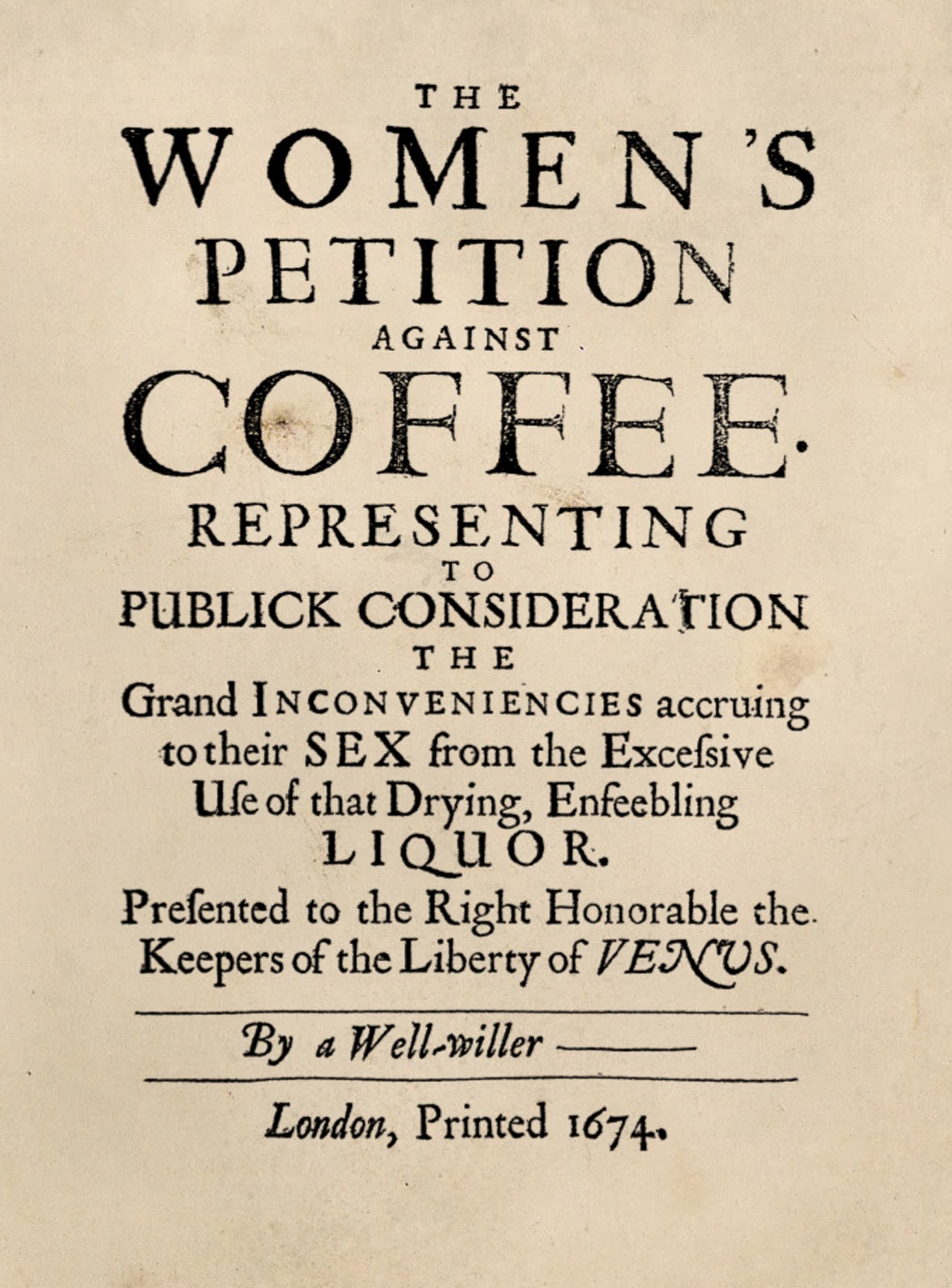
We see, then, that the commercial availability of coffee actually contributed to the advance of women’s rights!
Looking back at the astonishing success of Starbucks and so many locally owned brew houses in our own time, it doesn’t seem surprising. They too serve as gathering spots, social mixers, places of business, and centers of conversation and ideas.
We are more accustomed to it now than centuries ago, and yet even today, how much political controversy is engendered by access to products and services of which social authorities disapprove?
The “Coffee Cantata” concludes: “Cats do not give up mousing, girls remain coffee-sisters. The mother adores her coffee-habit, and grandma also drank it, so who can blame the daughters!”
Government regulation could not kill coffee but inflation yet might!
Views expressed in this article are the opinions of the author and do not necessarily reflect the views of The Epoch Times.







