
Commentary
The documentary “Escaping Venezuela” portrays the unprecedented unfolding of the contemporary Venezuelan crisis, one that cannot be grasped through constitutional analysis, political science, international law, or electoral analysis alone. Its present dimensions are rooted in a broader historical arc spanning 1958 to 2026. That arc began with a functioning, peaceful yet imperfect democracy in what was then one of Latin America’s wealthiest nations (1958–1999). It gave way to 21st-century socialism under Hugo Chávez (1999–2013) and Nicolás Maduro (2013–2026), an era defined by institutional decay, the dismantling of democracy, the capture of state institutions by criminal networks with international ties, profound economic and social collapse, and systematic human rights violations. It now enters a new phase marked by the Trump administration’s asserted control over Venezuela, following the Jan. 3, 2026, military operation that seized Maduro, whom much of the international community regarded as a usurper, and brought him before the U.S. federal courts.
At the beginning of Venezuela’s democratic era, the system relied on consensus among the major political parties on key issues. It also gradually incorporated national business organizations, labor unions, and religious groups into a semi-corporatist framework that allowed them to participate in key economic and political decisions. Over time, the bipartisan system evolved into a complex, conflict-ridden multiparty system, with organizations outside the parties becoming increasingly influential. This convergence of diverse, competing interests, along with the risk these groups perceived to their sometimes opaque privileges and interests from the market-friendly economic reforms of the late 1980s, weakened democracy and enabled practices that undermined economic and political integrity.
The documentary vividly describes how during the second presidency of social democrat Carlos Andrés Pérez (1989–1993), Venezuela was shaken by the Caracazo, a wave of protests, riots, and looting that began on Feb. 27, 1989. Amnesty International reported that human rights organizations identified approximately 400 people who died or went missing during the events. Some commentators contend that the Caracazo was planned rather than entirely spontaneous. They cite reports that politically active students occupied public transportation facilities at 6 a.m. on Feb. 27, 1989, and distributed preprinted leaflets. They also point to allegations that police had been instructed not to intervene, while Pérez blamed police insubordination. Some accounts cite evidence of coordination and identify Jorge Rodríguez, then a student leader and later a prominent figure in Venezuela’s socialist government, as an organizer. Paulina Gamus, who chaired the congressional inquiry, believed the unrest had been orchestrated but had spiraled out of control. Chávez later said the Caracazo helped spur his plans for the 1992 coup attempt.
As the documentary explains, the Caracazo was a victory for 21st-century socialism. How did that happen? Pérez’s market-oriented policy reforms during his second term threatened the interests and the wide range of privileges of corporatist groups and factions within the main political parties. This convergence of threatened interests produced an alliance of unlikely bedfellows, uniting groups with conflicting ideologies and interests against Pérez’s economic liberal reforms. Indeed, the alliance against Pérez’s comprehensive liberal measures included national business organizations, labor unions, prominent intellectuals, left-wing political parties, the main media, and factions of Social Democratic and Christian political parties, including Pérez’s own party. That was the distinctive form the classic conflict between market and state took in Venezuela.
Ultimately, this process eroded public confidence in the system and brought about the collapse of the traditional political parties and of democracy itself. Chávez’s attempted military coups d’état gave him a broad national audience, which he capitalized on after President Rafael Caldera dismissed the charges against him in 1994. He then emerged as a voice in the debate over the crisis of the traditional political and economic system. He presented himself as an outsider able to respond to growing dissatisfaction with traditional leaders and the party system. Through a Constituent Assembly, he promised a clean break from a hollow representative democracy controlled by party elites and economic interests, replacing it with a participatory democracy in which the people would govern directly through referenda.
The documentary “Escaping Venezuela” lays bare the human cost of the socialist project: a country without the rule of law, its republican and liberal institutions hollowed out, corruption of colossal proportions, and a repressive, predatory economic system. The destruction has reached the economy, democracy, education, international credibility, the armed forces, the police, the judiciary, and, worst of all, the nation’s moral values, making the restoration of Venezuela’s way of life an epic task.
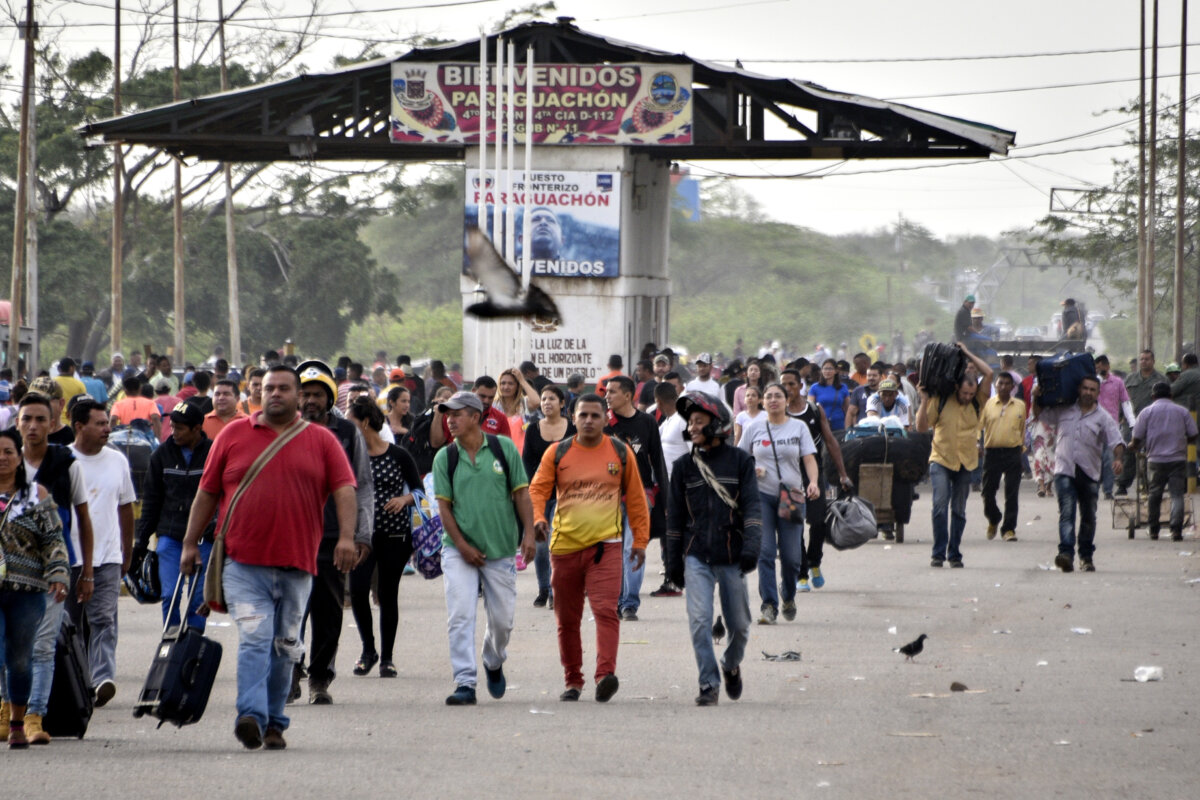
A few figures convey the scale of the loss. For four decades, Venezuelans internalized the democratic values of the 1961 Constitution; surveys from 1963 to 1999 consistently found that 70 percent to 77 percent preferred democracy to any other form of government, a preference that persists today despite the socialist calamity. Since then, conditions have deteriorated dramatically. Between 2013 and 2021, the economy contracted by roughly 75 percent, the largest collapse in nearly half a century for a country not at war, and extreme poverty rose from 22.6 percent in 1999 to 76.6 percent in 2021. In 2025, inflation exceeded 500 percent; 62 percent of the population had restricted access to drinking water; and 70 percent lacked access to healthcare. Education fared no better: Nearly 3 million children were out of school at the start of the 2024–2025 school year, and the country faced a shortfall of some 250,000 teachers, each earning about $10 per month plus a $40 food bonus. Since 2015, nearly 8 million Venezuelans have emigrated, and in the first half of 2025, they became the largest group of asylum seekers in Europe.
For more than a century, Venezuela had been one of the most reliable sources of oil for the United States, proving its trustworthiness in times of war and crisis. The relationship began in the 1920s, when U.S. companies such as Standard Oil of New Jersey and Gulf developed the Maracaibo fields. By 1928, Venezuela led the world in oil exports. During World War II, its crude, refined in Aruba and Curaçao, fed the Allied war effort so effectively that German U-boats attacked those refineries in 1942. In the 1950s, Venezuela supplied roughly 72 percent of U.S. oil imports. Its reliability was clearest when others used oil as a weapon. In 1967 and again in 1973, Venezuela refused to join the Arab embargoes against the U.S. In 1990, after Iraq invaded Kuwait, it raised output by 500,000 barrels per day to help replace the lost supply. Proximity, heavy crude suited to U.S. refineries, and a record of keeping supply open in moments of crisis made Venezuela one of the United States’ most trustworthy partners.
For policymakers and intelligence services in Washington and Caracas, permanent vigilance is the first line of defense against signs, some subtle, others unmistakable, of a deliberate effort to undermine their long-standing partnership. That awareness is the surest way to preserve a relationship that has been close, transparent, and mutually rewarding for more than a century. Indeed, the documentary shows how imminent the danger was at the outset of Venezuela’s 21st-century socialism, when it opened its doors to Tehran and La Habana, enabling them to establish a presence that a weakened nation can no longer uproot on its own. The current war with Iran makes clear that Venezuela cannot rid itself of Iranian and Cuban influence without American help.
The Greek myth of Cassandra, as Virgil recounts it in the “Aeneid,” teaches that truth is not enough when it is hard to believe, for it goes unheeded until disaster bears it out. Disaster has now shown its face in soaring oil prices and in Venezuelans living in fear amid catastrophic social and economic ruin, as the documentary “Escaping Venezuela” makes plain.
The scale of Venezuela’s political and socioeconomic catastrophe, now compounded by the recent earthquake, has made it difficult for some of the hemisphere’s democracies to fully grasp or believe the truth. Yet history offers a lesson worth recalling: Venezuelans have long shared their oil and natural resources through cooperation and generosity, a tradition interrupted only by the recent socialist regime. The steadfast support of the international democratic community is essential to Venezuela’s return to a republic grounded in liberal institutions.
The film “Escaping Venezuela” documents what a nation loses when its institutions are destroyed and reminds us that the cost of that loss does not end at its borders. Venezuela was once a democracy that gave its citizens hope and was a partner that never failed the United States in times of war. Restoring Venezuela will require patience, resources, and a sustained international commitment, and above all, the courage to heed the truth before disaster confirms it once more.
Reprinted from Civitas Outlook, a publication of Civitas Institute
Views expressed in this article are the opinions of the author and do not necessarily reflect the views of The Epoch Times.