
Commentary
Through revised textbooks, mandatory Xi Jinping Thought, patriotic education laws, and randomized student placement, the Chinese Communist Party (CCP) is expanding its control over what Chinese students learn and how they are educated.
China revised its English-language textbooks for primary and middle school students, with the full rollout beginning in the fall 2026 semester. Material on foreign culture, including Tower Bridge, Big Ben, and Halloween, was replaced with passages on Qing Dynasty thinker Liang Qichao, the Dragon Boat Festival, and China’s overseas aid projects.
Former Ministry of Education Textbook Review Committee expert Liu Daoyi said the goal is to produce students who can “tell China’s stories effectively” and cultivate “patriotic sentiment.” Sichuan Provincial Education Science Institute Deputy Director Dong Hongdan said previous textbooks had lacked content on “revolutionary culture and advanced socialist culture.”
Even a subject built around foreign languages and cultures now teaches students to promote socialism, revolution, and patriotism. The textbook revisions are part of a series of Party directives, regulations, and laws introduced since 2020 to require state-directed political content throughout China’s education system and tighten the CCP’s control.
On July 22, Chinese state media outlets published “Xi Jinping Made Important Instructions on Basic Education Work,” timed to coincide with the National Basic Education Work Conference in Beijing.
In CCP institutional language, “work” (gōngzuò) refers to a system through which the Party issues directives. United front work, propaganda work, education work, ideological work, and mass work each operate through a Party apparatus. A Central Leading Group or commission sets policy, while periodic work conferences issue instructions to the institutions below.
Education is directed by the Central Education Work Leading Group, established in March 2018 as a Central Committee coordinating body, with its office located within the Ministry of Education. It operates at the same level as the Central Foreign Affairs Commission and the Central National Security Commission.
At the conference, CCP leader Xi Jinping instructed educators to “persistently use the Party’s innovative theory to shape and educate,” a phrase not used at the 2019 education conference. Vice Premier Ding Xuexiang also spoke, emphasizing guidance by Xi Jinping Thought and education’s “political, people-oriented, and strategic attributes.”
This political framing of education is consistent with “Teaching Materials No. 6, 2020,” a directive issued jointly by the CCP’s Central Propaganda Department and Ministry of Education on Dec. 18, 2020. It assigns the two departments responsibility for organizing the writing of mandatory university course materials and directs provincial propaganda departments to implement the curriculum “from the perspective of fulfilling ideology work responsibility systems.”
On July 21, 2021, four years after the State Council established the National Textbook Committee, the committee issued “National Teaching Materials No. 2, 2021.” The document mandates the integration of “Xi Jinping Thought on Socialism with Chinese Characteristics for a New Era” into every subject and level of education, including foreign languages.
The following month, the Ministry of Education issued guidelines requiring Xi Jinping Thought to be taught from primary school through university, expanding a requirement that had applied only to universities since 2020. The stated goal for primary schools is to cultivate “love for the country, Chinese Communist Party and socialism so they will follow the Party from a young age.”
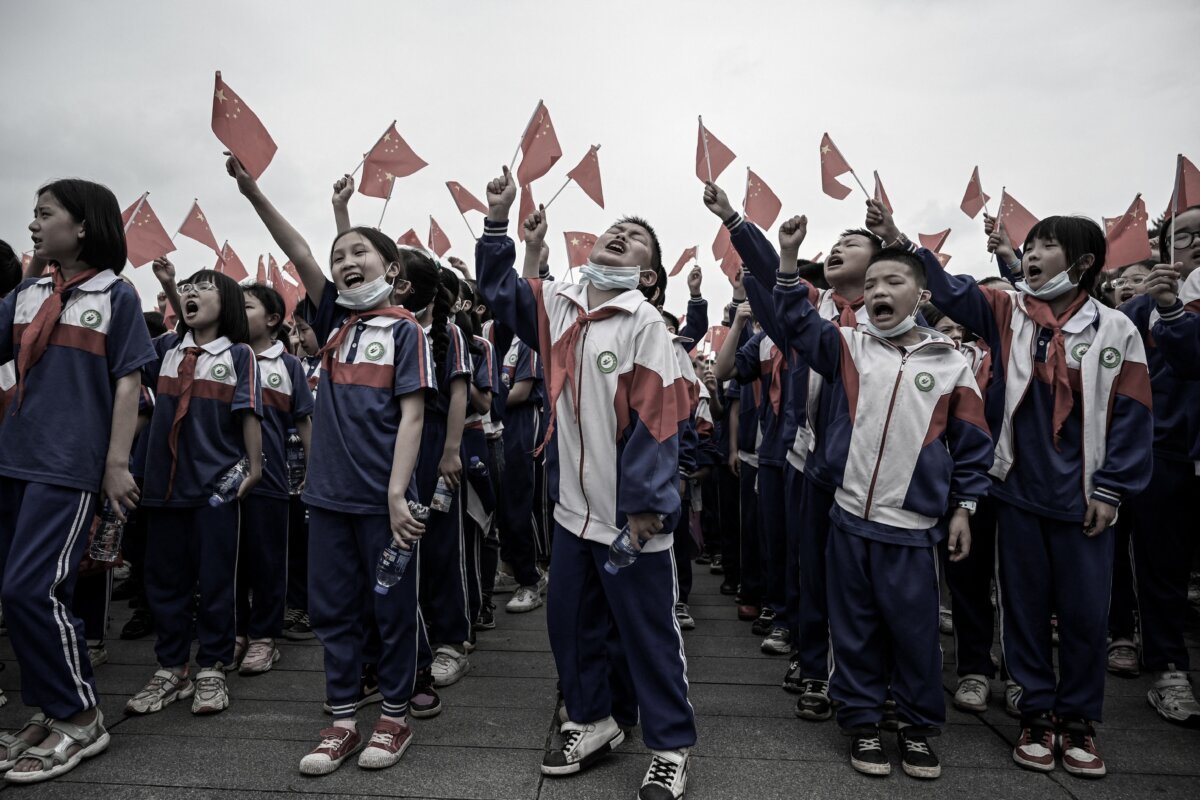
More recently, China’s National People’s Congress Standing Committee passed the Patriotic Education Law, which took effect on Jan. 1, 2024, codifying patriotic education in national law rather than leaving it to Party directives alone.
Article 15 requires schools at all levels to provide patriotic education throughout the curriculum, including in ideological and political theory courses, and to integrate it into other subjects and textbooks. Article 17 requires parents and guardians to include love of country in family education, while Article 19 requires enterprises and public institutions to include patriotic education in their training plans.
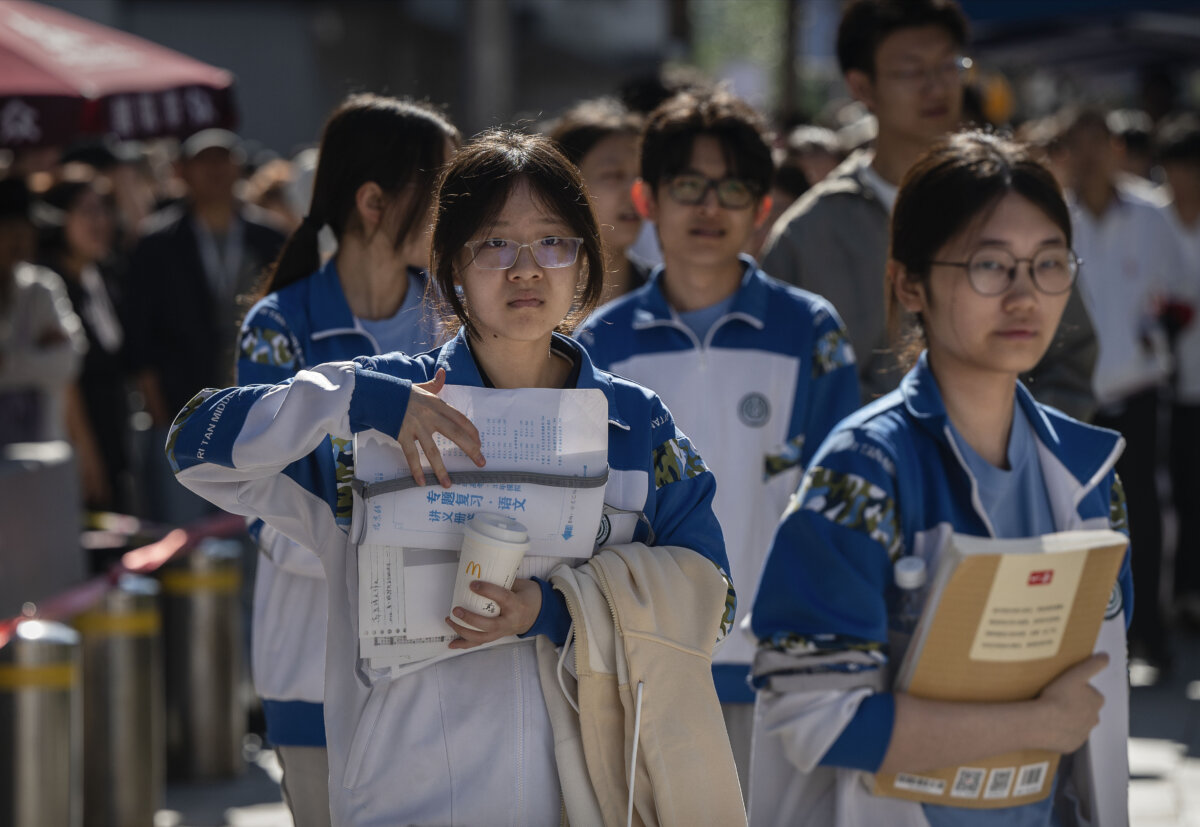
A more recent change may appear to be a banal administrative rearrangement, but it also advances the CCP’s control of education. Since spring this year, Chinese schools and universities have been eliminating “key classes,” which are elite tracks for high-scoring students, and replacing test-score-based placement with a lottery system known as “randomized streaming.”
The official goal is to end a system in which schools sort students into academically ranked classes and families “compete fiercely for advantage.”
The changes are framed as leveling the playing field so that children from rich and poor families receive the same education. However, the new system gives the CCP greater control. The Party, rather than test scores, family networks, or independent school hierarchies, determines how students are sorted.
Chinese schools are returning to Mao-era education, with CCP slogans and Xi Jinping Thought replacing critical thinking and knowledge of the outside world. Mao-era policies kept most of China in absolute poverty while giving the CCP absolute control, and by repeating the errors of the past, Xi is signaling that he is willing to make this trade-off today.
Views expressed in this article are the opinions of the author and do not necessarily reflect the views of The Epoch Times.