
Commentary
The Red Sea crisis is exposing a troubling difference between how the West and China approach maritime security.
Western governments expend ships, personnel, and money trying to keep international shipping lanes open. Beijing appears increasingly willing to leverage political access to ensure that Chinese-linked vessels receive preferential treatment.
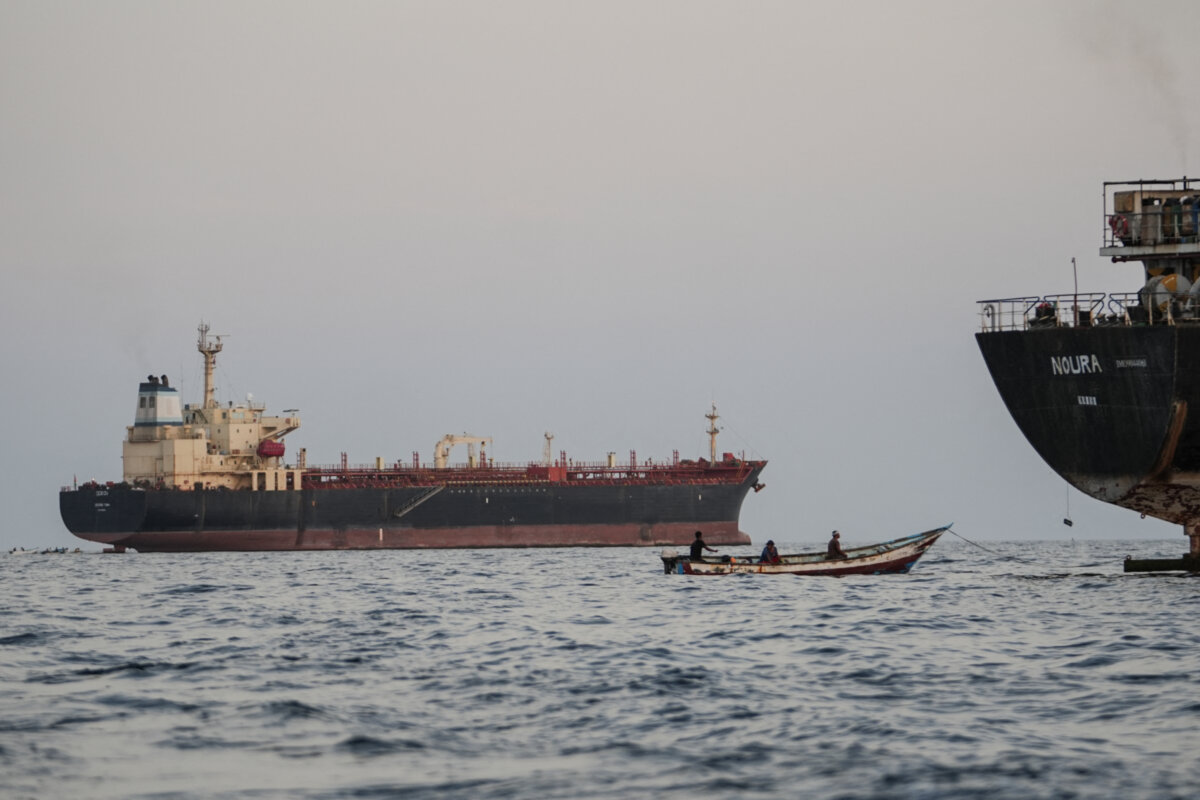
In late July, two Chinese-controlled supertankers left Saudi Arabia’s Red Sea coast carrying roughly 4 million barrels of crude. The Houthis had declared a blockade against Saudi-linked shipping, and other tankers were reconsidering the route.
The Chinese vessels kept going.
Days later, Reuters reported that Beijing had opened direct talks with the Houthis to secure safe passage for Chinese tankers through the Bab el Mandeb. One source said Chinese officials were clearing vessels individually. The episode suggests China may not be experiencing the same level of threat as vessels from other countries.
Two Very Different Security Models
The European Union’s Operation Aspides is explicitly committed to protecting freedom of navigation “for all” in the Red Sea. U.S. maritime efforts similarly treat Houthi attacks as a general threat to commercial navigation. The EU reaffirmed that universal protection principle in July. At the same time, the Chinese regime publicly endorses safe passage, but its behavior reveals a narrower range of options.
After the Houthis announced their July 20 blockade, Beijing sought assurances specifically for Chinese tankers. At least four vessels carrying Saudi crude to China subsequently crossed the Bab el Mandeb, while other tankers changed course because of security concerns.
The financial consequences are increasingly visible. Reuters reported in September that war-risk premiums for Saudi-linked tankers calling at Yanbu had risen to roughly 3 percent of vessel value, compared with about 0.2 percent to 0.3 percent for tankers without a Saudi association.
Political identity is now part of the cost of navigating the Red Sea, which creates an advantage for a country whose shipping is protected.
Beijing Can Influence the Target Set
The foundations of this relationship predate the current crisis. In March 2025, the U.S. Treasury reported that senior Houthi leader Mohamed Ali al-Houthi communicated with Russian and Chinese officials specifically to ensure Houthi militants did not strike Russian or Chinese vessels transiting the Red Sea.
That is more than ordinary diplomatic contact. It confirms that Chinese officials can directly influence Houthi target priorities and “no strike” lists.
The Houthis’ targeting methods make such access valuable. The U.S. Maritime Administration now warns that ships with U.S., British, Israeli, or Saudi associations—and even vessels connected to fleets that have called at Saudi ports—face elevated risk. MARAD says the Houthis use the automatic identification system, unmanned aerial vehicles, small boats, and other electronic signals to find and target merchant ships.
Beijing, therefore, does not need to command a Houthi missile crew to alter the risk environment. Political access that removes China-linked vessels from consideration can shape the practical target set before a weapon is launched.
The Other Side of the Targeting Picture
The concern deepens when Chinese intelligence capabilities enter the equation, as reported by the U.S.-China Economic and Security Review Commission. The State Department determined that Chinese company Chang Guang Satellite Technology supplied imagery used by the Houthis to target U.S. warships and international vessels.
The use of Chinese imagery is not surprising. The U.S. Treasury had already sanctioned Chang Guang in 2023 for providing high-resolution imagery that supported Russian operations in Ukraine.
The combination remains disturbing. Chinese officials have communicated which Chinese vessels should be spared while a Chinese commercial imagery company helped improve the Houthis’ ability to identify and prioritize maritime targets.
Chinese Protection Is Not Immunity
Preferential access is not the same as guaranteed protection. The Houthis retain their own political and military objectives, and Beijing has not publicly acknowledged a formal agreement granting Chinese shipping immunity.
China’s foreign ministry has instead continued publicly calling for safe navigation and regional deescalation while declining to confirm reported arrangements. This allows China to project a public image that supports deescalation and stability in the region, while not being exposed to the actual threat.
Let Others Carry the Cost
The United States and its allies devote warships, surveillance capabilities, and personnel to keeping maritime routes available to global commerce. China benefits from that security architecture while preserving political relationships with actors Western governments often isolate.
This behavior is not unusual. China ran a number of mining projects in Afghanistan, using the United States to stabilize the area, assuming little risk but securing significant economic advantage.
When those actors threaten shipping, Beijing possesses channels its competitors may lack. The U.S. Treasury says Chinese officials have already used those relationships to protect Chinese vessels. Reuters now reports Chinese officials clearing individual ships with the Houthis.
The result is asymmetric. Western powers bear much of the cost of defending the maritime commons, while Chinese shipping may receive an additional layer of political protection.
That is what makes the model strategically troubling. Beijing does not have to make the Bab el Mandeb safe. In fact, it is China’s interest to allow the instability to continue, while the regime makes Chinese commerce safer than everyone else’s.
Once political access begins to determine who bears the risk, privileged access itself becomes a competitive weapon.
Views expressed in this article are the opinions of the author and do not necessarily reflect the views of The Epoch Times.