
Commentary
I often think about the extraordinary comfort in which we live and our tendency to resent the things that make it possible.
We hate oil and gas companies while heating our homes, driving our cars, and flying across the country.
We are furious with food manufacturers for filling grocery stores with products that make us sick, yet we continue supporting the systems producing them.
But perhaps the most egregious contradiction is our growing disdain for traditional masculinity while living inside a civilization largely built and maintained by men doing traditionally masculine things.
I recently read an article in The Guardian titled “Muscles, Metrosexuals and Male Tears: The 39 Pictures That Changed the Way We See Men.” Through photographs of politicians, celebrities, and cultural icons, it examines changing ideas about manhood. What struck me was how traditional expressions of masculinity were so often examined through a critical lens, while men embracing traditionally feminine roles were celebrated as progressive.
Where was the celebration of the ordinary men whose strength, courage, sacrifice, and willingness to do dangerous work make our comfortable lives possible?
I have no objection to men pushing strollers, changing diapers, crying, or expressing tenderness. My husband has changed hundreds of diapers, pushed strollers, and comforted crying children.
But those aren’t the images that come to mind when I think about what makes him a man.
As I write this, I’m sitting in my rocking chair in front of the fireplace. My husband left at 5 a.m. to pick up grain for our animals. It’s a three-hour round trip, and he left early so he could return for the lunch rush at our restaurant.
Yesterday, he was up at 5 a.m. loading cattle to take to the processor, making the long trip and returning in time for lunch service. When he arrived, our oven wasn’t working. He took it apart, switched out electrical components, and figured out how to get it running while the restaurant was already open.
This is the masculinity I see every day. Not a performance or a political statement. A man taking responsibility for what needs to be done.
And I am profoundly grateful for it.
There was a time when I would have reacted differently to that statement.
I spent years as a domineering boss, convinced that I could do anything a man could, probably better. I built businesses, managed employees, fixed equipment, and took enormous pride in my independence.
I still can do many of those things. I’m a reasonably capable mechanic and pretty good at plumbing as long as it doesn’t involve copper pipes. If something breaks and my husband isn’t around, I won’t sit helplessly waiting for rescue.
But being capable of doing something doesn’t mean that I must insist on doing it.
On the coldest winter days, when ice covers the ground and the animals need feeding, I’m perfectly happy to stay inside by the fire with my children while my husband goes out into the freezing weather. I no longer need to prove something by following him.
That doesn’t mean that I’ve escaped the conditioning I grew up with. Sometimes, my husband speaks in a particular tone or asks me to do something, and I feel resistance rising.
Don’t tell me what to do.
It’s almost automatic.
I grew up learning to resist male authority, question traditional roles, and see independence as the ultimate expression of female empowerment. Even in a marriage I cherish, I sometimes resist a reasonable request simply because it came from my husband. I’ve had to ask whether that reflex serves me or my family.
Meanwhile, look around.
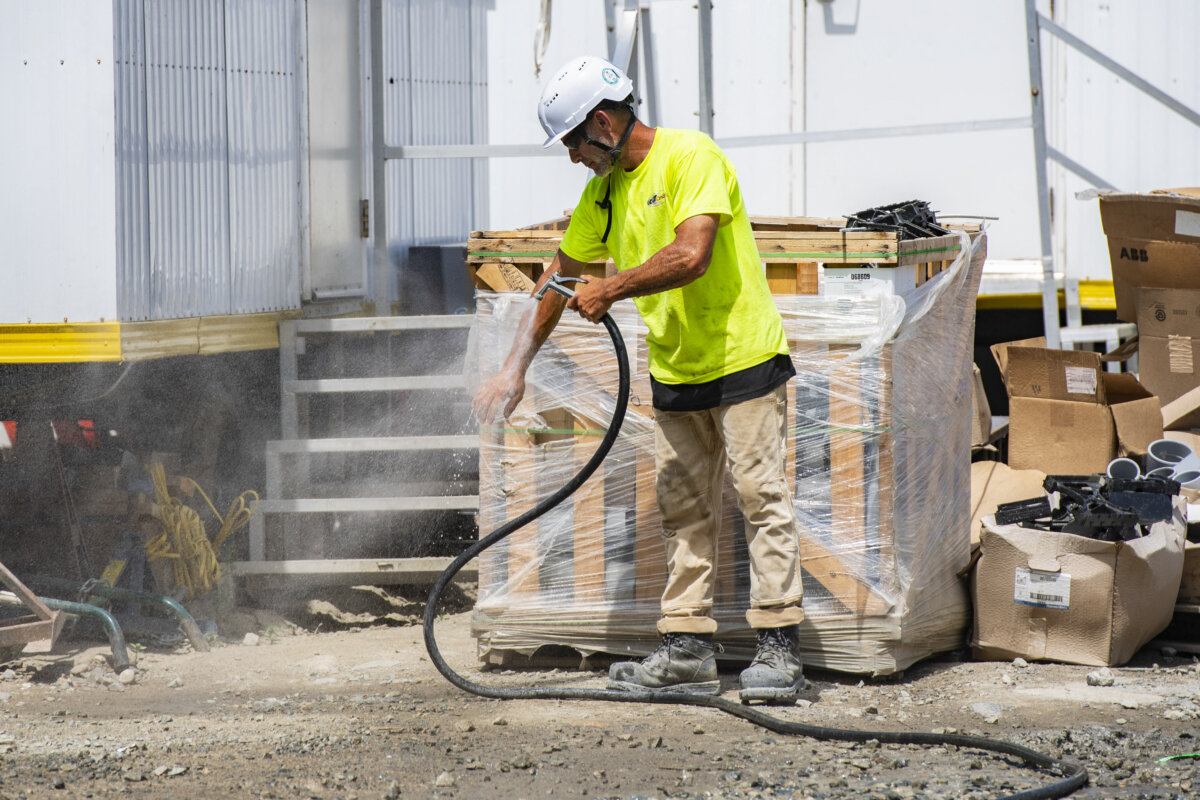
Our houses, roads, electrical grids, factories, plumbing, delivery trucks, and machinery are overwhelmingly built, operated, and maintained by men. Women also work in these industries, but men make up large majorities of the workforce in many construction trades and physically dangerous occupations.
We live inside a cocoon of comfort made possible in substantial part by men doing hard, dirty, dangerous work. And somehow we’ve convinced ourselves to be suspicious of traditional masculinity.
I have yet to meet a woman who declares that she doesn’t need men and can also say her house was built entirely by women, her roads maintained by women, her vehicle repaired by women, and her electricity delivered through infrastructure built entirely by women.
Even women who claim complete independence outsource traditionally masculine work in exchange for currency. There’s nothing wrong with that. It’s how an economy works. But perhaps we should acknowledge our interdependence.
Sometimes, when I put on my conspiracy-minded hat, I wonder whether there’s a reason our culture seems determined to discourage masculinity. A society of strong, capable men willing to protect their families and challenge authority might be harder to control.
But I’ll put that hat away for now.
What concerns me more is what we’re teaching boys.
If strength is suspicious, competitiveness problematic, assertiveness aggression, and the desire to protect or provide an outdated stereotype, what are boys supposed to aspire to?
My 11-year-old son will probably be physically stronger than I am before long. I don’t see that as a threat or a problem to correct. I see something wonderful.
I want him strong and capable. I want him to fix things, build things, protect people, and take responsibility. I also want him kind, compassionate, emotionally intelligent, and capable of loving deeply.
Why have we decided that these qualities are in opposition?
My husband is physically stronger than I am. But I bring other strengths to our marriage. I have a high tolerance for pain. I can endure emotional hardship, stay the course through uncertainty, and keep moving when things feel impossible. Our family benefits from both of us.
In New Age communities, people talk about the divine masculine and divine feminine. Part of me rolls my eyes. I grew up around enough hippies to be skeptical of language that sounds like it belongs on a crystal-shop greeting card.
But perhaps my resistance is another form of conditioning.
Maybe there is something divine about the masculine and feminine. Maybe God designed men and women with complementary strengths, and maybe that design is more extraordinary than anything we could invent through social engineering.
That doesn’t mean that every man or woman must embrace the same role. We can celebrate differences without treating them as defects.
The Guardian’s article is one small example of a larger cultural conversation. Instead of endlessly examining how men might become less traditionally masculine, perhaps we should ask what happens when men stop aspiring to be strong, courageous, protective, capable, and responsible.
Who builds the houses? Who repairs power lines during winter storms? Who climbs into dangerous machinery, works through the night, or takes responsibility when everyone else has gone home?
Women can and do perform these jobs. But that doesn’t erase men’s enormous contributions or mean that we should stop celebrating the masculine qualities that have motivated so many to do this work.
I’m no longer interested in proving that I don’t need a man. I know what I’m capable of. I’ve spent most of my adult life proving it.
Today, I’m more interested in appreciating what my husband brings to our family, what men bring to our communities, and what masculinity brings to civilization.
As I finish writing, I’m still sitting beside the fire. My husband is somewhere on a Texas highway, hauling feed for the animals that sustain our family and business.
I could make that trip. I could repair the oven. I could load the cattle.
But today, I don’t have to. And I’m grateful.
Masculinity is not toxic. It’s necessary, and I’m exhausted by the idea that it isn’t.
Views expressed in this article are the opinions of the author and do not necessarily reflect the views of The Epoch Times.