
Commentary
As we head toward the midterms, and as we look back to November 2024, it is interesting to note that the issue of education is rarely a topic of partisan debate or campaign promises. In 2000, education was on the minds of many in office, and it resulted in the No Child Left Behind Act of 2001. Gov. Ron DeSantis made the elimination of Common Core a centerpiece of his first term, and he also made identity politics in the schools a high-profile target. But in this election season, education is an afterthought.
The quiet is strange, for the sad and simple truth is that American kids are graduating from high school with low skills and knowledge and with poor academic habits. Grades are high, to be sure, but standardized test scores keep falling. The discrepancy indicates that a lot of teachers and schools have given up on meaningful evaluation of performance. Fewer complete books are assigned, and fewer than that are actually read. Knowledge of history, civics, art, and literature is abysmal. Even those high school grads who get accepted to competitive schools such as Harvard and University of California-San Diego sometimes end up needing remedial math instruction.
For decades, educators have concocted theories and practices to get more out of the kids. Readers my age may remember the “open classrooms” layout, where different classes met in large areas in a school building, each class a few years apart with no barriers between them. The set-up was based on the notion that walls were uncomfortable for kids and hampered their learning. The experiment didn’t last.
Then there was the self-esteem movement, which said that kids would learn more if they felt better about themselves. Go light on correction, teachers were told, and ease up on criticism. It was a nice thought, but one with no empirical backing.
The accountability movement, which started in the 1980s, shifted attention away from kids and onto those responsible for educating them. Regular testing, it said, would weed out incompetent instructors, bogus curricula, and dysfunctional schools. To some extent, it succeeded in doing that, but the slide continued. That is why reformers (mostly on the right) championed charter schools and vouchers, which let parents do the job of improvement by the simple act of withdrawing their kids from bad situations. The method was not to fix existing schools but to create new and better ones.
More theories and practices have come along. Social-emotional learning (SEL) is one of them, which schools of education favor. “Cultural relevance” is another, a principle that says a classroom should reflect the culture from which the students come, so that a room filled with African American kids should have a syllabus stocked with African American materials. However well-funded and persistent those efforts are, however, they haven’t reversed the trend. We are falling and falling.
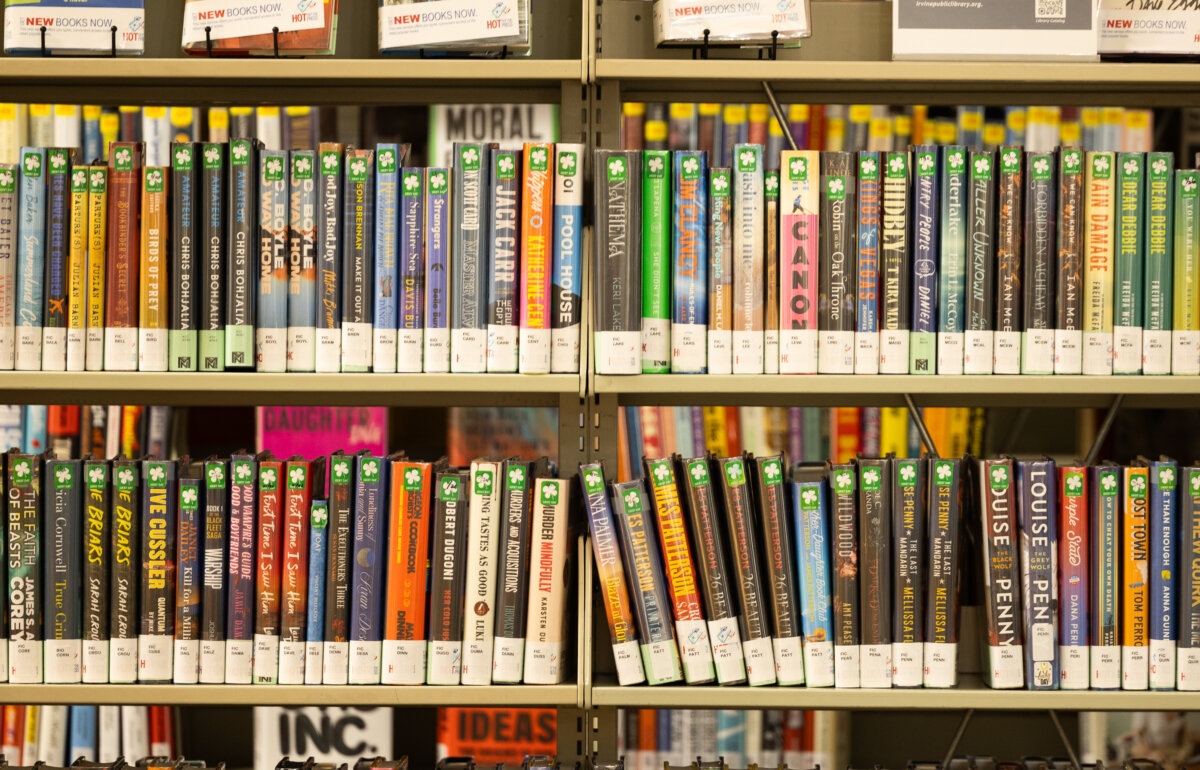
In my English class in 11th grade in 1976 in a large public high school, we read The Red Badge of Courage, Winesburg, Ohio, The Great Gatsby, A Farewell to Arms, The Sound and the Fury, Miss Lonelyhearts, Invisible Man, Seize the Day, and Rabbit, Run. There were more novels, in fact—those are just the ones I remember. No English teacher would assign that page count today, though, not in an average public school. To read a 300-page novel is not in the Gen-Z playbook; an honest teacher would have to fail half of them if she required the novels and tested the kids conscientiously. Everyone knows this is true. The story many months back in The Atlantic on kids entering college without having read a complete book went viral because it stated an obvious fact we’d rather not acknowledge.
There are answers, however. One, remove the phones from schools and reduce the in-class screen time and screen-based assignments. Build a reading culture in early grades with read-alouds and reinforcing habits in the home. Choose a curriculum that instills background knowledge in middle school so that readings in high school are less opaque (for example, so that they won’t be puzzled by references to the Good Samaritan or by the presence of high diction). Don’t waste time on matters beyond the literary sphere such as current events and social behavior. Get disrupters and naysayers out of the classroom and find charismatic teachers who can make the fiction in its most dramatic moments come alive. Finally, eliminate any chance of students using AI to complete assignments (oral exams, blue books, in-class writing exercises completed by hand…).
Such reforms aren’t flashy. The prescriptions don’t make for good publicity, not in the way a classroom outfitted with the latest glossy technology did in 2015. This is one reason why education is a minor theme in the present political climate. But it should be. If we don’t fix the schools, America will never be great again.
Views expressed in this article are the opinions of the author and do not necessarily reflect the views of The Epoch Times.