
Commentary
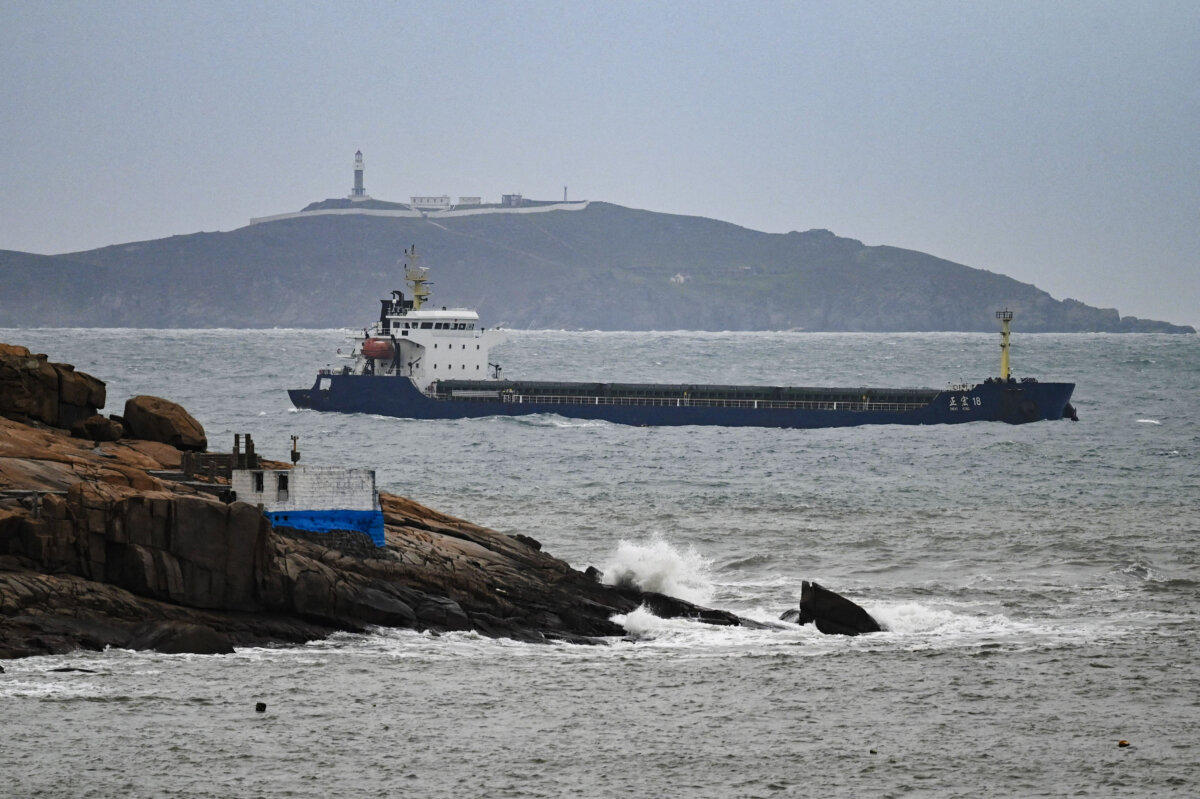
The China Coast Guard on Sept. 3 conducted what Beijing called a “routine law-enforcement patrol” in the area east of Taiwan. The Chinese authorities said such patrols would be carried out in the waters that they regard as falling within China’s jurisdiction. Taiwan’s Coast Guard dismissed that assertion and kept a watch on the Chinese vessels.
The most important term in Beijing’s description was not “law enforcement”—it was “routine.”
The great powers do not invariably alter strategic situations through spectacular acts of conquest; on other occasions, they do so gradually—by arriving, staying, and repeatedly carrying out an activity, thus making what was originally exceptional seem normal.
There is a growing recognition in China of the strategic importance of having a physical presence. It should be noted that China has a particular obsession with “first presence” and lawfare to assert de facto or de jure sovereignty. First presence is an age-old method of asserting eventual control and sovereignty.
As the Center for Strategic and International Studies points out, the average number of different Chinese Coast Guard vessels entering the waters around Taiwan rose by more than 500 percent between 2020 and 2025. The term “Coast Guard” may be confusing to an American reader, since some Chinese Coast Guard vessels are as large as major naval warships; in this way, Beijing can achieve the physical effect of a warship while still using language associated with law enforcement.
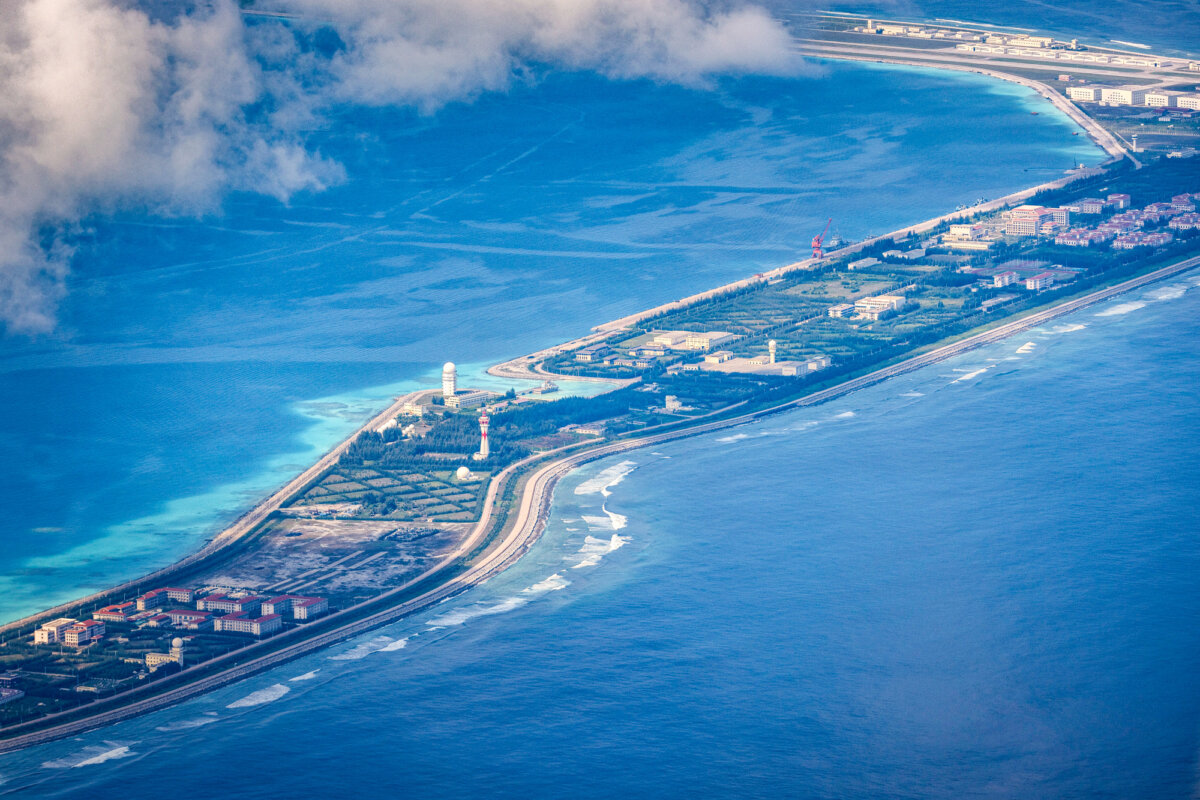
While the object and legal status of separate operations may be contested, it is more difficult to dismiss their combined strategic impact; although a claim drawn on a map has a certain kind of power, a claim supported by ships, patrols, communications, infrastructure, and ongoing activity has a different kind of power.
The mere fact of being present is not sufficient to establish legitimate sovereignty; however, strategy involves more than sovereignty, as it also entails position.
The lesson does not stop with the atmosphere.
The geography doesn’t vanish when humans leave Earth; instead, it becomes astrography.
The great maritime strategists knew that the oceans were not merely empty spaces; the eminent navalist Alfred Thayer Mahan understood the significance of routes, access, bases, commerce, distance, and position, since geography produced opportunities and vulnerabilities that statesmen could choose to exploit or ignore.
Although space is different in a physical and legal sense, it is not, as many people suppose, strategically featureless. In space, it is necessary to consider orbital regimes, routes between Earth and the moon, locations on the moon, communication routes, and libration regions, each with distinct properties and uses. The study of these properties is known as astrography, while their use to achieve national objectives is called astrostrategy.
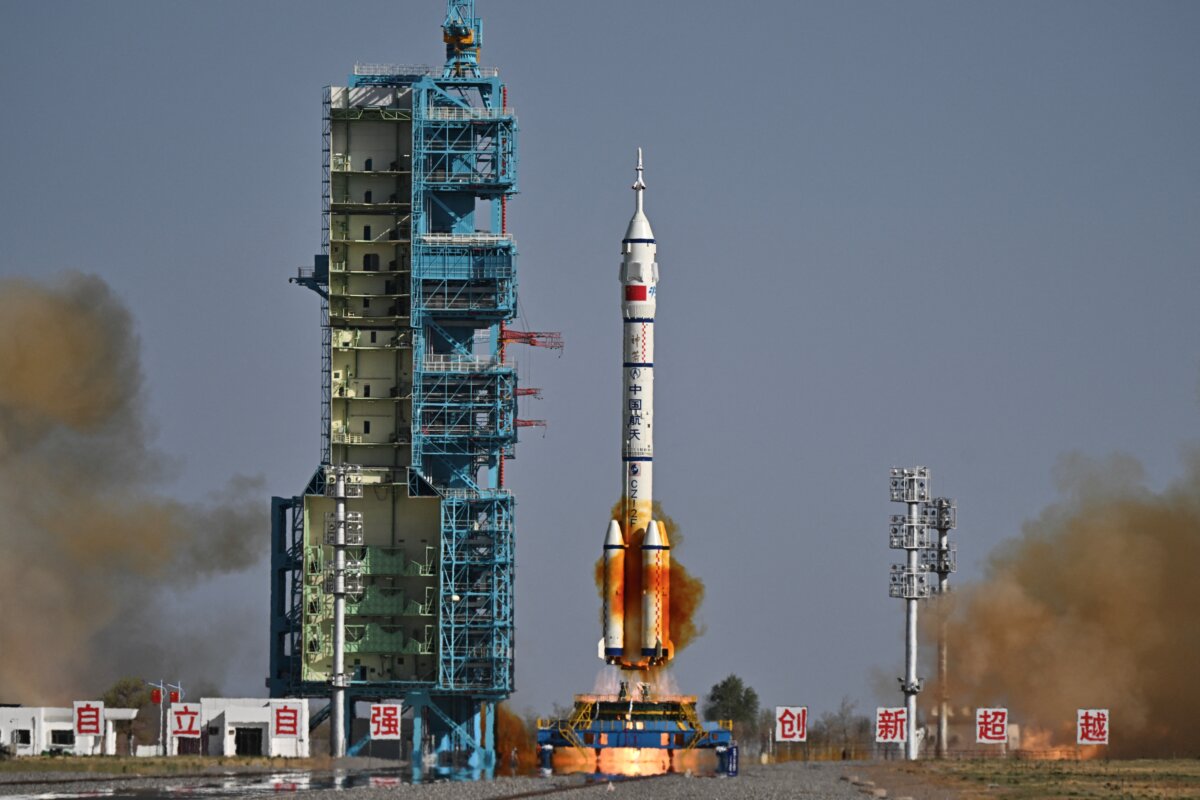
The maritime analogy should not be pushed too far. It is not lawful for Beijing to turn the moon into another South China Sea just because it has arrived there first. Article II of the Outer Space Treaty bans any country from appropriating outer space, including the moon and other celestial bodies, by means of sovereignty claims, use, occupation, or otherwise. Of course, this assumes that China will comply with the treaty when its strategic interests are involved, which is questionable.
That is not the case: Sovereignty and strategic advantage are by no means the same thing.
A state does not have to own an orbital region, a transportation route, or a communications network to obtain benefits from conducting operations there on a continuous basis. Moreover, infrastructure need not be overtly military to have strategic value. All the same, advances in navigation, communications, transportation, mapping, scientific knowledge, and operational experience contribute to what a nation can achieve.
China is working on exactly the types of capabilities mentioned.
The plans for the International Lunar Research Station include components that will be located both on the lunar surface and in lunar orbit. According to Chinese space authorities, the basic model, which is expected to be completed in 2035, should include Earth-moon transportation, energy supply, central control, communications, navigation, lunar scientific exploration, and ground-support facilities. Beijing described the project as both scientific and international.
China’s example of this is the development of a more extensive Queqiao communication and navigation system that connects the far side of the moon to communication relay satellites. The Chinese regime has mentioned a future system that would include lunar orbiters and spacecraft stationed at the Earth-moon Lagrange points. These aims would eventually reach deeper into space, leading to a multi-generational solar system and an interstellar strategy.
The fact that this shows nothing about China’s intention to assert sovereignty over the moon or to convert its scientific stations into military bases is evident; there is no requirement to make such claims in order to acknowledge their strategic importance.
The sea and space are different because their legal regimes and physical environments differ. In the maritime area, Beijing combines its jurisdictional claims with frequent patrols and a physical presence. In space, however, formal appropriation is forbidden, but access, infrastructure, and persistent operations can be seen as elements of space superiority.
The common element is being present.
China isn’t obliged to take over every strategically important area if it wants to gain benefits from them; it just needs to be able to get to key locations, carry out operations there, provide support for activities there, and make its presence increasingly difficult to ignore.
It is an old strategic principle that has now been applied to a new field.
The situation will also become increasingly true beyond Earth.
It is only natural that talk of competition with China should focus on dramatic scenarios such as an invasion of Taiwan, a blockade, the destruction of a satellite, or a future clash over the moon; such events would obviously be important. But if we wait until conquest takes place before acknowledging the existence of strategic competition, we risk mistaking the end of it for its start.
The real issue already concerns access, infrastructure, movement, knowledge, and continuous presence.
It seems that China realizes that a strategic position can come about before political control is established; in the waters off Taiwan and in the newly developing Earth-moon system, it is acquiring the capability not only to visit strategically significant areas but also to remain active in them.
In this new phase of spacepower, the key question may not merely be which side has the most powerful weapons. It may be who gets there, who can stay there, and whose presence eventually becomes part of the strategic landscape.
Views expressed in this article are the opinions of the author and do not necessarily reflect the views of The Epoch Times.