
Commentary
At approximately 1:30 a.m. Vancouver local time on Nov. 20, I boarded a red-eye flight from the Canadian city to Taipei, Taiwan. It was the beginning of a long trans-Pacific journey. Somewhere above the Pacific Ocean, Wall Street was experiencing a brutal sell-off.
By the time my aircraft landed in Taipei, the damage was already done. The Nasdaq had plunged, the Dow Jones Industrial Average had suffered a substantial decline, and semiconductor stocks had been particularly savaged.
For someone who has spent more than three decades in global finance, this was a sobering reminder: financial markets do not wait for you to wake up, return to your trading desk, or land at your destination.
You may be thousands of feet above the Pacific, but your market exposure is still very much grounded in reality. This brings me to two essential disciplines in professional trading: knowing when to hedge, and knowing when to go for the jugular.
Nov. 20: The Semiconductor Bloodbath
Friday’s sell-off was particularly painful for technology investors. The Nasdaq Composite plunged 5.3 percent, losing 1,261 points. The Dow fell 949.73 points, or 1.9 percent, while the S&P 500 declined 3.7 percent. The Nasdaq also recorded a staggering 10 percent decline for the entire trading week.
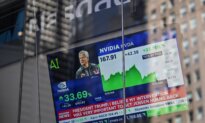
Among the semiconductor casualties, SanDisk (SNDK) fell approximately 16.1 percent, Nvidia (NVDA) dropped 14.01 percent, and Micron Technology (MU) lost approximately 13.8 percent on Friday alone. These were not insignificant corrections in obscure technology companies. They involved some of the most closely watched beneficiaries of the artificial intelligence investment boom.
Some investors are beginning to draw comparisons to the technology meltdown of 2000, when the dot-com bubble burst wiped out enormous amounts of market value. There are concerns that the current artificial intelligence (AI)-driven technology boom could face an equally painful reckoning—and potentially an even more severe correction if excessive valuations, geopolitical tensions, and the enormous capital expenditure behind AI infrastructure all unravel at the same time. Whether this proves to be a repeat of 2000, or something worse, remains to be seen. But the warning signs deserve serious attention.
The market was reassessing AI valuations, future data-center spending, earnings expectations, and investor positioning. Reports of a Securities and Exchange Commission accounting probe involving Nvidia added another source of uncertainty. The important lesson is that a compelling long-term investment narrative does not guarantee a smooth investment journey.
An investor can remain bullish on artificial intelligence over the next five years and still lose substantial capital over five trading sessions. Being bullish on semiconductors does not mean you should remain unhedged.
US–China Chip War: When National Security Becomes Market Risk
Beyond valuations and market sentiment, geopolitics is increasingly influencing semiconductor prices. Washington has tightened restrictions on China’s access to advanced AI chips, particularly high-performance processors supplied by Nvidia.
The restrictions are not limited to direct shipments. The U.S. government has also moved to restrict Chinese companies from accessing advanced computing power remotely through overseas data centers.
This matters because Chinese technology companies have sought to rent Nvidia-powered computing capacity in locations such as Southeast Asia, potentially circumventing restrictions on direct imports. Can China still buy Nvidia chips through the black market?
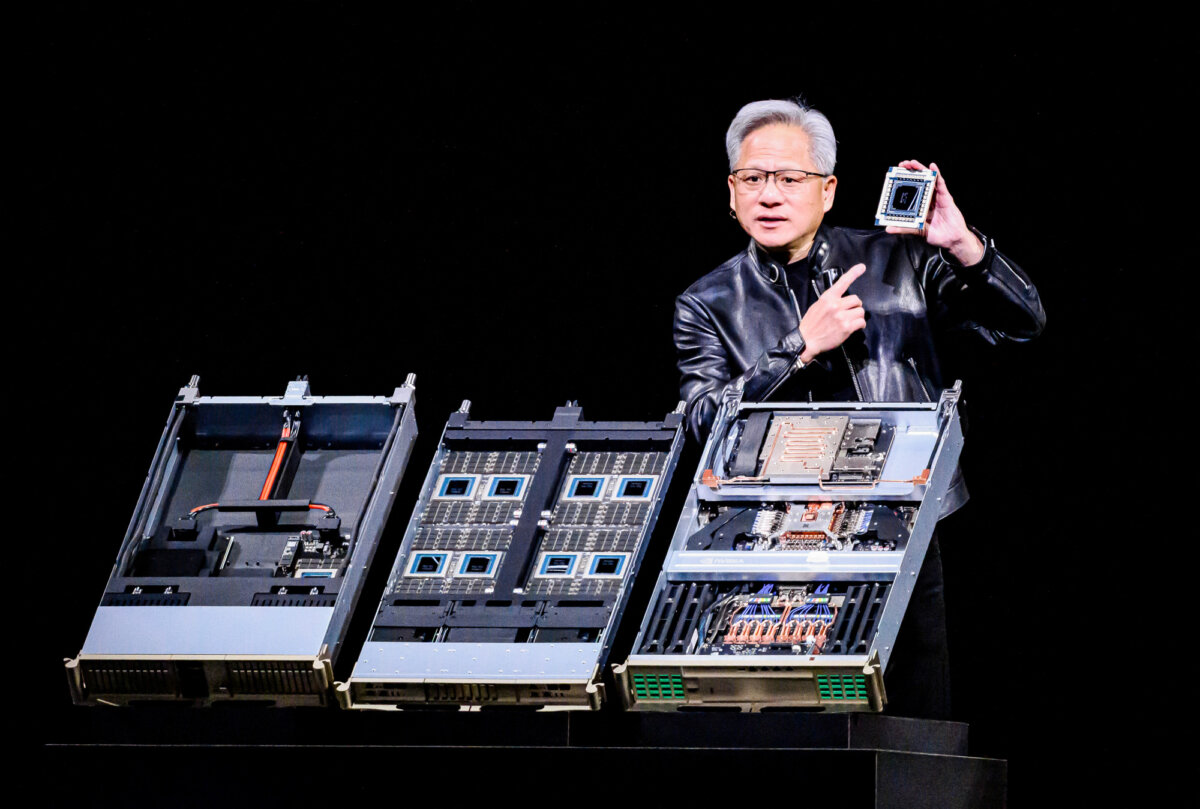
 A screengrab from CTI video footage obtained Nov. 9, 2026, shows a woman identified by Reuters as Alice Huang, after comparison with a separately obtained photograph, attending a dinner with Nvidia CEO Jensen Huang (in black) at a restaurant in Taipei, Taiwan, on May 22, 2025. (CTI via Reuters)
The November 2026 restrictions are intended to close some of these loopholes. For Nvidia, this creates a difficult commercial and geopolitical balancing act. China represents a significant potential market, but access to that market is increasingly subject to U.S. national-security policy.
Meanwhile, Beijing has every incentive to accelerate domestic semiconductor development. For investors, this is an important consideration: semiconductor companies are no longer competing exclusively on technology, pricing, and earnings. They are also operating within an increasingly complicated geopolitical environment.
Taiwan at the Center of the Semiconductor Supply Chain
Having landed in Taipei, I am particularly conscious of Taiwan’s strategic position in this global technology contest. Taiwan is home to Taiwan Semiconductor Manufacturing Company (TSMC), the world’s leading contract chipmaker and a critical supplier to the global technology industry.
The concentration of advanced semiconductor manufacturing in Taiwan creates both enormous economic importance and geopolitical vulnerability. The latest U.S. restrictions also affect TSMC. Reuters reported that the company was tightening restrictions on advanced manufacturing orders from mainland Chinese chip designers unless they obtained the necessary U.S. export licenses.
This illustrates how geopolitical decisions in Washington can affect manufacturing decisions in Taiwan and the commercial ambitions of companies in mainland China.
Investors cannot simply analyze semiconductor stocks through earnings multiples and revenue growth. They must also consider export controls, supply-chain concentration, cross-strait tensions and the possibility of unexpected regulatory intervention. In today’s technology markets, geopolitical risk is financial risk.
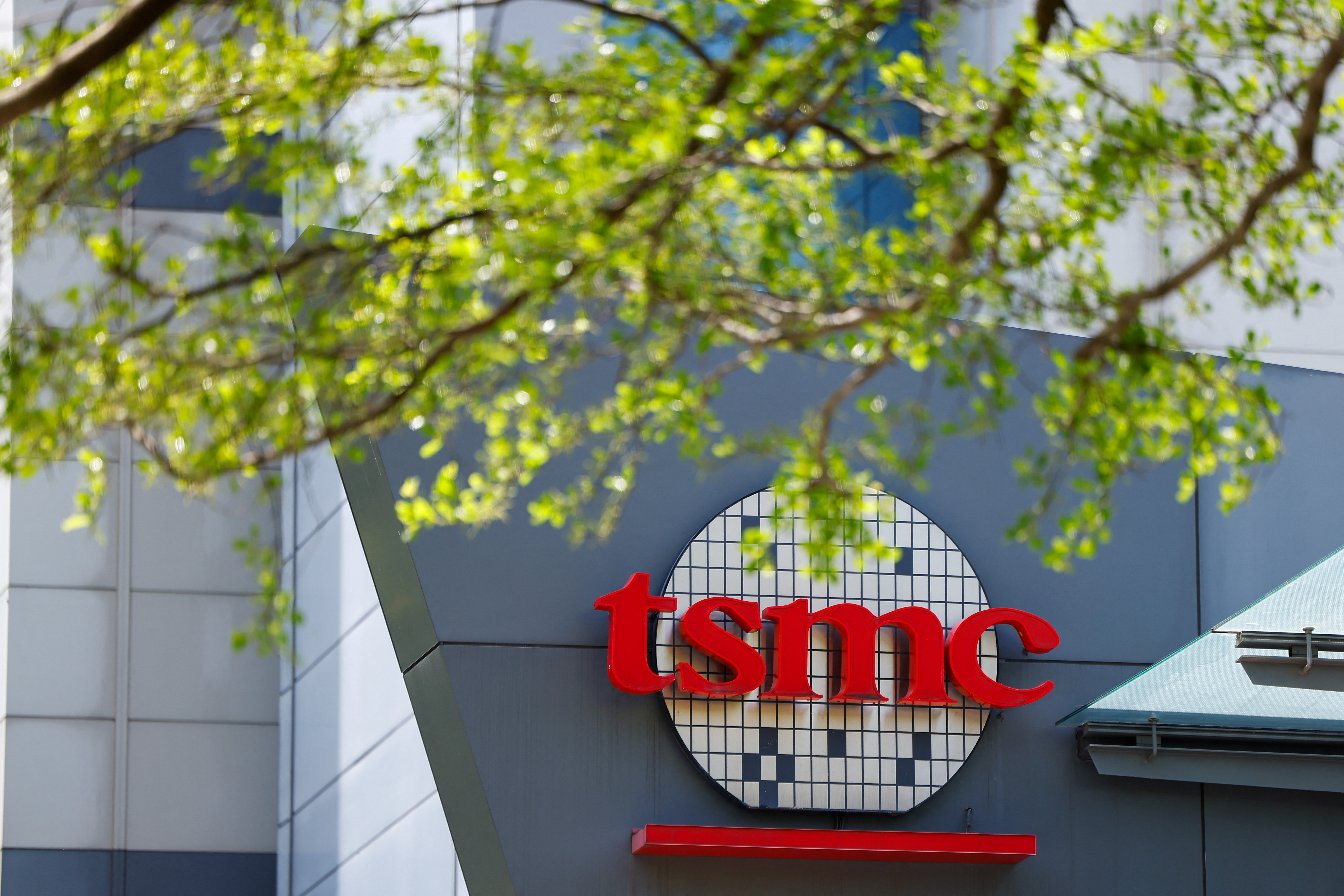 The TSMC logo is displayed on a building in Hsinchu, Taiwan, on April 15, 2025. (Ann Wang/Reuters)
Hedging: The Art of Staying in the Game
Hedging is sometimes misunderstood as a strategy for investors who lack conviction. In reality, professional hedging is about managing exposure, controlling downside risk, and preserving the flexibility to participate in future opportunities.
A portfolio manager who believes in the long-term AI investment thesis does not necessarily have to liquidate every semiconductor holding when market conditions deteriorate.
There are alternatives:
-
Buying protective put options on individual stocks or relevant ETFs.
-
Shorting Nasdaq futures against a long equity portfolio.
-
Reducing gross exposure.
-
Holding additional cash or short-term government securities.
For example, a manager with substantial Nvidia and semiconductor exposure could use index futures or options to reduce broader market risk without abandoning the underlying investment thesis.
Of course, hedging is not free. Options premiums can be expensive, futures require margin management, and correlations between securities can change during market stress. Nevertheless, a well-constructed hedge can buy something extremely valuable: time and optionality.
When markets fall sharply, investors with adequate liquidity and protection may be better positioned to identify opportunities while others are forced to liquidate.
The Cost of Being Wrong
One of the most important lessons in professional trading is that being fundamentally right does not necessarily mean making money. A trader can correctly identify an undervalued company but enter too early. A macroeconomic thesis can be correct but take months to materialize. Leverage makes this problem considerably worse.
A position that moves against you by 10 percent can become catastrophic when excessive leverage is involved. This is why position sizing matters.
Before entering a trade, I would always ask two questions:
How much can I make if I am right? More importantly, how much am I prepared to lose if I am wrong? The second question is often more important than the first.
Professional traders must be comfortable accepting losses. Protecting capital is not about winning every trade. It is about ensuring that one bad position does not compromise the entire portfolio.
Going for the Jugular: When Conviction Meets Opportunity
But there is another side to trading. Being permanently defensive is not a strategy for generating exceptional returns.
There are moments when market dislocations create attractive opportunities, particularly when valuations become disconnected from fundamentals. This is when I believe a trader must be prepared to go for the jugular.
It does not mean gambling or putting the entire portfolio at risk. It means recognizing an exceptional risk-reward opportunity and committing meaningful capital when the evidence supports the decision.
Consider a company with deteriorating earnings prospects, excessive valuations and a weakening technical structure. A short position may become attractive, particularly when a catalyst emerges.
Alternatively, a sharp market correction may create opportunities to accumulate fundamentally strong companies at more reasonable valuations.
Options can also provide ways to structure asymmetric exposure, although volatility, time decay, and execution costs must be considered.
The critical distinction is between calculated aggression and recklessness. A professional trader should not be afraid of taking risk. But that risk must be understood, measured, and appropriately sized. Hedging requires humility. Going for the jugular requires conviction. Both require discipline.
The New Reality: Trading in an Extended-Hours Market
The trading environment is also changing. Nasdaq is scheduled to introduce nearly continuous trading—23 hours a day, five days a week—beginning Dec. 6, 2026.
For international investors, this is significant. Financial markets are increasingly interconnected across North America, Europe, and Asia. However, extended trading hours do not automatically mean better liquidity. Overnight markets can have wider bid-ask spreads, thinner order books, and greater price sensitivity.
A trader must distinguish between the ability to trade and the quality of the opportunity. More trading hours do not mean that we should trade every hour. Sometimes, the best decision is to remain on the sidelines.
A Final Note: Entering Thanksgiving Week Amid Uncertainty
As this article goes to print, the trading week of Nov. 23 will already have begun. Wall Street faces a shortened trading week, with U.S. equity markets closed on Thursday, Nov. 26, for Thanksgiving and an early close on Friday.
Will investors buy the dip? Will semiconductor stocks recover? Or will further selling pressure emerge? Investors will be watching inflation, Federal Reserve expectations, AI valuations, and developments in the US-China technology confrontation.
Nobody knows with certainty what the next trading session will bring. But one thing remains clear: the market will continue to present both risks and opportunities. The question is whether we have protected enough capital to take advantage of them.
Enjoy Thanksgiving, but never forget that the markets do not take a holiday from risk management!
Views expressed in this article are the opinions of the author and do not necessarily reflect the views of The Epoch Times.