Commentary
In June 2023, I was in Dharamsala, India, the home of the Tibetan government-in-exile. Something I saw there has stayed with me ever since: Posters featuring the image of a young boy were still everywhere, reminding the world of a child who had been missing for nearly three decades. His name is Gedhun Choekyi Nyima, the 11th Panchen Lama.
He was only 6 years old when Chinese authorities took him and his family away on May 17, 1995, just three days after the Dalai Lama recognized him as the 11th Panchen Lama.
More than 30 years later, his whereabouts remain unknown to the outside world. Human Rights Watch describes the case as an enforced disappearance. Chinese authorities have acknowledged taking him away, but have refused independent access to him or precise information about his whereabouts.
Standing in Dharamsala and seeing the photograph of that little boy, I found myself wondering: How can a government make a 6-year-old child disappear—and have the world still not know where he is more than three decades later? Today, he would be 37.
Perhaps he is living somewhere inside Tibet under Chinese rule. Perhaps he has been allowed to live a quiet life under intense state supervision. We simply do not know. That uncertainty is itself part of the tragedy.
The Chinese Communist Party (CCP) has repeatedly demonstrated its ability to remove people from public view through detention, imprisonment, and enforced disappearance. In cases involving foreign nationals, governments and human rights organizations have also described the detention of individuals as political leverage—a practice often referred to as “hostage diplomacy.”
Joshua Wong: A Voice of a New Generation
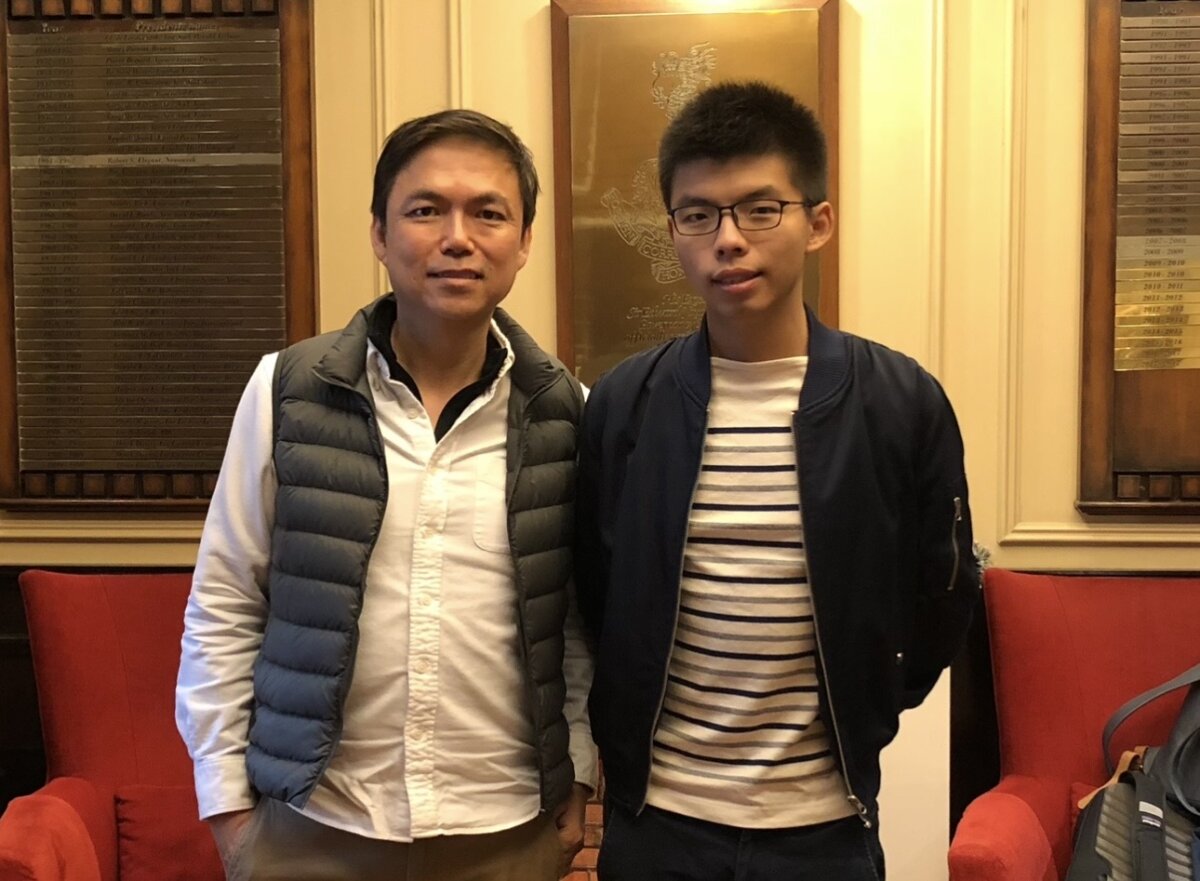
Few names better represent Hong Kong’s younger generation than Joshua Wong. He first became internationally known as a teenager during the 2012 campaign against Hong Kong’s proposed national education curriculum, which he and other students opposed as political indoctrination. Two years later, he became one of the most recognizable faces of the Umbrella Movement.
Wong was still very young—that matters, because his story is not only about one individual. It is about an entire generation of young Hongkongers who grew up believing that their city would retain meaningful freedoms under “One Country, Two Systems.”
Wong is now 29. And he remains behind bars. His first national security case arose from the 2020 unofficial primary election. He pleaded guilty to conspiracy to commit subversion and was sentenced to four years and eight months in prison.
Then came a second national security case. On Sept. 2, 2026, Wong pleaded guilty to conspiracy to collude with foreign forces. Prosecutors accused him of participating in efforts to seek foreign sanctions and other hostile measures against Hong Kong and China. The charge carries a possible life sentence in the most serious circumstances.
His sentencing date has not yet been set. It could happen before or after Sept. 24, when U.S. President Donald Trump is expected to meet with Chinese leader Xi Jinping in Washington.
But there is one thing that we can reasonably assume: The free world would want Wong’s name to be part of the human rights conversation surrounding the Trump–Xi summit.
Will the fate of Hong Kong’s political prisoners have a place at the negotiating table alongside trade, tariffs, technology, and geopolitics?
However, if Wong is sentenced before the summit, his case could become an even more immediate issue for the White House to raise with Beijing. If the sentencing comes after Sept. 24, another question will remain: Did the two leaders discuss Hong Kong’s political prisoners at all? Either way, Wong’s name should not disappear from the international agenda.
Hong Kong’s Political Prisoners
An entire generation of Hong Kong political figures has experienced imprisonment under the CCP-imposed National Security Law.
 Tibetan Buddhist members of the Tibetan Women Association hold posters on April 29, 2019, as they take part in a silent march. Tibetans living in exile in the northeastern areas of India organized a peaceful march on April 25, 2019, on the occasion of the 30th birthday celebration of the 11th Panchen Lama, who disappeared into Chinese custody in 1995 at the age of 6. (Dipendu Dutta/AFP via Getty Images)
Chow Hang-tung—a human rights lawyer and former vice-chair of the Hong Kong Alliance who helped preserve the memory of the 1989 Tiananmen Square massacre through Hong Kong’s annual June 4 vigils—was sentenced to seven years and three months in prison for inciting subversion.
Lee Cheuk-yan—a veteran labor activist, former legislator, and former leader of the Hong Kong Alliance—was sentenced to seven years.
Albert Ho—a veteran democratic politician and human rights lawyer—was sentenced to five years and two months.
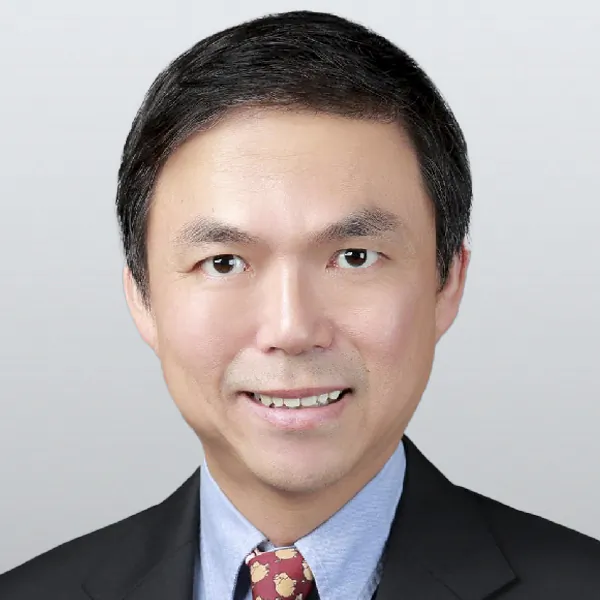
Benny Tai—a former University of Hong Kong law professor and one of the intellectual figures behind the 2014 Occupy Central movement—was sentenced to 10 years in the Hong Kong 47 national security case.
These are not abstract names. They are lawyers, professors, legislators, publishers, activists, and community leaders. And they represent different chapters of Hong Kong’s modern history.
What Happens to a Generation When Its Leaders Disappear?
These are the questions that trouble me most: What happens to young Hongkongers when the people they once looked up to are gradually erased from public life and from the world’s view? When political parties disappear? When newspapers are shut down? When June 4 commemorations can no longer take place? And when a teenager who once stood in front of cameras to speak about his city’s future eventually finds himself facing the possibility of life imprisonment?
The message to the next generation can be chilling: Do not speak. Do not organize. Do not challenge. Do not remember.
But history has repeatedly shown that repression does not necessarily destroy an idea. Sometimes, it drives the idea underground. Sometimes, it carries it overseas. Sometimes, it passes it from one generation to another.
That is why Joshua Wong matters. His story is part of Hong Kong’s younger generation—and of the question of whether the ideals that shaped the city can survive even after many of the people who defended them have been imprisoned.
Will Trump Raise Lai and Wong With Xi?
The upcoming Trump–Xi meeting in Washington could, therefore, have significance far beyond trade and economics.
If the planned one-day Washington visit takes place, trade, tariffs, technology, Taiwan, and broader geopolitical issues will almost certainly dominate the agenda. But what about human rights? What about Hong Kong? What about Jimmy Lai? And now, what about Joshua Wong?
We do not know whether Trump will raise their cases. We do not know whether Xi would respond positively. And we should not pretend that a presidential conversation automatically means that a political prisoner will walk free.
Diplomacy does not work that simply. But there is enormous value in raising their names. Because when a powerful leader says the name of a political prisoner across the negotiating table, that prisoner is no longer invisible.
The Panchen Lama teaches us what happens when a person disappears from public view for decades. Lai, Wong, Chow Hang-tung, Lee Cheuk-yan, Albert Ho, and Benny Tai show us what political repression looks like in Hong Kong. The international community should not allow any of them to be forgotten.
We Should Never Underestimate the International Community
It is easy to become cynical. Governments have interests. Politicians have elections. Diplomats have priorities. Economic relationships can sometimes appear to matter more than human rights.
But we should never underestimate what nongovernmental organizations, journalists, churches, human rights organizations, lawmakers, and ordinary citizens can do. They can keep names alive. They can document abuses. They can visit prisoners’ families. They can raise cases with governments. And most importantly, they can refuse to let the world forget.
I think back to Dharamsala in June 2023. The posters of the missing child were still there. After almost 30 years, people were still asking, “Where is the Panchen Lama?” That is the power of memory.
The CCP may control the territory. It may control the prisons. It may control the police. It may control what is shown inside Tibet and, increasingly, what can be said inside Hong Kong. But it cannot completely control what people remember outside its borders.
Joshua Wong was a teenager when he first stood up for Hong Kong. Jimmy Lai is an elderly publisher sitting in a Hong Kong prison. Chow Hang-tung, Lee Cheuk-yan, Albert Ho, and Benny Tai are now prisoners because of what they believed Hong Kong should be. Different people. Different places. Different circumstances.
But there is a common thread: Human beings should never become bargaining chips. And perhaps that is the responsibility of those of us who remain free. To remember their names. To tell their stories. To speak for those who cannot speak freely. Because to make a person disappear is one thing. To make the world forget that they ever existed is another. We should never let that happen.
Views expressed in this article are the opinions of the author and do not necessarily reflect the views of The Epoch Times.