Commentary
As I write this article on Nov. 11, 2026, Canada is observing Remembrance Day, honoring those who sacrificed their lives in defense of freedom, democracy, and national security.
Yet, thousands of miles away in Washington, a different kind of battle is unfolding—one fought not with guns and missiles, but with artificial intelligence, advanced semiconductors, financial networks, and intelligence operations.
At its center is Jensen Huang, the chief executive of Nvidia. What began as a personal scandal involving an alleged extramarital relationship has developed into a much wider national security controversy. Could a senior technology executive have been targeted by a foreign intelligence operation? And could an international business network have helped move restricted AI technology to China?
Jensen Huang: From AI Billionaire to National Security Storm
Jensen Huang co-founded Nvidia in 1993. Today, the company is the dominant supplier of advanced chips that power the global artificial intelligence revolution.
His influence extends beyond Silicon Valley. Nvidia’s technology is strategically important to the United States and its allies, making Huang a significant figure in the geopolitical competition with China.
The New York Times reported that U.S. intelligence officials suspected Chinese businesswoman Alice Huang, also known as Huang Le, of working with China’s intelligence services and passing information to Beijing.
The allegations intensified after Jensen Huang acknowledged that he had been unfaithful to his wife. Nvidia’s board subsequently launched an independent investigation into reports that he may have been targeted by a foreign intelligence operation.
However, there is no publicly established evidence that Jensen Huang knowingly participated in espionage, passed Nvidia’s trade secrets to China, or committed an offence. Nvidia’s board has also said it has no reason to believe that national security information or company secrets were compromised.
Alice Huang: Sex, Spies, and the Alleged Honey Trap
Who is Alice Huang? Media reports and corporate records reviewed by Reuters indicate that she built a career in China’s financial sector, with reported connections to television journalism, HSBC Private Banking in Hong Kong, CITIC Securities, and Shanghai Hexi Investment Management.
In March 2023, she became the controlling shareholder of Megaspeed International, a Singapore-based cloud-computing company.
 A screengrab from CTI video footage obtained on Nov. 9, 2026, shows a woman identified by Reuters as Alice Huang after comparison with a photograph obtained separately, attending a dinner with Nvidia CEO Jensen Huang (in black) at a restaurant in Taipei, Taiwan, on May 22, 2025. (CTI via Reuters)
A personal relationship does not prove an intelligence operation. But when the individual involved is the chief executive of a company at the heart of America’s AI industry, the potential security implications are considerable. U.S. intelligence allegations about Alice Huang remain unproven. China has firmly rejected them.
Where Is Alice Huang Now?
Since the controversy became public, Alice Huang appears to have disappeared from public view. The Washington Post reported on Nov. 10 that she had not made a public statement, her social media accounts appeared to have been deleted, and her whereabouts remained uncertain.
At China’s Foreign Ministry press conference on Nov. 10, Bloomberg asked whether Alice Huang was a Chinese citizen and where she was located. Spokesperson Guo Jiakun did not provide a specific answer. Instead, he described the Chinese spy allegation as “purely unsubstantiated and directed at smearing China.”
The Real Prize: Nvidia’s Advanced AI Chips
Why does this matter so much? Nvidia’s advanced GPUs provide the computing power needed to train sophisticated AI models, analyze vast amounts of data, and run complex simulations. Their applications include intelligence analysis, surveillance, autonomous systems, and military planning.
This is why Washington restricts the export of certain advanced chips to China. The concern is not simply who buys the hardware, but what capabilities it could give China’s military and technology sectors.
Yet chips can pass through distributors, resellers, and data centers in different countries. Tracking their ultimate destination is a major challenge for export-control authorities.
Megaspeed: Follow the Company
Megaspeed International is central to the controversy because of Alice Huang’s reported role and its business in AI computing infrastructure. Reuters reported that she became its controlling shareholder in 2023. Her shares were subsequently transferred to another corporate entity, Swiftdata. However, the ultimate ownership and control structure has not been fully established.
Reuters also reviewed shipping records showing that Megaspeed’s Indonesian subsidiary imported Nvidia H100 processors and related hardware between 2024 and 2026. These shipments do not, by themselves, prove an export-control violation or an illegal transfer to China. Megaspeed has denied wrongdoing, saying that inspections and reviews found no evidence of illegal chip transfers.
Singapore has confirmed that investigations into Megaspeed are ongoing. Importantly, Singaporean authorities have clarified that they did not investigate Alice Huang over alleged intelligence links to China. These are separate matters and should not be conflated.
The key questions remain: Who ultimately owns Megaspeed? Who financed its rapid expansion? Who controls its operations? And who are the final users of its computing infrastructure?
Follow the Money, Follow the Chips
This is where anti-money laundering becomes particularly relevant. In financial investigations, the starting point is to establish the source of funds, identify the ultimate beneficial owner and determine who actually controls the transactions.
The same principles apply to sensitive technology supply chains. Investigators should examine:
-
Source of funds: Where did the company’s capital originate?
-
Beneficial ownership: Who ultimately owns or benefits from the business?
-
Control: Who makes the strategic and commercial decisions?
-
Counterparties: Who are the suppliers, intermediaries, and customers?
-
End users: Where do the chips ultimately go, and who operates them?
A company may be registered in Singapore, financed elsewhere, purchase chips through another jurisdiction, and provide computing services to customers in yet another country.
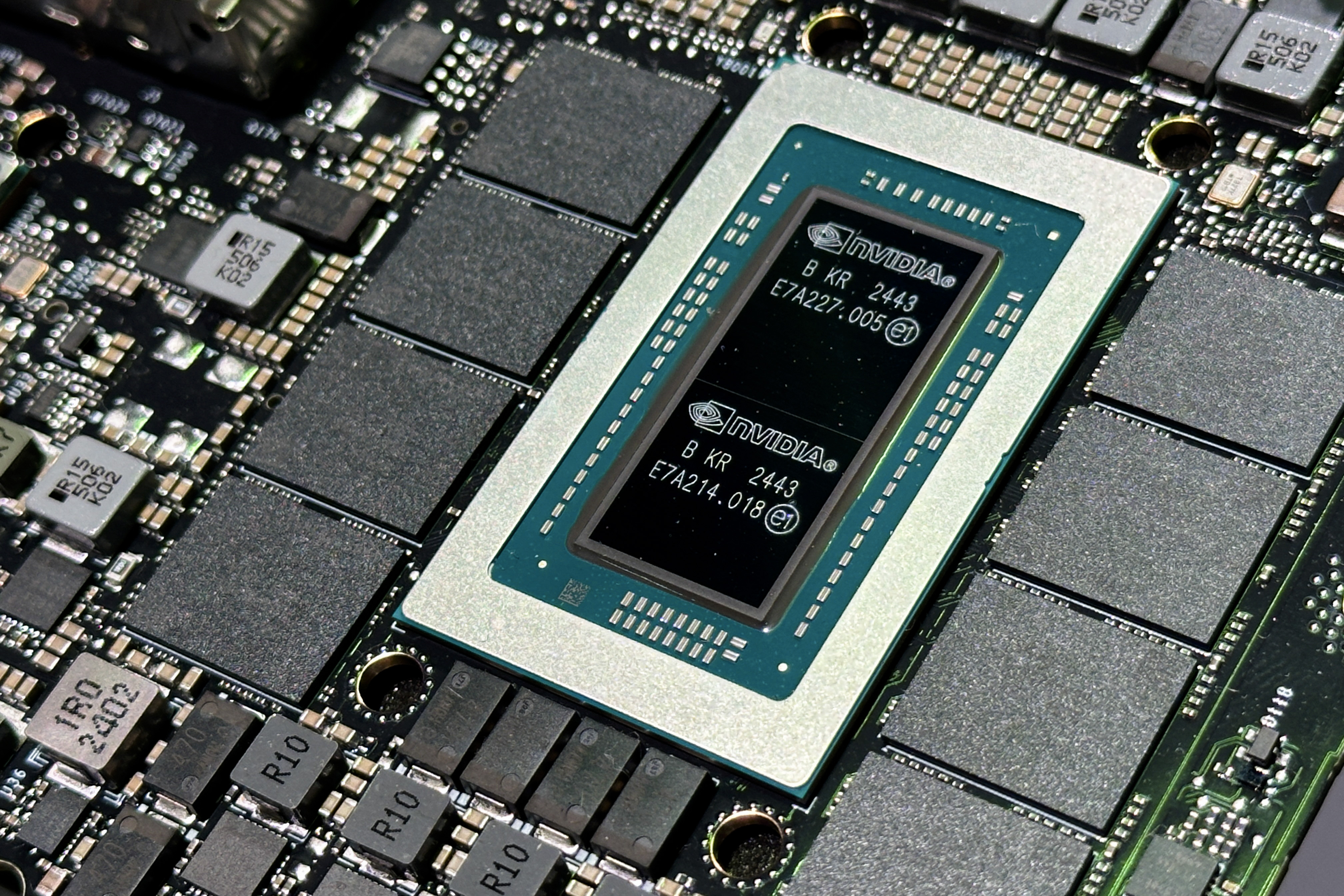 Nvidia’s GB10 Grace Blackwell Superchip is displayed at the company’s GTC conference in San Jose, Calif., on March 19, 2025. (Max A. Cherney/Reuters)
In today’s AI economy, AML, sanctions compliance and export-control enforcement increasingly overlap. Follow the money. Follow the ownership. Follow the chips.
Washington Steps In: Congress Wants Answers
The controversy has reached Capitol Hill. Three U.S. House committee chairmen have requested a closed-door briefing with Jensen Huang, reportedly scheduled for Nov. 18.
Lawmakers want answers about his relationship with Alice Huang, potential foreign intelligence activity, and Nvidia’s safeguards for protecting sensitive information.
The questions are straightforward: Was Huang aware of any intelligence concerns? Could confidential information have been exposed? Were the company’s customer-screening and supply-chain controls adequate?
Congressional scrutiny is not proof of wrongdoing. But given Nvidia’s importance to America’s technological advantage, the issue is unlikely to disappear quickly.
Wall Street’s Warning: Could Nvidia Lose Its Crown?
The controversy has also unsettled investors. On Nov. 11, Robert W. Baird downgraded Nvidia from Buy to Neutral and cut its price target from $500 to $200. Morgan Stanley removed Nvidia from its Top Pick list but retained its Overweight rating.
These decisions reflect more than the personal scandal. Analysts are also weighing uncertainty over Jensen Huang’s leadership, potential U.S. government action, export restrictions, and the outlook for AI data-center spending.
For investors, the risks are threefold: leadership uncertainty, possible restrictions on international sales, and reputational damage if corporate governance or compliance controls are found wanting.
Nvidia’s long-term technological advantage remains a separate question from the allegations. But the controversy demonstrates how geopolitical risk can quickly become corporate and market risk.
The New Battlefield: AI Supremacy and National Security
There is a broader lesson here. National security is no longer confined to military bases, weapons systems, and intelligence agencies. It now extends to semiconductor factories, data centres, cloud networks, corporate ownership structures, and the personal vulnerabilities of senior executives.
For technology companies, three priorities are becoming essential:
-
Corporate security: Protect executives, intellectual property, and confidential information against potential foreign intelligence activity.
-
Supply-chain transparency: Know not only who purchases advanced chips, but where they ultimately go and who uses them.
-
Financial accountability: Establish the true source of funds, beneficial ownership and control behind strategically sensitive businesses.
For the United States and its allies, protecting technological leadership requires more than restricting individual chip exports. It means safeguarding the entire ecosystem of talent, capital, intellectual property, and global supply chains.
The honey trap may be the bait. The real prize is control over the technology that will shape the next generation of military and economic power. And this battle may only just be beginning.
This article reflects information available as of Nov. 11, 2026. Allegations concerning Alice Huang’s intelligence connections and Megaspeed’s possible involvement in export-control violations remain subject to investigation and must not be treated as established facts. Nothing in this article establishes that Jensen Huang knowingly participated in any unlawful activity or that Nvidia’s confidential information was compromised.
Views expressed in this article are the opinions of the author and do not necessarily reflect the views of The Epoch Times.