
Commentary
As the weather gets colder and chili cook-off season gets underway, I think it’s time we address one of America’s great culinary disagreements.
Do beans belong in chili? Does spaghetti belong in chili? And who gets to decide what chili actually is?
I grew up in upstate New York, where chili always had beans. Sometimes, it had corn. It was made with ground beef, tomatoes, onions, and spices, topped with shredded cheese, sour cream, and sometimes, green onions. We ate it with cornbread, crackers, or tortilla chips.
Nobody was concerned about whether it was authentic chili. It was cold outside, a big pot of food sat on the stove, and everybody was happy.
Years later, I briefly dated a rapper from Louisville, Kentucky, named Smoky. He liked his chili with spaghetti.
Spaghetti.
Not as a side dish. Not as leftovers the following day. He ate chili on top of spaghetti noodles. And his chili didn’t have beans.
I thought this was a personal eccentricity. It turns out an entire region of the country eats chili this way.
Then, I married a Mexican man and discovered another layer of confusion.
In Mexico, chile means pepper. Countless varieties of chiles—fresh and dried—are foundational to Mexican cooking. But what Americans call chili is not necessarily what a Mexican cook thinks of when you say chile.
My husband calls the American dish “chili beans,” which makes perfect sense if you think about it. The chili I grew up eating always had beans. To him, that combination of meat, beans, and spices is chili beans, not simply chile.
And now, we live in Texas, where apparently beans have no business being in chili at all.
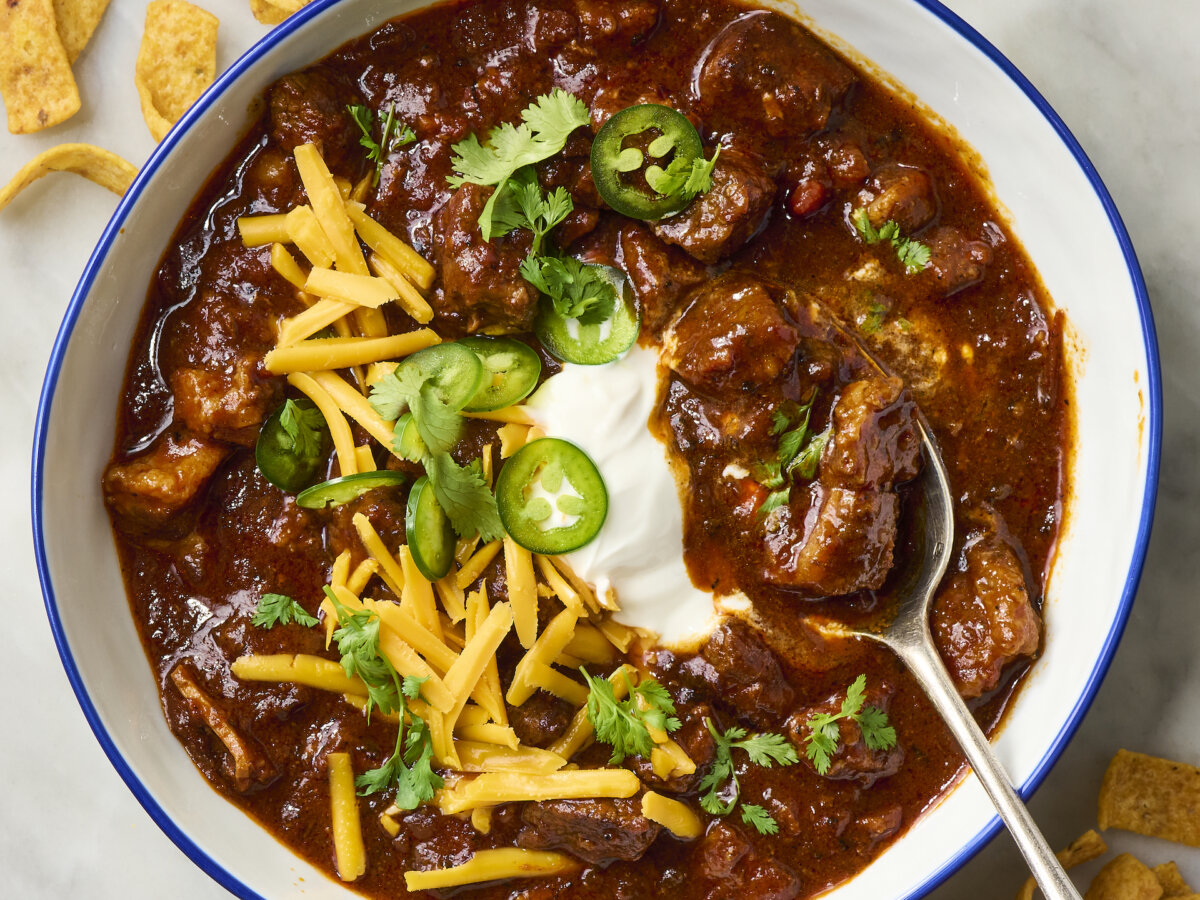
In Texas, traditional chili con carne is a meat-and-chile-pepper dish. No kidney beans. No pinto beans. No black beans. Just meat, chiles, and seasonings.
And here’s the part that might make a few Texas chili purists turn over in their graves.
For years, I owned vegan restaurants in California, and we served chili made entirely of beans, corn, tomatoes, and peppers. No meat whatsoever.
Not only did my chili have beans, but the beans were also practically the entire point.
I’m not sure what the official Texas chili cook-off judges would have done with that one. They might have disqualified me before I even plugged in the crockpot.
But Texas has a pretty good historical argument.
Chiles have been cultivated and eaten in the Americas for thousands of years. Indigenous people were cooking with peppers long before Europeans arrived. The particular dish Americans call chili con carne became famous in San Antonio during the 1800s.
Women known as the Chili Queens sold bowls of spicy meat stew in San Antonio’s plazas, feeding workers, travelers, and anyone else who was hungry.
I’ve taken my children to the Witte Museum in San Antonio multiple times to see the exhibition about the Chili Queens. I love being able to connect my children to this part of their Mexican heritage through food. These women were entrepreneurs, cooks, and an important part of San Antonio’s history. Their food helped shape something that eventually became an iconic American dish.
There is something wonderful about watching your children learn that the foods we eat have histories, and that some of those histories are part of their own cultural inheritance.
In 1977, Texas officially designated chili as its state dish.
But beans were hardly foreign to the region’s food culture. Beans were a staple food throughout Mexico and the American Southwest, sometimes served alongside meat dishes and sometimes incorporated into stews.
As chili traveled across America, it changed.
In the Northeast and Midwest, chili often became a thick tomato-based stew with ground beef and beans. Sometimes, it included bell peppers or corn. It was economical, filling, and easy to make in a big pot.
In Cincinnati, the story took an entirely different turn.
In 1922, Macedonian immigrant brothers opened the Empress Chili Parlor and popularized a seasoned meat sauce served over spaghetti. The sauce incorporated warm spices associated with Mediterranean cooking, including cinnamon and cloves.
Eventually, Cincinnati developed its own chili vocabulary.
A two-way is spaghetti and chili. A three-way adds shredded cheddar cheese. A four-way adds either beans or onions. A five-way includes both.
But Cincinnati isn’t the only place where chili and pasta have become friends. Louisville, Kentucky, has its own tradition of serving chili over spaghetti. Depending on the cook, the chili may look more like the familiar tomato-and-ground-beef version than Cincinnati’s finely textured, spiced meat sauce.
So Smoky wasn’t being strange. He was being Louisville.
Then, there is white chicken chili.
Somebody decided chili didn’t need to be red or even contain beef. White chicken chili is usually made with chicken, white beans, green chiles, and broth. Some recipes include cream cheese or heavy cream.
I suppose if Texans are upset about beans in chili, cream cheese must be completely unacceptable.
New Mexico has its own chile traditions, using roasted green chiles in stews, sauces, and countless other dishes. Green chile stew, often made with pork and potatoes, is an entirely different experience from a bowl of Texas red.
And across America, people make chili with turkey, venison, brisket, or no meat at all. Some add beer, coffee, chocolate, pumpkin, or sweet potatoes.
At some point, you have to wonder what actually makes chili chili.
Is it the peppers? The meat? The beans? The seasoning? Or is it simply that somebody decided to call it chili?
I have been a chef for much of my adult life, and one of the things that fascinates me about food is how confidently people defend the version they grew up eating.
Our food traditions carry geography, immigration, agriculture, economics, and memory. The Chili Queens were feeding people in San Antonio. Macedonian immigrants were building restaurants in Cincinnati. Families in upstate New York were stretching ground beef with beans. Every version tells a story.
Chili cook-offs are an interesting example of how seriously we take those traditions. Some competitions have strict rules prohibiting beans or other fillers, while others welcome everything from Texas red to vegetarian chili. We have managed to turn a pot of meat, peppers, and sometimes beans into a competitive sport with official rules.
I still like beans in my chili, with cheese and sour cream on top and cornbread on the side. Smoky can have his spaghetti. My husband can call it chili beans. And Texans can keep their beanless bowls of red.
I suspect we’ll be arguing about what belongs in chili for another hundred years.
At least we’ll have something good to eat while we do.
Views expressed in this article are the opinions of the author and do not necessarily reflect the views of The Epoch Times.