
Commentary
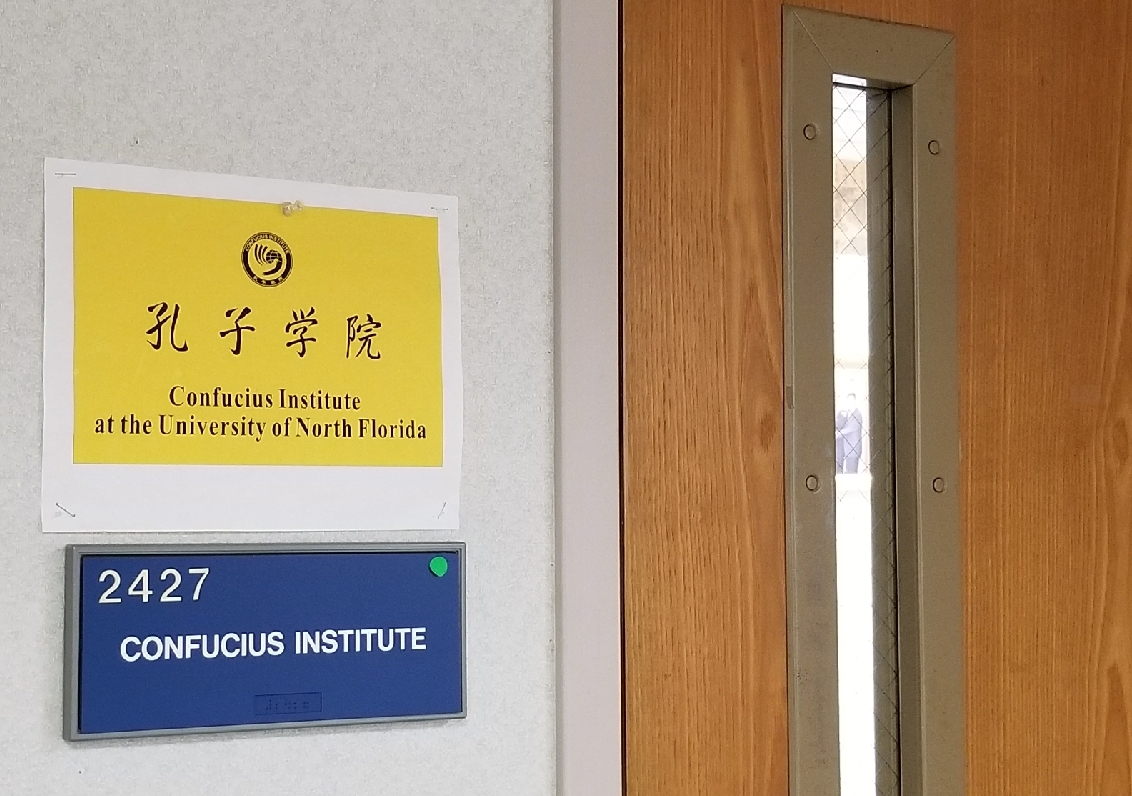
Secretary of War Pete Hegseth recently announced that the Pentagon had dismantled 80 programs at 30 U.S. universities where Chinese Confucius Institutes had officially closed but continued operating under new names, often with the same Chinese partners.
The first of the U.S. Confucius Institutes—Chinese language and culture centers funded by the Chinese communist regime—opened at the University of Maryland in November 2004, in partnership with Nankai University. Hanban, an agency affiliated with China’s Ministry of Education, set up each institute by supplying start-up money, teachers, and textbooks and pairing each host university with a Chinese university.
A 2019 bipartisan Senate investigation found that Beijing controlled nearly every aspect of the institutes, including veto authority over events and speakers, thus allowing the regime to suppress critical speech about China on American campuses. U.S. officials also accused the institutes of spreading Beijing’s propaganda and facilitating espionage and intellectual property theft.
Congress began restricting funding to host universities in 2018, barring Pentagon money for their Chinese language programs. The fiscal 2021 defense act expanded the restriction to Pentagon funding for host universities without waivers, whatever name the program used. By late 2023, the Government Accountability Office counted fewer than five institutes at U.S. universities, down from about 100.
In June 2020, 27 Chinese entities, including universities, companies, and social organizations, founded the Chinese International Education Foundation to take over the Confucius Institute network. Founders included Beijing Normal University, Beijing Language and Culture University, and Nankai University. Registered with China’s Civil Affairs Ministry, the foundation is described by the Congressional Research Service as a nongovernmental charity sponsored by the Ministry of Education and composed of universities and corporations.
In July 2020, the Ministry of Education renamed Hanban the Center for Language Education and Cooperation. The center retained Chinese proficiency testing, teaching resources, and the “Chinese Bridge” contest for language students, while the foundation assumed funding and oversight of remaining institutes and many replacement language programs.
The global network then comprised 541 institutes and 1,170 Confucius Classrooms in 162 countries. China’s state-run Global Times quoted analysts saying the restructuring would dispel the Western view that the organization served as China’s “ideological marketing machine.”
At least 64 of the 104 colleges and universities that closed their Confucius Institutes reopened similar programs under new names or maintained close ties with former Chinese sponsors, the National Association of Scholars found. Institute staff moved into replacement programs, some textbooks stayed on campus, and University of Michigan and Arizona State University records were retroactively edited to make continued Chinese funding anonymous.
A 2023 GAO survey found that 43 of 74 schools that closed an institute retained their Chinese partner ties. Nine still received support, though eight schools said those partnerships predated their institutes.
The College of William and Mary closed its Confucius Institute on June 30, 2021, then launched a partnership the very next day with Beijing Normal University, its former institute partner. The institute became the W&M-BNU Collaborative Partnership, which remains active, covering summer and winter study abroad, visiting students, and cultural exchange.
Similarly, Binghamton University and its former Confucius Institute partner, the National Academy of Chinese Theatre Arts, formed the Center for Theater Arts Collaboration in December 2021. The center’s advisory board includes the Beijing academy’s president, vice president, eight department chairs, and international exchange director. An academy professor also teaches Beijing opera at Binghamton as a visiting professor.
The University of Washington’s institute, established under a 2009 Hanban agreement, moved to Pacific Lutheran University in Tacoma in 2020, retaining its Confucius name for six more years. Its partners were Sichuan University and Chongqing Jiaotong University, and Seattle Public Schools ran its K–12 education center. In 2022, Sichuan University reported that the institute worked with about 30 elementary and middle schools across eight districts. Pacific Lutheran closed the institute in summer 2026.
Western Kentucky University announced on April 22, 2019, that it would close its Confucius Institute. Two months later, the program moved to the Simpson County school district under a five-year agreement with Hanban and its Chinese partner, North China Electric Power University. Renamed the Confucius Institute of Western Kentucky, it served 47 K–12 schools across more than a dozen counties. BG Education Management Solutions, a nonprofit founded by former institute director Terrill Martin, ran the program from July 2019 to June 2024.
The move placed the institute outside Pentagon funding restrictions, which apply only to a host higher education institution. The National Academies’ 2023 list of open institutes likewise excluded those hosted by school districts.
Hanban’s K–12 network once included Confucius Classrooms in 501 American primary and secondary schools. An Oct. 21, 2026, study by the Foundation for Defense of Democracies, a Washington think tank, documented continuing Chinese regime influence in American classrooms, including BG Education Management Solutions’ active partnership with North China Electric Power University.
The study also reported that Chicago Public Schools’ Chinese World Language Program appears to have absorbed the K–12 programming of the city’s former Confucius Institute. Until at least September 2025, ILTexas Global, which coordinated Confucius Classrooms for Texas schools, stated on its website that it acted as an intermediary between China’s Ministry of Education and school districts. ILTexas Global removed that language after the foundation filed a Texas public records request for its Confucius Classroom documents.
The Young Envoys Scholarship, founded in 2024 and run by the China Education Association for International Exchange, has drawn participants from about 83 universities and 27 K–12 schools, according to an August 2026 report by Defending Education, a parents’ advocacy group. In 2026, American Heritage Schools sent 31 students and faculty to China through the program, with most travel costs covered by the Chinese association.
While the federal government investigates and severs Chinese communist ties to U.S. universities, K–12 schools remain a loophole for rebranded Confucius Institute programs and Beijing’s continued malign influence.
Views expressed in this article are the opinions of the author and do not necessarily reflect the views of The Epoch Times.