
Commentary
It’s college application season. Across the country, high school seniors are hitting “submit,” and the parents, grandparents, and other adults who love them are quietly wondering how it will all get paid for. I have taught at an expensive private university and at two large public research universities, and my advice to everyone around the kitchen table is simple: before your family commits to a single dollar of borrowing, do the math. The U.S. Department of Education deserves credit here: it has built a suite of free tools that answer the questions families should ask before signing anything.
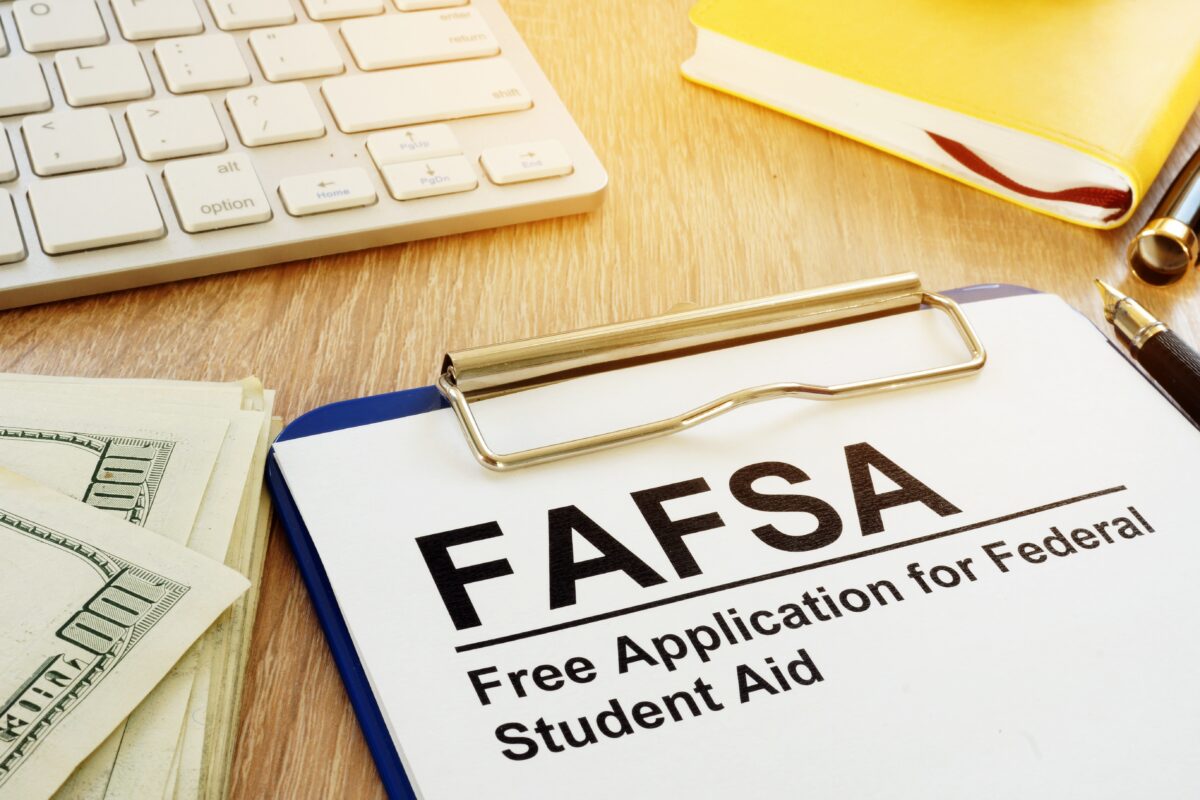
Start with the FAFSA (Free Application for Federal Student Aid). The 2027-28 form opened in September, earlier than ever, and the department says it takes about 15 minutes on average. File the FAFSA even if you doubt you qualify for need-based aid, because many states and colleges use it to award their own money. The form now includes an earnings indicator that flags any college on your list whose graduates, four years out, earn less than a typical high school graduate in your state.
Next, open the College Scorecard, which shows graduation rates, typical debt, and earnings, and now includes a comparison of outcomes by field of study, not just by school. A nursing degree and a film degree from the same university lead to very different paychecks. Then use the Net Price Calculator Center to estimate what each college will actually cost your family after grants, not just the sticker price.
Finally, before anyone signs a promissory note, plug the numbers into the department’s Repayment Calculator. Seeing a monthly payment next to a realistic starting salary is sobering in the best way. For new borrowers, Parent PLUS loans, which parents take out in their own names and must repay themselves, are now capped at $20,000 a year and $65,000 per student. And grandparents, take note: on the FAFSA, money from a grandparent-owned 529 plan no longer counts against a grandchild’s federal aid.
Why does this matter more than ever? In September, the White House formally inaugurated “the Era of Super Intelligence,” directing federal agencies to retire the term “artificial intelligence.” Regardless of the name, it is here: these systems now draft memos, write code, analyze data, and much more—the work that once filled the bottom rung of the white-collar career ladder. Economists still debate how much AI explains today’s tough entry-level market, but recent college graduates now face higher unemployment than the workforce as a whole, and roughly four in 10 work in jobs that don’t require a degree.
The honest truth is that no one, not me and not the AI labs, can tell your 17-year-old which jobs will exist in 2031. That uncertainty is exactly why heavy borrowing is such a bad bet. A student loan is a fixed claim on an unknowable future. Young people entering this economy will need room to switch fields, start a business, move for an opportunity, or retrain. Every dollar of unnecessary debt shrinks that room. Americans already owe $1.66 trillion in student loans, and nearly 11 percent of that balance is at least 90 days past due.
I have seen the difference up close. At the private university where I taught earlier in my career, many of my students were bright, hardworking, and anxious. They worried about tuition, about room and board, and about loans that would follow them for decades. Nationally, the College Board puts the average published price of tuition, fees, housing, and food for 2025-26 at about $61,000 a year at private nonprofit colleges, versus roughly $26,000 for in-state students at public four-year universities.
Today I teach at Florida Atlantic University, a public university with annual in-state tuition and fees of about $5,984. Most of our students graduate without any student loans: only 38 percent of our 2024 graduates borrowed, and the typical borrower left with about $17,000 in federal loans. Florida has the lowest in-state public university tuition in the nation, and 80 percent of in-state students in the State University System attend without taking out a federal student loan. Families elsewhere can find similar value at in-state public universities and community colleges, and through dual-enrollment credits earned in high school.
None of this means college isn’t worth it; college remains a powerful path forward. In 2025, workers with a bachelor’s degree earned a median $1,578 a week, compared with $966 for those with only a high school diploma, and they were less likely to be unemployed, according to the Bureau of Labor Statistics. In a world of super intelligence, the most valuable graduates will be those who can ask good questions, exercise judgment, work with people, and keep learning. A good education builds exactly those habits. The question isn’t whether to go to college. It’s how to go without mortgaging the future.
So, parents, grandparents, mentors, and coaches: sit down with your senior this month. Pull up the Scorecard. Run the net price calculators. Model the payments. Then ask the question I ask my own students: Will this choice expand your options, or shrink them?
In the era of super intelligence, the best gift you can give a young person is a great education, and the freedom to use it.
Views expressed in this article are the opinions of the author and do not necessarily reflect the views of The Epoch Times.