
Commentary
I recently came across a policy document from the Democratic Socialists of America (DSA) setting out what life might look like after capitalism. It is an ambitious program. The new America would apparently manage without several institutions hitherto thought to be useful, among them police, borders, jails, and (a nice touch, this) even a president.
But it was the DSA’s proposals concerning that most ancient of human scourges, work, that caught my attention.
Work has always had rather a bad press. Genesis presents it as one of the penalties of the Fall. Karl Marx thought it was alienating. Bertrand Russell thought that work consisted of two kinds: moving matter about on the earth’s surface and telling other people to do so. As a philosopher, Russell regarded the second kind of work as more agreeable.
The DSA’s ambition is even more generous. It proposes, in effect, to promote almost everyone into Russell’s second category. In the socialist future, work “might not feel as badly needed as it does now.” You work “as much as you are able and no more than needed,” control your own labor, and see it put to good use. It would no longer be merely “a job to pay the bills,” which is, alas, the lot of so many of us.
Well, I thought, that all sounds agreeable enough.
Indeed, the future of work envisioned for us by the DSA only improves upon inspection. Because the work would interest you and because you would be properly trained for it, you would enjoy it. Nor would it make vulgar claims upon the whole day. Having worked as much as you were able but no more than was needed, you would then be free to turn to life’s gentler occupations.
In the morning, you might walk the children to school, run a few errands, or visit the doctor. The afternoon could be given over to sport, learning a new skill, reading a good book, or planning a holiday. The evening would belong to friends and family, dinner, a film, or a stroll in the park.
I found myself warming to the program.
Yet the more I read about the DSA’s idyll, the more I felt a troubling sense of déjà vu. I had encountered this utopian social order before: a world in which the disagreeable business of earning a living has receded into the background, leaving human beings free to cultivate friendships, take up a sport, learn to play a musical instrument, pursue love affairs, travel, and, in general, cultivate their higher faculties.
And then it suddenly occurred to me: the Democratic Socialists of America are taking their lead from P.G. Wodehouse, the great British comic novelist.
As Stephen Fry said about Wodehouse’s world, “You don’t analyse such sunlit perfection, you just bask in its warmth and splendour.”
This is precisely the posture the DSA’s manifesto invites us to adopt toward its vision of the post-capitalist morning.
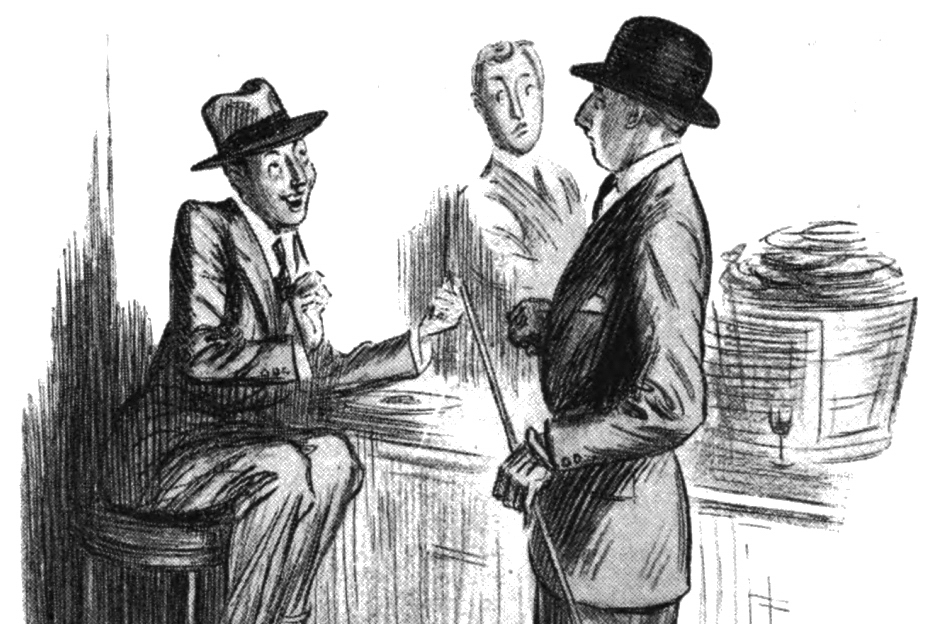
Consider Wodehouse’s best-known character, the sporting young man-about-town Bertram Wooster. Bertie is, in many respects, the fully emancipated socialist man. He has no employer and no career ambitions worth mentioning, although he once contributed an article, “What the Well-Dressed Man Is Wearing,” to his Aunt Dahlia’s magazine, Milady’s Boudoir.
He has no mortgage to trouble him and no tiresome bills visibly intruding upon luncheon. His mornings are his own. His afternoons may be devoted to golf, motoring, or throwing bread rolls at fellow members of the Drones Club. His evenings revolve around drinks, dinner, friends, and, for one regrettable period, the banjolele. Bertie is living the DSA dream.
Lord Emsworth of Blandings Castle has progressed still further. He has been liberated not merely from work but, for long stretches, from anything resembling purposeful activity. His principal concern is his prize pig, the Empress of Blandings, whose dietary habits command his entire attention.
Wodehouse’s other characters have likewise escaped the tyranny of economic necessity. Gussie Fink-Nottle studies newts. Bingo Little falls in love. Madeline Basset, who believes that the stars are God’s daisy chain, pursues spiritual matters.
Nobody seems particularly concerned with productivity statistics. Surely, this is what Marx had in mind when he spoke of overcoming alienated labor.
However, one small difficulty remains with the Wodehouse–DSA synthesis. Someone is still doing all the work.
Bertie’s emancipation depends upon Jeeves, his valet, not being similarly emancipated. Lord Emsworth may spend the afternoon gazing lovingly at the Empress, but somebody has to feed the Empress, clean her sty, and maintain Blandings Castle. Lawns still require cutting. And cocktails do not mix themselves.
Wodehouse’s paradise works because behind its glorious population of idlers stands an immense and largely invisible machinery of competence. There are butlers, valets, cooks, gardeners, chauffeurs, policemen, physicians, magistrates, hotel staff, and formidable aunts.
Especially formidable aunts. As Bertie complains, “Aunts aren’t gentlemen.” Aunt Dahlia, for example, understands something about labor economics that might usefully be added to the DSA curriculum. Her French chef, Anatole, is a genius. His dinners are so magnificent that otherwise rational men will endure considerable humiliation merely to secure an invitation to Brinkley Court.
Keeping Anatole happy is, therefore, a matter of supreme importance. His Gallic pride must not be wounded; his working conditions require delicate management. If he threatens to depart, civilization itself totters.
Wodehouse understood supply and demand. He also understood that the agreeable life enjoyed by Bertie and his friends depends upon the skill, discipline, and labor of people who cannot simply be wished into existence.
And here the DSA’s pleasant socialist day encounters its Anatole problem. You visit the doctor. Excellent. But somebody must have spent years training to become one. You walk your children to school. Splendid. But somebody must teach them. You stroll through the manicured park. Somebody has cut the grass, emptied the trash bins, and maintained the paths. You meet friends for dinner. Someone has grown the vegetables, slaughtered the cattle, driven the truck, unloaded and refrigerated the food, cooked the meal, and washed the dishes.
Then there are the less picturesque occupations that seldom find their way into political utopias. Somebody must repair the sewer at 2 a.m. Somebody needs to restore the electrical grid in a February storm, clean the boiler at the paper mill, and put a roof on the barn when it is 40 degrees Fahrenheit in the shade.
These somebodies might cynically ponder the DSA’s promise that everyone will work “as much as you are able and no more than needed.” Needed by whom? And who decides?
For me, when it comes to dirty, dangerous, exhausting, or merely disagreeable work, my judgment of how much is “needed” of me tends to align remarkably well with how little I would prefer to do. I have no reason to suppose that socialism will make my fellow man any less ingenious in reaching the same conclusion.
The difficulty with utopian politics is not that it wants people to have richer lives. A society in which people have more time for children, friendship, books, music, and leisure is surely desirable.
The difficulty arises when we forget the intricate web of human effort on which such freedom depends. Wodehouse never did. Indeed, much of his comedy rests on Bertie’s serene conviction that he is master of his own affairs, while the reader knows that it is Jeeves’s competence and hard work that sustain the entire Woosterian order.
The DSA has, in effect, promised us all the life of Bertie Wooster. And a remarkably agreeable prospect it is.
Yet one detail remains tantalizingly unresolved: who, in this brave new world, has agreed to be Jeeves?
Perhaps Wodehouse supplied the answer. Bertie, in one of his rare moments of lucidity, tells Jeeves that “for sheer brain … you stand alone.”
Jeeves, characteristically, receives the tribute without fuss: “I endeavour to give satisfaction.”
This is not a bad motto for the vast, uncelebrated army of competence on which civilized life depends: plumbers, teachers, carpenters, physicians, cooks, nurses, mechanics, and yes, even the formidable aunts, all of whom quietly keep the lights burning, the drains flowing, and civilization’s cocktails mixed.
The DSA has promised us Bertie’s life. It has yet to explain where all the Jeeveses are coming from.
Views expressed in this article are the opinions of the author and do not necessarily reflect the views of The Epoch Times.