Commentary
The case of an alleged Chinese spy in California illustrates how underground finance can bring espionage and organized crime into the same circle of people and businesses.
Wanying “Heather” Zhang has drawn international media attention over allegations that she spied for the Chinese Communist Party (CCP). Court records also connect people in her circle to an underground currency exchange, a cartel stash house identified by the Drug Enforcement Administration (DEA), and an alleged enforcer for a Cambodian scam empire.
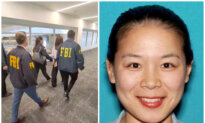
FBI agents arrested Zhang, 34, at Los Angeles International Airport on Oct. 4, 2026. On Oct. 9, a federal grand jury indicted Zhang on charges of conspiracy and acting as an unregistered agent of the People’s Republic of China, the official name of China under the CCP.
According to the criminal complaint, Chinese officials tasked her with surveilling the Seattle-area home of Ting-Yu Lai, the son of Taiwan’s President Lai Ching-te. She allegedly visited the home with a companion and sent a Chinese official photographs, video, and license plate numbers of the family’s vehicles.
A former classmate from Beijing’s University of International Relations, which the FBI describes as closely affiliated with China’s Ministry of State Security, had introduced her to one of the officials.
At her second court hearing, a federal prosecutor said Zhang operated an “unlicensed currency exchange”, earning about $190,000 from unauthorized transfers from China to the United States. The profits were deposited in her Chinese bank account. Zhang has not been charged with operating an unlicensed money-transmitting business, and the government has not alleged that her exchange handled cartel money.
Underground transfer networks serve wealthy Chinese nationals seeking to move savings abroad and Mexican cartels seeking to dispose of their dollar profits. China generally limits individuals to purchasing the equivalent of $50,000 in foreign currency annually, while Mexico restricts U.S. dollar cash deposits in its banks. FinCEN calls this a “mutualistic relationship”: cartels sell their illicit dollars to Chinese networks, which resell them to customers seeking to evade Beijing’s controls.
According to the Justice Department, a customer deposits Chinese currency into a designated account in China and receives an equivalent amount of U.S. dollars in the United States, without a direct international bank transfer.
Brokers profit by matching Chinese customers seeking dollars with cartels seeking to dispose of them, bringing legitimate savings and drug proceeds into the same exchange system. According to a GAO report, much of these networks’ revenue comes from selling the illicit dollars to Chinese customers, allowing them to charge cartels lower fees than other launderers. Cartels also favor them for their speed and willingness to absorb financial losses. Beijing’s restrictions help sustain the demand that makes those terms profitable.
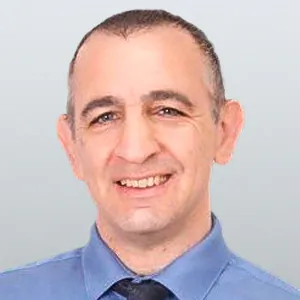
Zhang’s alleged surveillance companion, Fatai Miao, whom federal authorities described as her romantic partner, runs a company registered at an Irvine house. A 2023 DEA complaint identifies that property as a stash house for a Sinaloa-linked laundering network. Miao was not named in that case and has not been charged with any crime.
According to the DEA’s 2025 threat assessment, Mexican cartels manufacture fentanyl using precursor chemicals and pill presses supplied by companies in China. The Justice Department says Chinese currency deposited through underground laundering networks can pay for goods including fentanyl precursors. These exchanges, therefore, help cartels collect their drug profits and pay suppliers, supporting continued production.
The DEA assessment cites provisional CDC figures showing that synthetic opioids, primarily fentanyl, were involved in 74,702 deaths out of an estimated 107,543 U.S. drug overdose deaths in 2023.
Miao’s business partner, Cheng Zhang, co-manages Big Bow LLC, a California company, with M Capital Global California LLC, a firm CBS reports is controlled by Chen Sokly. The Organized Crime and Corruption Reporting Project (OCCRP) identified Sokly as “Co-Conspirator-2” in the October 2025 indictment accusing Prince Group chairman Chen Zhi of directing forced-labor scam compounds in Cambodia.
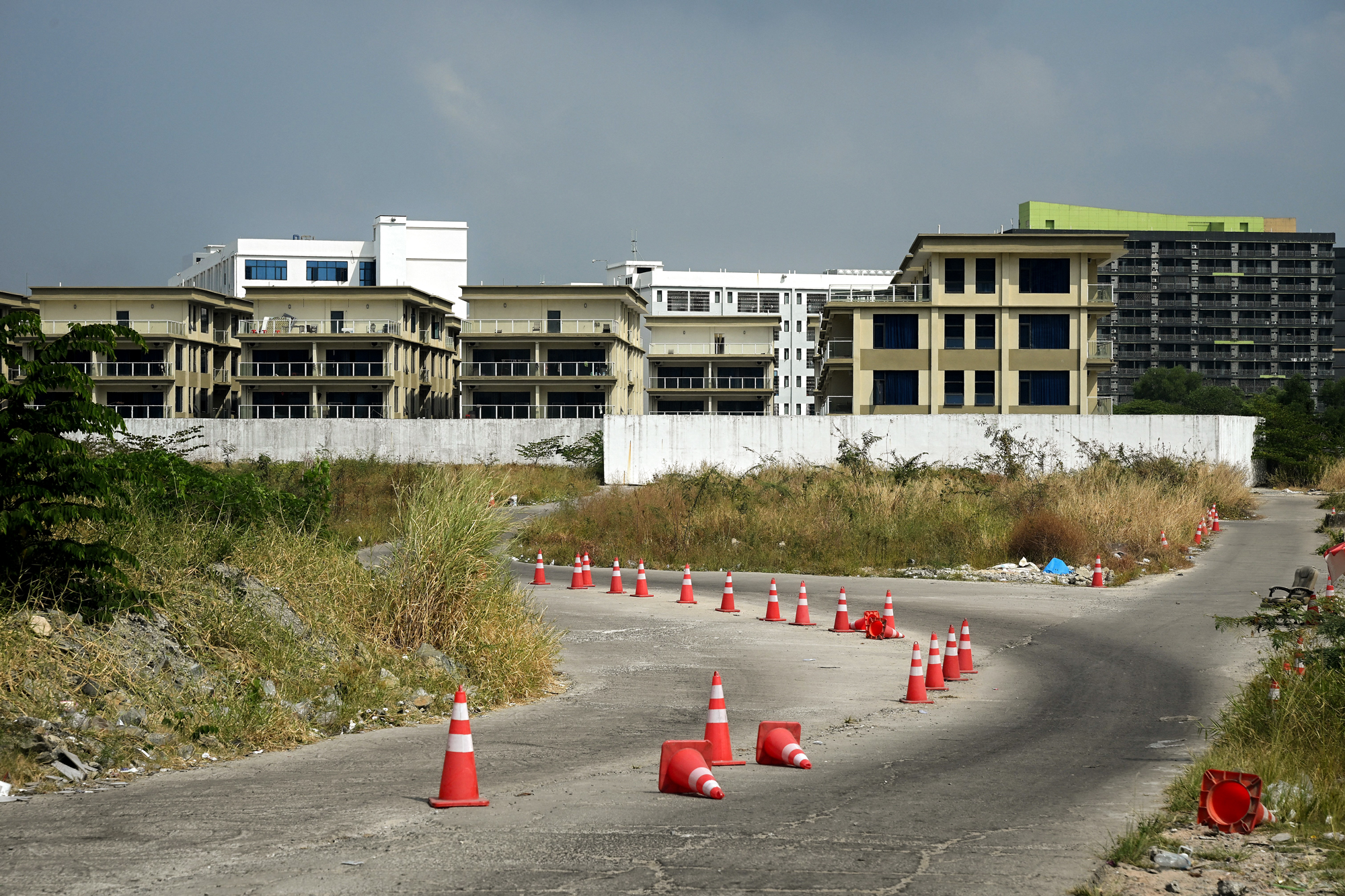 Buildings known as Jinbei 6 are part of a suspected compound built and operated by the Prince Group, headed by the internationally sanctioned Chen Zhi, in Sihanoukville, Cambodia, on Jan. 15, 2026. (Tang Chhin Sothy/AFP via Getty Images)
These allegations concern officials helping a criminal organization avoid punishment and use police against other businesses. Such protection can allow an organization to keep operating even when authorities elsewhere pursue its members.
U.S. authorities have pursued the businesses and financial services involved. On Oct. 14, 2025, Treasury designated Prince Group a transnational criminal organization and sanctioned 146 targets within it. On Oct. 13, 2026, FinCEN imposed a $1.2 billion penalty on Bank of America for failures to address and report risks, including Chinese money laundering networks and illicit finance along the southwest border.
Tracing those financial relationships could help investigators determine whether the CCP used them to support Zhang’s alleged espionage, and whether Chinese officials protected or benefited from the cartel laundering networks connected to people in her circle.
Views expressed in this article are the opinions of the author and do not necessarily reflect the views of The Epoch Times.