Commentary
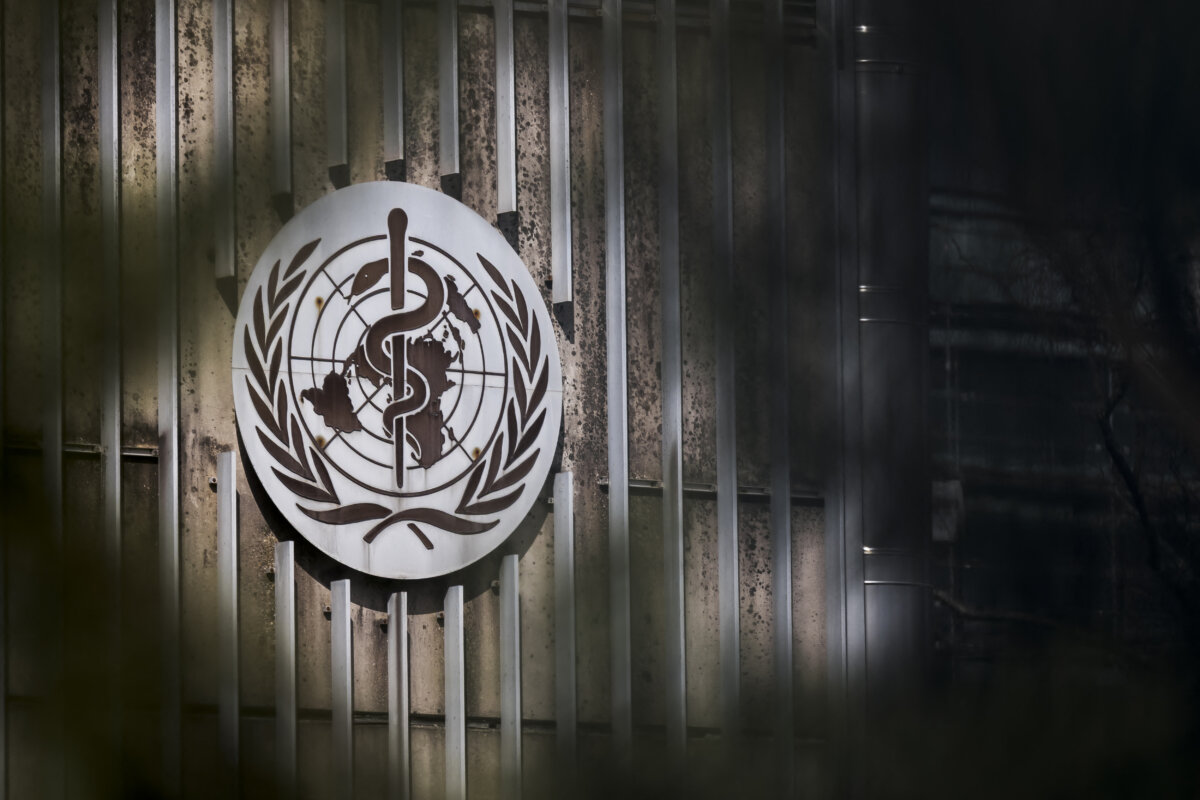
The United States declined on Sept. 25 to support a U.N. political declaration on pandemic preparedness, the latest step in the Trump administration’s break with the global health body.
The administration had already withdrawn from the World Health Organization (WHO), halted negotiations on the WHO Pandemic Agreement, and rejected amendments to the International Health Regulations. The withdrawal took effect on Jan. 22. In explaining those decisions, the administration repeatedly cited China’s influence over the organization.
With the United States gone, China may stand to gain. A study published in Globalization and Health in January noted that after the U.S. withdrawal, “China will become the WHO’s largest assessed contributor.”
Its authors are affiliated with Tsinghua and McGill universities, both of which have documented ties to Beijing-linked institutions. Tsinghua operates under the leadership of its Communist Party committee.
McGill has documented its collaboration with the Chinese Ministry of Education and its commitment to expanding teaching and research partnerships with China. Its researchers have also co-authored scientific papers with scientists at China’s National University of Defense Technology, which is affiliated with the People’s Liberation Army.
Based on interviews with 10 global health experts, the study’s authors concluded that “China does not seek to formally replace the U.S. as the dominant power within the WHO.” Instead, they wrote, Beijing “actively pursues a more favorable position for itself within the organization.”
The researchers’ claim about China’s financial position is accurate. The United States was the WHO’s largest financial supporter. With its withdrawal, China moves from second to first among assessed contributors, becoming the organization’s largest dues-paying member state. However, China is not replacing the lost U.S. funding. Its annual dues are set to rise to about $137.8 million in 2026 from $87.6 million in 2025.
Beijing also pledged an additional $500 million over five years. Combined, those commitments average roughly half of the $450 million per year the United States was paying in 2020, according to the Trump administration. The WHO will have less money to work with, while Beijing’s influence will increase at a fraction of what Washington paid.
The researchers’ claim that the Chinese Communist Party (CCP) does not seek to replace the United States in its leading role is not supported by the evidence or recent history. Beijing has openly stated its ambition to lead global institutions.
In February 2017, CCP leader Xi Jinping said that China “should continue to guide the international community toward a new order that is more just and reasonable.” In October 2017, his report to the 19th Party Congress set the goal that by mid-century, “China will become a global leader in terms of composite national strength and international influence.” At a 2018 foreign affairs conference, he said that China should “take an active part in leading the reform of the global governance system.”
During the COVID-19 pandemic, the CCP suppressed information about the outbreak while promoting China as a global health leader. The WHO’s February 2020 joint mission report praised the Chinese regime’s movement restrictions and quarantine, urging other countries to prepare to implement its approach.

In September 2020, Xi claimed that China was leading the world in COVID-19 pandemic response and economic recovery, attributing these results to the superiority of the CCP’s leadership and the socialist system. The following year, the State Council Information Office blamed Washington’s response for allowing the epidemic to go out of control in the United States.
In September 2025, Xi proposed a Global Governance Initiative at the Shanghai Cooperation Organization summit in Tianjin, China. A month later, the Party’s five-year plan proposal for 2026–2030 called for China to “comprehensively increase [its] international voice.”
Personnel is part of that strategy. In 2016, Xi called for improving China’s “ability to make rules, set agendas” and for training “high-caliber personnel involved in global governance.”
At the WHO, China nominated Margaret Chan of Hong Kong, who served as director-general from 2007 to 2017. China’s state media report that Chinese nationals hold only 2.3 percent of U.N. jobs, and a new global governance school is preparing Chinese graduates for posts in international organizations.
As the U.N. cuts staff, Chinese diplomats have demanded more jobs for their nationals. A U.N. official said that they were “approaching about senior posts,” citing China’s status as the second-largest contributor. The 2026 study identified “personnel deployment” as one source of China’s growing influence at the WHO.
Washington has objected to Beijing’s pursuit of influence across the U.N. system. In January 2020, the U.S. State Department appointed a special envoy whose mandate included “countering the malign influences of the [People’s Republic of China] and others in the UN system.”
In March, the U.S. House Select Committee on the CCP found that “China has strategically placed its own nationals in senior UN positions where they can advance China’s interests abroad.” Committee Chairman John Moolenaar said that China is “installing its own personnel in key posts, bankrolling initiatives to counter the United States.”
Beijing’s statements and actions show an ambition to lead global institutions, including the WHO. The U.S. withdrawal could give China more room to pursue that ambition without having to replace the funding that Washington provided.
However, the U.S. withdrawal from the organization will shield Americans from the CCP’s malign influence within the WHO, while Europe and the rest of the world may still fall victim to it.
Views expressed in this article are the opinions of the author and do not necessarily reflect the views of The Epoch Times.







