
Commentary
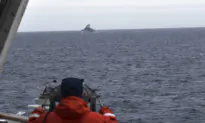
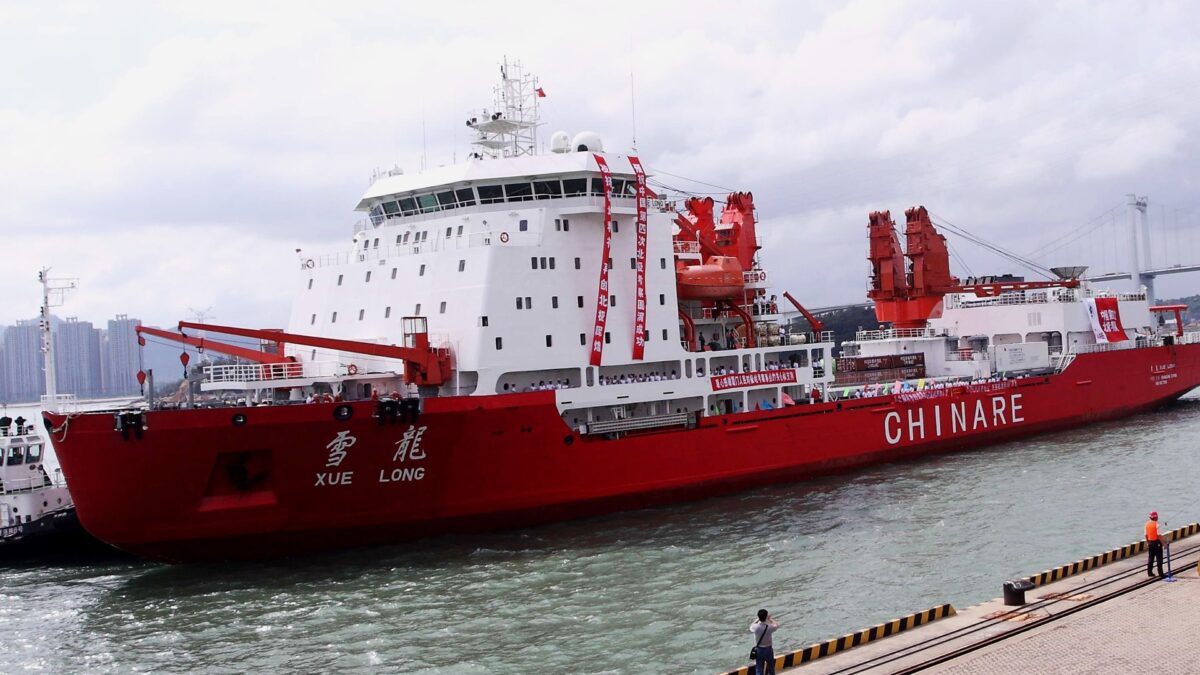
The Chinese icebreaker Xue Long moved north through the Bering Sea in July with the quiet profile of a scientific mission. The U.S. Coast Guard cutter Munro tracked it across the American exclusive economic zone and over the U.S. extended continental shelf. Nearby, Xue Long 2 was also heading into the Arctic. Nothing visibly illegal occurred. No military confrontation followed.
That is precisely why the encounter matters.
China’s Arctic strategy advances through activities that are individually defensible and collectively useful to Beijing’s long-term ambitions. Research voyages generate data while icebreakers build operating experience. Russian cooperation opens ports, resources, and sea lanes. The Norwegian archipelago Svalbard provides an established scientific foothold on NATO territory. Chinese carriers are now trying to turn experimental Arctic passages into scheduled commerce. Each step expands Beijing’s ability to operate and cement footholds of influence. China is steadily reducing the barriers that could constrain it later.
Science With a Strategic Purpose
The Coast Guard correctly distinguishes lawful transit from marine scientific research requiring U.S. consent. That distinction should be preserved. It should not obscure the pattern.
China operated five research vessels in the Arctic Ocean in 2025, up from three in 2024 and one in previous years. The Norwegian Intelligence Service’s 2026 assessment says China’s growing icebreaker fleet enables more frequent voyages, improves its ability to survey the region for civilian and military purposes, and supports a longer-term ambition to conduct independent operations in the polar regions.
The trend has continued. In September, the Coast Guard said four Chinese research vessels had operated around Alaska and the Bering Strait during 2026. They remained in international waters, but U.S. officials said the missions could support seabed mineral exploration and likely provide China with military advantages.
Climate and ocean research are legitimate. Beijing’s repeated presence nevertheless produces strategic value whether or not every voyage carries a military tasking order. Crews enhance their understanding of the operational environment along with scientific collections of seabed, ice, and atmospheric data. Chinese institutions build expertise that few countries possess. Capability accumulates quietly while Western governments are left to determine when ordinary research has become strategically consequential.
Svalbard: Presence Before Leverage
Svalbard gives this expansion a geographic anchor. China has operated the Yellow River Station at Ny-Alesund since 2004 and cites it in its own Arctic policy as a platform for a multidisciplinary observation system and wider participation in Arctic affairs.
Beijing is also tending the political foundation beneath that presence. In April, China’s ambassador to Norway visited Svalbard, thanked Oslo for supporting the Yellow River Station, and called for deeper Arctic scientific cooperation. That does not challenge Norwegian sovereignty. It does show that China considers its Svalbard position worth preserving and cultivating.
 Journalists and cameramen walk under a gust of cold wind near the entrance of the Svalbard Global Seed Vault that was officially opened near Longyearbyen on Svalbard, Norway, on Feb. 26, 2008. (Larsen, Hakon Mosvold/Scanpix Norway/AFP via Getty Images)
This is where frequency becomes more than a statistic. More voyages create expertise and credibility. More relationships can support personnel, projects, and access. If those trends converge with demands for a larger Chinese footprint on Svalbard, the West should recognize the pattern before Beijing normalizes it.
Norway appears to understand the risk. Its 2026 Svalbard research strategy strengthens Norwegian management and places greater emphasis on research security. International science remains welcome. Strategic permissiveness does not have to be.
Russia Opens the Door
China is not an Arctic state, despite Beijing’s self-created description of itself as a “near-Arctic state.” Russia is helping it overcome that geographic disadvantage.
Moscow provides territory, ports, resources, and icebreaking experience. China brings capital, industrial capacity, and demand. The arrangement gives Beijing access that it cannot acquire through geography, while helping Russia blunt Western economic pressure.
By August, seven tankers had carried roughly 6 million barrels of Russian crude toward Asia through the Northern Sea Route, with China the principal destination. The route also allows Russian exporters to move cargo away from European inspection points and sanctions enforcement.
For Beijing, that matters beyond discounted energy. Each voyage increases familiarity with an Arctic corridor linking Chinese markets to Russian resources while avoiding traditional maritime choke points. China is gaining experience on a route whose strategic value would rise sharply during disruption elsewhere.
Experiment Becomes Infrastructure
Commercial shipping is making the same transition. Sea Legend Shipping has moved from a single 2025 trial voyage toward a scheduled 2026 China-Europe Arctic Express. The company planned eight sailings using seven vessels between China and northern Europe through Russia’s Northern Sea Route. In September, a Chinese maritime platform also activated specialized Arctic weather-routing support using Chinese meteorological satellites, forecasting, and artificial intelligence.
The scale remains small compared with conventional Asia-Europe trade. That is not the point. A pilot voyage proves the possibility, and an established schedule creates repetition. Repetition builds crews, data, port access, and customers with an interest in keeping the corridor viable.
The Counterargument—and Its Limit
China has legitimate interests in climate science and lawful navigation. Chinese researchers can contribute useful knowledge, and treating every expedition as a covert military operation may weaken the Western argument.
But Western governments do not need proof of hostile intent before protecting strategic space. NATO now says that growing Russia–China cooperation has “strategic and operational implications” for allied deterrence and defense. Norway has tightened research governance in Svalbard. The U.S. Coast Guard is devoting resources to monitoring Chinese vessels near Alaska.
Those responses reflect the same reality: China is creating capabilities faster than the West can determine how Beijing ultimately intends to use them.
China does not need Arctic sovereignty to gain Arctic leverage. It needs repeated access, institutional legitimacy, operational experience, and partners willing to keep doors open.
That is the danger of Beijing’s optionality quest. By the time each scientific voyage, shipping route, and research foothold is viewed separately as routine, the accumulated strategic position may no longer be routine at all.
Views expressed in this article are the opinions of the author and do not necessarily reflect the views of The Epoch Times.