
Commentary
Beijing appears to be tightening its restrictions on rare-earth minerals for its customers on Nov. 10. In other words, China is now officially playing its rare-earth mineral monopoly card against the United States and the rest of the world.
If the restrictions aren’t somehow rescinded or lessened, the impact on the global economy will be significant and unavoidable. The International Energy Agency has warned that concentrated supply chains pose substantial risks for industries that depend on critical minerals.
Beijing Holding the World Hostage
China’s monopoly on rare-earth minerals supply and processing capacity is staggering. In 2024, it accounted for about 60 percent of global mined production of magnet rare earths, 91 percent of refined output, and 94 percent of sintered permanent-magnet production. Beijing knows the power it holds and is showing the world, and the United States, just how willing it is to use it.
Again, these restrictions could have severe, far-reaching effects on both the United States and the global economy. That’s because rare-earth minerals are critical to a wide variety of products in modern economies.
They’re essential for manufacturing components used in smartphones and artificial intelligence systems, as well as permanent magnets used in drones, robots, electric vehicles, and strategic defense technologies, from fighter jets to missiles and radar systems, along with many other high-tech products.
The Blueprint of a Monopoly
But how did China establish a monopoly over elements so critical to modern economies worldwide?
China’s leverage results from a long-term strategy. It started with the difficulty and danger of extracting the rare-earth elements. The United States and other nations have regulations that protect workers from hazardous, labor-intensive tasks such as extracting and processing rare-earth minerals, making it high-risk and expensive.
China, however, benefited from lower production costs and less stringent environmental enforcement during much of its industry’s expansion. The environmental costs of rare-earth mining and processing have been widely documented.
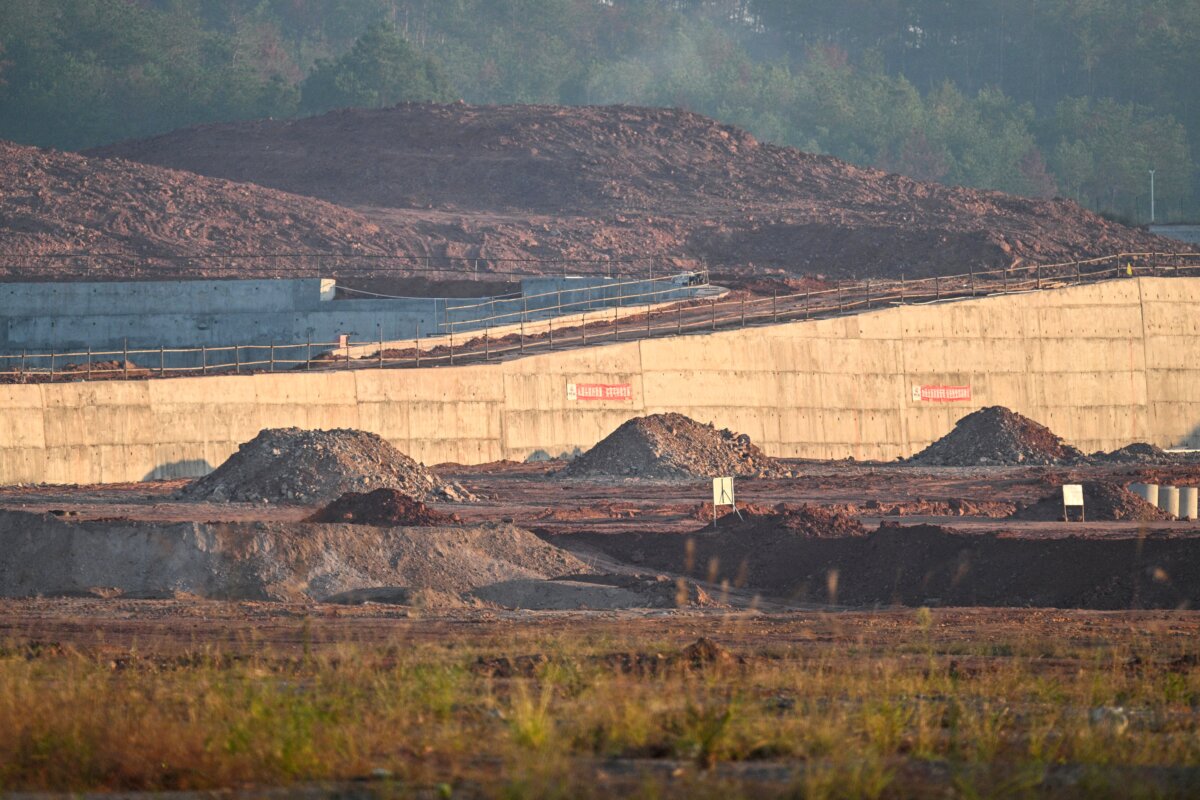
But the rare-earth element monopoly goes beyond simple extraction. It extends to turning the raw material into industrial-grade elements suitable for various technological demands. That step in the cycle is complex, costly, and environmentally risky. For Beijing, those obstacles aren’t obstacles. China developed extensive capacity for separation, refining, and magnet manufacturing.
For advanced nations, it became politically easier and simpler to let China do the hard work and just buy the finished products. Meanwhile, China’s low-cost advantages forced competitors out of the rare-earth business life cycle. Within a few years, China gained control of much of the global supply chain.
Today, China dominates the world’s rare-earth mineral processing and permanent-magnet supply chain and is more than willing to use export controls as geopolitical leverage.
How Will Trump Respond?
The Trump administration is not sugar-coating what Beijing’s move means. U.S. Trade Representative Jamieson Greer said it was “an exercise in economic coercion on every country in the world.” More pointedly, U.S. Treasury Secretary Scott Bessent described the potential consequences of China’s restrictions on rare-earth exports and related supply chains.
U.S. President Donald Trump responded in October 2025 by threatening an additional 100 percent tariff on Chinese imports. That threat was subsequently deferred as the two countries reached a trade framework that also included a deferral of China’s planned rare-earth export controls. At the same time, the United States and other nations are racing to secure sources of critical minerals and processing capacity outside China’s control.
But why is Beijing suddenly threatening the world’s economies by withholding rare-earth minerals?
A Response to US Tariffs and More?
Many believe China’s rare-earth restrictions are at least partly in response to U.S. tariffs and other economic sanctions on Chinese imports.
However, U.S. intervention in Iran and Venezuela and, of course, its continued arms sales to Taiwan may also factor into Chinese leader Xi Jinping’s calculation.
But there’s even more to it than that.
Essentially, the Chinese Communist Party sees advanced democracies as obstacles to China’s technological and geopolitical rise. Depriving them of rare-earth minerals that are critical to their economies lets Beijing flex its power over them, raise its great-power status, and use them as a bargaining chip in other negotiations.
Can FORGE Break China’s Monopoly?
Today, even if a nation extracts rare earths from its own mines, it will likely still have to send the raw material to China for processing. In short, as long as the West depends on China’s processing facilities, it will remain vulnerable to China’s restrictions.
In response, the United States launched the Forum on Resource Geostrategic Engagement, or FORGE, a global coalition intended to diversify critical-mineral supply chains. The goal is to break China’s near-total monopoly on rare-earth processing—the sooner, the better.
But can the West achieve supply chain autonomy within the critical 12- to 18-month window?
That seems optimistic. In the United States, the Mountain Pass mine in California is the main source of domestic rare-earth production, but building refining infrastructure isn’t just a matter of money; it takes time. The International Energy Agency has highlighted the challenge of diversifying concentrated critical-mineral supply chains.
A Reality Check
The upcoming 18-month period will likely not result in breaking China’s monopoly. But it may well be defined by continued geopolitical friction between China and the West.
Beijing will leverage its advantage as long as it can. Therefore, expect more export restrictions, not less, and added retaliation from the United States and Europe.
In the meantime, both will be making slow but steady progress in replacing China’s supply chain with their own.
Views expressed in this article are the opinions of the author and do not necessarily reflect the views of The Epoch Times.