Commentary
Not only is inflation not going away, it is getting worse. The pace of price level increases has been rising. There are multiple causes of rising price levels across many categories of goods and services, but the most obvious is the rise in energy prices since the start of “Epic Fury,” the U.S. war with Iran.
For example, gasoline prices in the Consumer Price Index (CPI) rose 37.4 percent year over year in October. Energy prices, especially fuel, act as a transmission mechanism into many other goods categories such as food and other consumer products.
The Producer Price Index (PPI), just published for October 2026, increased by 6.5 percent on an annual basis, an increase from September’s 6.3 percent reading, and the highest level recorded since late 2022. According to the October PPI, the cost of truck freight increased by approximately 25 percent over the past year. This is a direct result of an approximately 60 percent increase in the cost of diesel over the same period.
PPI energy had a modest monthly decline in October of 0.1 percent, so perhaps the worst is behind us. Yet oil prices still hover just shy of $90, 38 percent above February’s pre-war levels.
Producer prices eventually get passed on to consumer goods. The Cleveland Fed’s estimate for annualized CPI growth in the fourth quarter is 4.3 percent, a meaningful increase in the implied rate of price growth from September’s 3.7 percent year-over-year increase. This implies that, unless input prices come down, inflation will continue to trend higher going into year end.
At the same time, the housing market is in trouble. With mortgage rates above 7 percent and consumer confidence low, sales of pre-owned homes fell 5.5 percent in October, and 8.8 percent year over year, to their lowest level since 2010. This is sending mixed signals. Is the economy hot or cold?
New York Fed President John Williams recently said, “The economy is strong, the labor market continues to strengthen, and inflation is persistent,” adding, “We still have work to do … to get monetary policy to the right place.” He’s signaling a rate increase as soon as December. As vice chairman of the Federal Open Market Committee, he carries significant weight.
By using the catchphrase “inflation is persistent,” Mr. Williams is also signaling that he doesn’t see it ending any time soon, perhaps not even with an end to the war.
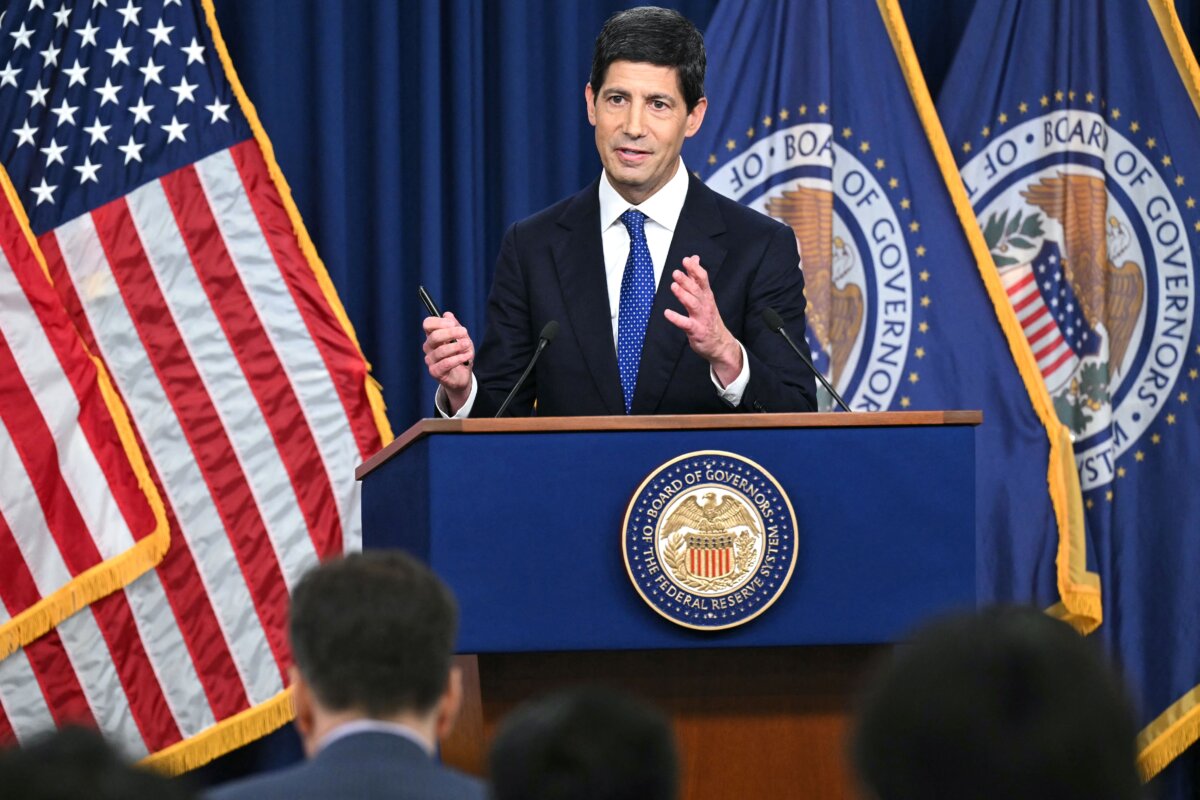
When the committee voted to hold interest rates steady at the October meeting, Fed Chairman Kevin Warsh faced two dissenting voices who believed that rates should have been raised. Since then, the tide has turned in favor of a December rate increase.
Mr. Warsh is in a tough spot. Raise rates, and the borrowing costs for the deeply indebted U.S. government will go up. This means a widening federal deficit, already setting records. The U.S. government ran a $404 billion deficit in October, the largest ever for the first month of the fiscal year. Total outlays were $773 billion, also an October high, and an increase of 12 percent over last year. Of this amount, $115 billion went to service interest on the debt. At some point, debt service crowds out other investment.
But raising rates too much too fast risks slowing the economy and potentially even causing a recession. No one wants that, and especially not elected officials in Washington, whose career longevity depends on a healthy economy.
Fail to raise interest rates, and inflation will not only persist, but gather momentum. Inflation will become embedded in consumer expectations, and this will accelerate purchase decisions (i.e., people spend money faster before it loses value). The increase in the velocity of money will be a further stimulant to inflation, a form of self-fulfilling prophecy. Yet this will be the politically easier path to take, and one that governments across time have always chosen.
Views expressed in this article are the opinions of the author and do not necessarily reflect the views of The Epoch Times.