Commentary
I walked into Hobby Lobby with six children in tow, the day before our pumpkin patch was scheduled to open. I was running last-minute errands, trying to get everything ready, and desperately needed some Halloween welcome signs.
I asked an employee where I could find them.
“We don’t sell Halloween,” she told me.
I looked around at what appeared to be 17 rows of pumpkins, fall decorations, and enough autumn merchandise to decorate half of Texas.
“You don’t sell Halloween?” I asked.
She said, “No, we only sell fall.”
I was dumbfounded.
Did Hobby Lobby genuinely believe that none of those thousands of pumpkins would be used for Halloween?
Did changing the name somehow change what people were purchasing them for?
Does changing the language make us moral?
I left frustrated. But somewhere along the drive home, I started thinking about my own business.
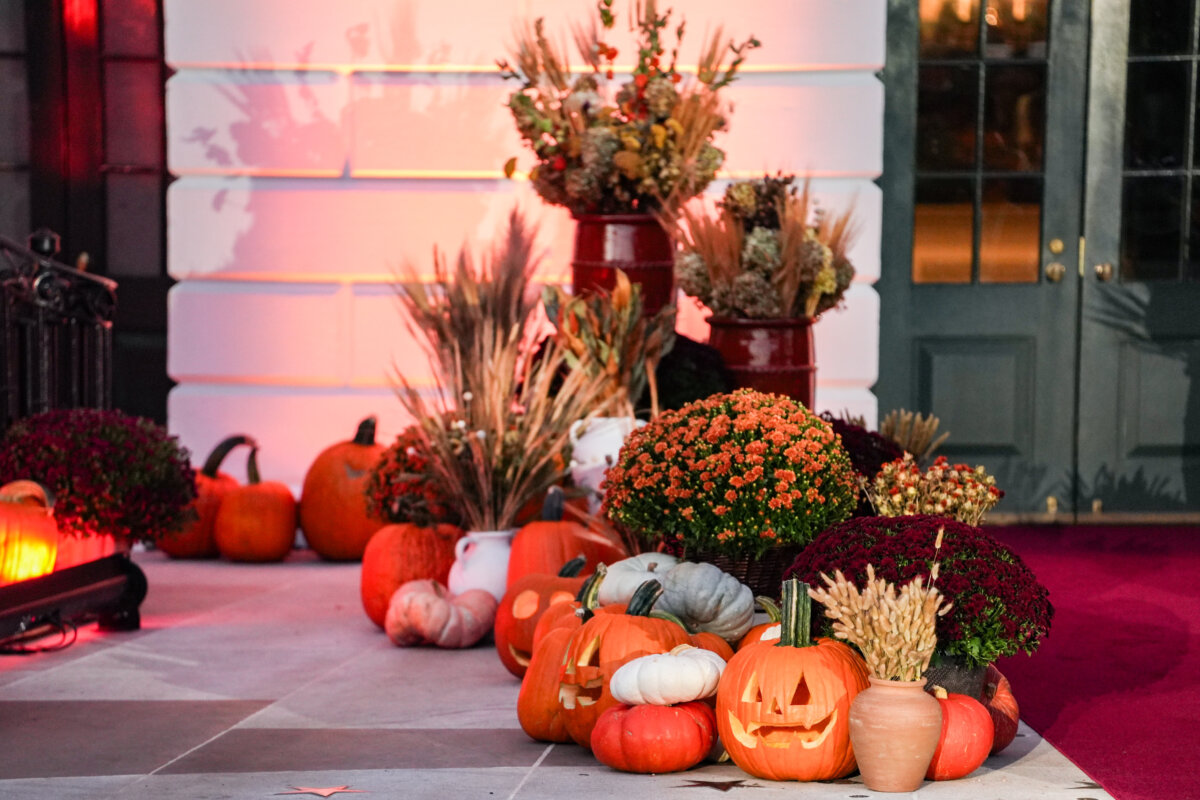
We don’t call our annual pumpkin patch a Halloween festival. We call it a harvest festival.
We don’t have witches, skeletons, haunted houses, or frightening decorations. I grew up in upstate New York, where spooky hayrides and scary Halloween displays were part of the October experience. But I now live in the Texas Hill Country, where many families have strong religious objections to those traditions.
So we celebrate the harvest. We have pumpkins, farm activities, a costume contest, and even trick-or-treating. Suddenly, I wondered whether I was really any different from Hobby Lobby. Perhaps not.
I’ve written extensively about how language shapes our society. Words influence our understanding of reality, our relationships, and our moral judgments. Governments call civilian deaths collateral damage. Corporations call firing employees restructuring. Sewage sludge becomes biosolids. Sometimes, these distinctions have legitimate meanings, and sometimes, they simply make uncomfortable realities easier to accept.
Religion adds another dimension because language becomes intertwined with righteousness. Many Christians look backward at the history of religious holidays and question why we celebrate traditions with possible pagan origins. Yet aren’t we watching the same process happen today?
Cultures have always inherited celebrations, changed their meanings, incorporated new beliefs, and adapted traditions to fit their communities. Halloween itself developed through centuries of overlapping religious and seasonal customs. Día de los Muertos developed through a different blending of indigenous Mexican and Catholic traditions.
Now, across America, churches and families are creating harvest festivals, fall festivals, and trunk-or-treat celebrations. We keep the pumpkins, costumes, candy, and community gatherings while removing elements we find spiritually objectionable.
We’re doing the modern version of what generations before us did: taking existing cultural celebrations and transforming them into something compatible with our beliefs. Perhaps that isn’t hypocrisy. Perhaps it’s simply how culture evolves.
I live in a community where Christians debate whether Christmas trees are acceptable. Some churches embrace them. Others condemn them because of their perceived pagan associations. I put Christmas trees in our restaurant, our rental houses, and our home. I have no moral objection to them.
Every year during Lent, I give up food and coffee and consume only raw milk. Every year, someone tells me that Lent is a pagan tradition. Yet Scripture repeatedly describes fasting, including the 40-day fasts of Moses, Elijah, and Jesus. Would my fast become more Christian if I simply stopped calling it Lent?
My husband grew up in an indigenous Catholic culture in Mexico, where observing Día de los Muertos and building an ofrenda to remember deceased loved ones were completely normal. Nobody questioned whether you loved Jesus because you placed photographs of your family beside candles and flowers.
For years, we created an ofrenda in our restaurant in Los Angeles. It was simply part of our annual traditions, a way of honoring those who had passed and keeping their memories alive.
The first year we lived in Texas, we did what we had always done. We created an ofrenda honoring my husband’s brother, my friend Mimi, and others we had loved and lost. I was genuinely shocked by the reaction. The phone wouldn’t stop ringing. People demanded that we take down what they called devil worship.
Yet 40 miles south, in San Antonio, ofrendas are a familiar part of the cultural landscape. The same flowers, photographs, and love for people who are gone carries an entirely different cultural interpretation.
Something that represented family, remembrance, and love in my husband’s childhood, and that had been completely normal in our Los Angeles restaurant, was suddenly being described as worshipping the devil. How often do we use religious language not to understand one another but to separate ourselves?
Perhaps we’ve become so focused on deciding which traditions are acceptable that we’ve lost sight of something far more important. What does it mean to live a moral life?
Jesus didn’t ask us to build competing religious institutions and argue over which denomination was practicing unconditional love correctly. He asked us to follow him.
The earliest Christians described their faith as the Way, a way of living that required mercy, compassion, and love even toward people whose beliefs and practices were different from their own.
Jesus was criticized for eating with sinners, associating with outsiders, and challenging religious conventions. He repeatedly redirected attention away from outward appearances and toward the condition of the human heart.
I believe that the endless arguments among Christian denominations over who is following Christ correctly can directly contradict what he taught. If our religious certainty makes us less loving, less compassionate, and more judgmental, what exactly have we accomplished?
I don’t believe that our morality is measured by how effectively we judge one another. Our morality is measured by how we love one another.
And that brings me back to Hobby Lobby.
The company’s founder, David Green, has publicly discussed his decision to stop selling Halloween merchandise, acknowledging that it cost the company millions of dollars in sales. He believed that it was the right thing to do.
Perhaps their boundary between fall and Halloween is sincere. Perhaps my boundary between a harvest festival and a Halloween festival is equally sincere. And perhaps neither of us needs to justify that boundary to everyone else.
What I do need to examine is my own reaction. I walked into that store exhausted, overwhelmed, and frustrated, dragging six children through one more errand before our festival opened.
The young woman was doing her job. She didn’t establish Hobby Lobby’s corporate policies. She was simply communicating them to a customer.
My responsibility wasn’t to judge her or make her feel foolish. My responsibility, as someone who claims to follow Christ, was to extend compassion and love to another human being doing the best she could. And I failed to see that in the moment.
Perhaps this is where language matters most. Not in whether we call something Halloween or harvest, or whether we call a decorated tree Christian or pagan, but in whether the words we choose bring people closer together or push them farther apart.
Do our words create understanding or suspicion? Do they invite people into the community, or do they give us another reason to exclude them? Do they reflect the unconditional love Jesus taught, or do they simply make us feel morally superior?
I still believe that language shapes society, and that words matter profoundly. But morality is not a vocabulary test. It’s a way of living.
And if I truly want to follow the Way, perhaps I should spend less time worrying about what other people call their pumpkins and more time examining how I treat the people standing in front of me.
Views expressed in this article are the opinions of the author and do not necessarily reflect the views of The Epoch Times.







