
Commentary
As the war in Iran drones on, the disruption in oil shipments through the Strait of Hormuz has captured Beijing’s full attention and for good reason.
China is the world’s largest importer of oil.
Like every major energy importer, China depends heavily on oil flowing through the Hormuz Strait. Yet the strait is only the first leg of a much longer journey. Before Mideastern oil reaches China’s refineries, most of it must pass through another maritime choke point—the Strait of Malacca—that Beijing neither controls nor can adequately defend.
For China’s leadership, this is more than a logistical inconvenience. It is, perhaps, the country’s greatest strategic vulnerability.
World’s Most Important Energy Corridor
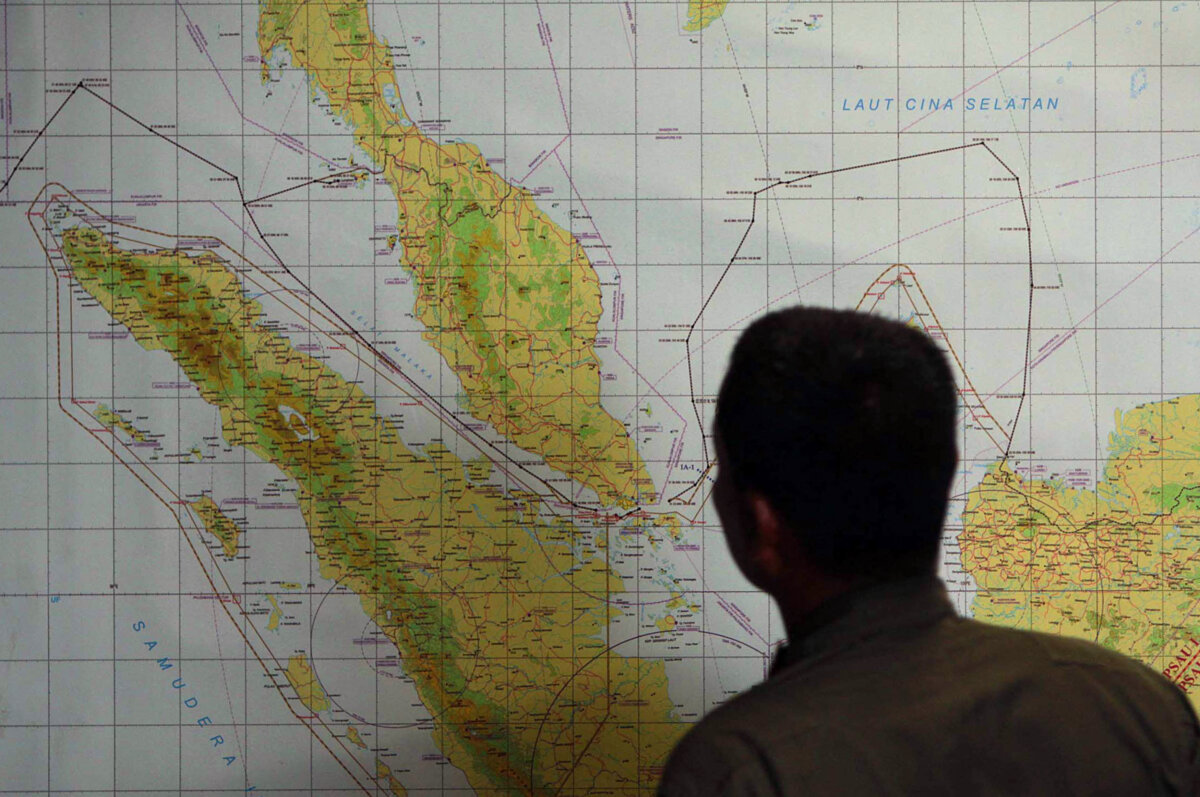
Although the Strait of Malacca is barely 1.7 miles wide at its narrowest navigable point, about one-quarter of global maritime trade moves through it each year. More to the point, the vast majority of China’s imported crude oil transits this corridor before reaching Chinese ports.
What’s more, the strait runs between Malaysia, Singapore, and Indonesia, connecting the Indian Ocean with the South China Sea. Should the Strait of Malacca become impassable during a regional conflict, China would face an immediate energy crisis even with its unrivaled strategic reserves.
More about that in a moment.
Beijing Has Worried About This for More Than 20 Years
China’s leaders have understood this vulnerability for decades.
In 2003, then-President Hu Jintao warned senior Chinese Communist Party officials about what became known as the “Malacca Dilemma.” This is the very real possibility that hostile naval powers could sever China’s maritime energy lifeline during a conflict.
As economic, diplomatic, and even military competition with India has risen, that concern has only intensified. The reality is that every oil tanker headed to China must travel thousands of miles through waters increasingly patrolled by friendly navies operating alongside the United States.
‘String of Pearls’ Strategy
To counter this, China’s naval modernization has accelerated dramatically over the past 15 years. The “string of pearls” strategy, as critics refer to it, involves Beijing establishing dual-use ports in strategic areas, developing a powerful blue-water navy, and maintaining diplomatic influence in strategically located nations in the Indian Ocean region.
 A giant Buddha statue on the Thai side of the Golden Triangle in Chiang Rai province on Sept. 20, 2019. China wants to cut a canal through southern Thailand to build a bypass to the Strait of Malacca. (Lillian Suwanrumpha/AFP via Getty Images)
But although the Strait of Malacca is at the top of Beijing’s list of strategic waterways that must be kept open, China’s only other major overseas military base is in Djibouti, which lies about 4,000 nautical miles from the Strait of Malacca. So far, it has proved to be of limited advantage.
Notably, last year China opened a joint logistics and training center with Cambodia at Ream Naval Base in Cambodia. At this time, however, China’s string of ports in the region may be helpful logistically, but they don’t guarantee sea control.
Geography Gives India Extraordinary Leverage
In fact, even though China views the United States as its principal maritime competitor, in terms of geography and fuel supply lines, India deserves equal attention.
India’s Andaman and Nicobar Islands sit near the western entrance to the Strait of Malacca. To capitalize on this advantage, New Delhi has built extensive military infrastructure in these strategic islands.
That development includes expanded airfields, fuel storage, naval facilities, and intelligence capabilities throughout the island chain. From there, Indian aircraft, surveillance systems, submarines, and surface combatants can monitor one of the busiest shipping lanes on Earth.
These investments are, not coincidentally, known as India’s “string of diamonds” strategy. They have transformed the islands from remote outposts into strategic platforms capable of projecting military power across the eastern Indian Ocean to counter China’s buildup and encirclement of India.
The ability of India to disrupt China’s critical energy flows is clearly understood in Beijing.
Quad Makes the Problem Larger
But India isn’t China’s only problem concerning its Malacca Dilemma.
Through the annual Malabar naval exercises, India regularly trains with the United States, Japan, and Australia (the quad) in anti-submarine warfare, maritime surveillance, carrier operations, and sea-lane security.
Although officially defensive, these exercises demonstrate the combined capability of four democracies to maintain control of vital Indo-Pacific shipping routes should conflict erupt.
From Beijing’s perspective, the message is unmistakable. China’s primary energy lifeline runs directly through waters increasingly monitored by potential adversaries.
Beijing Spending Billions to Solve the Problem
China has hardly ignored this vulnerability.
The Belt and Road Initiative includes pipelines through Myanmar, the China-Pakistan Economic Corridor connecting Gwadar Port to Xinjiang, expanded Russian pipeline imports, and investments in ports stretching from Southeast Asia to East Africa.
What’s more, its strategic oil reserves are the largest in the world, and its state-directed economy can control domestic oil consumption. For example, by some estimates, China has cut its oil use by more than 40 percent since the war in Iran began. Furthermore, China’s expanding coal-burning power plants and renewable energy capacity help reduce China’s reliance on foreign energy.
These projects and policies are intended to reduce dependence on Malacca for energy. Although they certainly help, they cannot eliminate it.
Hormuz and Malacca Tell a Similar Story
In fact, China’s economy depends upon maritime energy routes that it neither controls nor can reliably secure during a major conflict.
At this point, China’s overland pipelines move only a small fraction, about 10 percent, of the oil that arrives daily by sea. Therefore, for the foreseeable future, tankers remain China’s only practical means of importing the enormous quantities of energy its economy requires.
The importance of the two straits is clear. Hormuz represents the origin of much of China’s imported oil. Malacca represents the bottleneck through which that oil must pass before reaching Chinese refineries.
Both lie outside Chinese control, and both remain vulnerable to disruption. And both expose the fundamental contradiction of China’s rise as a continental power attempting to secure a maritime empire.
Views expressed in this article are the opinions of the author and do not necessarily reflect the views of The Epoch Times.