
Commentary
After years of on-again, off-again efforts to mitigate the ill effects of China’s long-running property crisis, Beijing has recently adopted a bolder approach.
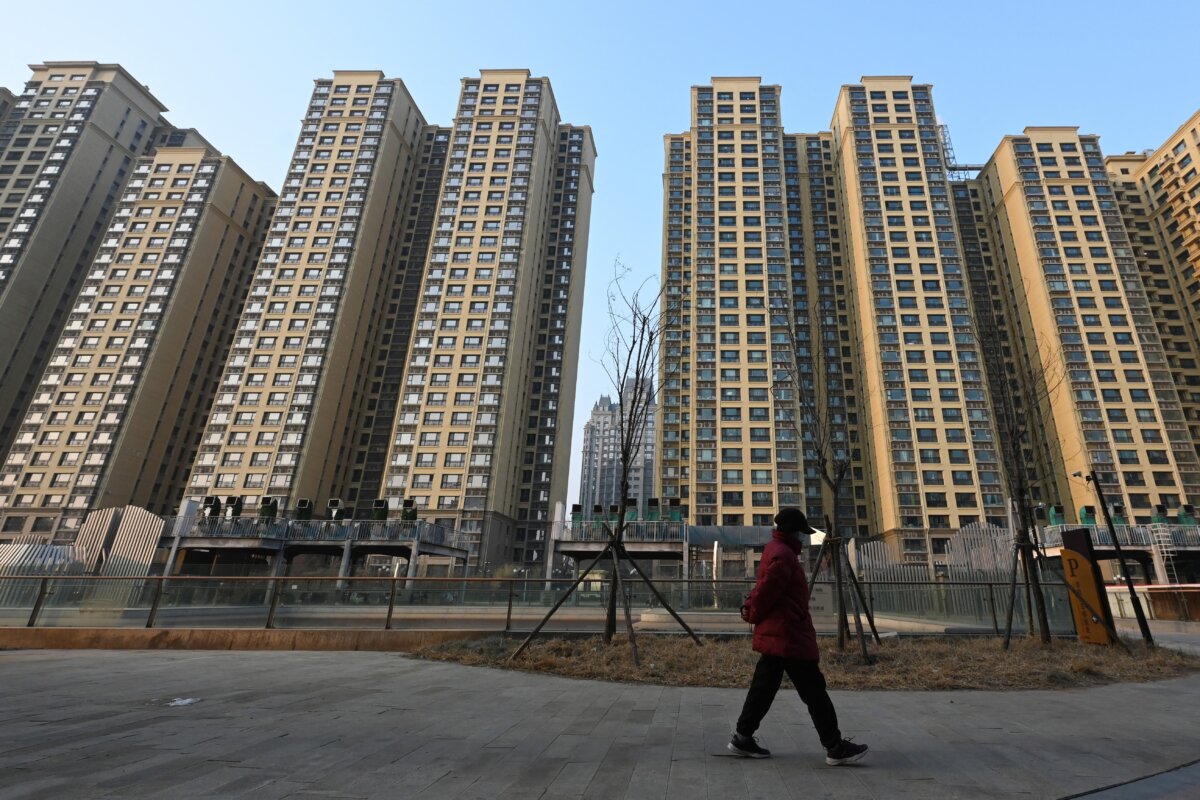
It has decided to inject 350 billion yuan (about $54 billion) into selected banks and insurers. Such an action might have helped more had Beijing done it five years ago when the property crisis first broke with the failure of the residential real estate developer Evergrande, but it is at least a step toward a remedy. However, it remains an open question whether this approach will have the desired effect.
The Ministry of Finance plans to raise most of the funds for this cash injection through a special issue of government bonds. Beijing’s stated hope is that the flow of public funds will enable financial institutions to raise even more capital from other sources and, from an improved financial position, lend and invest more aggressively than in the past and otherwise support economic activity more actively.
Beijing further hopes that such moves will boost languishing parts of China’s economy, most notably consumer spending and capital spending by private companies.
In one respect, this package contrasts with Beijing’s past approach to policy applications. Chinese leader Xi Jinping has long objected to broad-based economic stimulus, worrying that it will cause a “policy addiction” in which the Chinese public and the business community will come to rely on Beijing to solve all economic and financial problems. Rather than a broad approach, he has advocated targeted interventions that function like “acupressure” to address specific economic vulnerabilities.
Though this new, broader approach differs from Xi’s acupressure application of policy, other aspects of this cash injection fall well within past practice. For a long time now, Beijing has always acted on the economy through intermediaries. A favorite has been local and provincial governments. All China’s great infrastructure projects, for instance, were financed and directed through local and provincial governments.
Of course, Beijing can no longer rely on subordinate government entities. These past efforts and the borrowing involved have, among other things, so injured local and provincial finances that they can no longer serve the role for which Beijing once used them. Indeed, their finances have deteriorated to the point at which they now have to rely on Beijing to finance half of their ongoing budgets. For this latest move, Beijing appears to have harnessed a different intermediary, the banks and insurers.
The cash injection effort, though selective, is nonetheless broadly spread. The Agricultural Bank of China will receive 130 billion yuan (about $19.4 billion) in funds from the Ministry of Finance and plans to raise an additional 30 billion yuan (about $4.5 billion) from that enlarged base. The Industrial and Commercial Bank of China plans to increase the funds from Beijing to 100 billion yuan (about $14.9 billion) from 70 billion yuan (about $10.4 billion).
Smaller amounts of financing will go to the People’s Insurance Co. of China, China Life Insurance, the Export–Import Bank of China, China Export and Credit, Taiping Insurance, and China Reinsurance. All will add to a similar program last year that injected funds along narrower lines mostly to the China Construction Bank, the Bank of Communications, and the Postal Savings Bank of China.
The size of this new program offers some hope of impact. Still, it is far from apparent that it can get the economy back on a growth track acceptable to Beijing.
Even if banks and insurers have the financial capital to support more economic activity, this does not mean that individuals and businesses will borrow to expand. Both groups have lost confidence in future growth and lost the will to take the risk of aggressively expanding their spending.
Households struggle with rising living costs and have faced a long slide in their net worth as real estate prices have declined. Private business has held back, concerned about Beijing’s past policy failures and the pronounced slowdown in the economy’s growth pace.
A heightened availability of credit is no guarantee that the economy will avail itself of it. The problem recalls the old and folksy saying that you can lead a horse to water, but you cannot make it drink. In this case, Beijing’s program may be large enough but still fail to have the stimulative effect the central authorities would like.
Views expressed in this article are the opinions of the author and do not necessarily reflect the views of The Epoch Times.